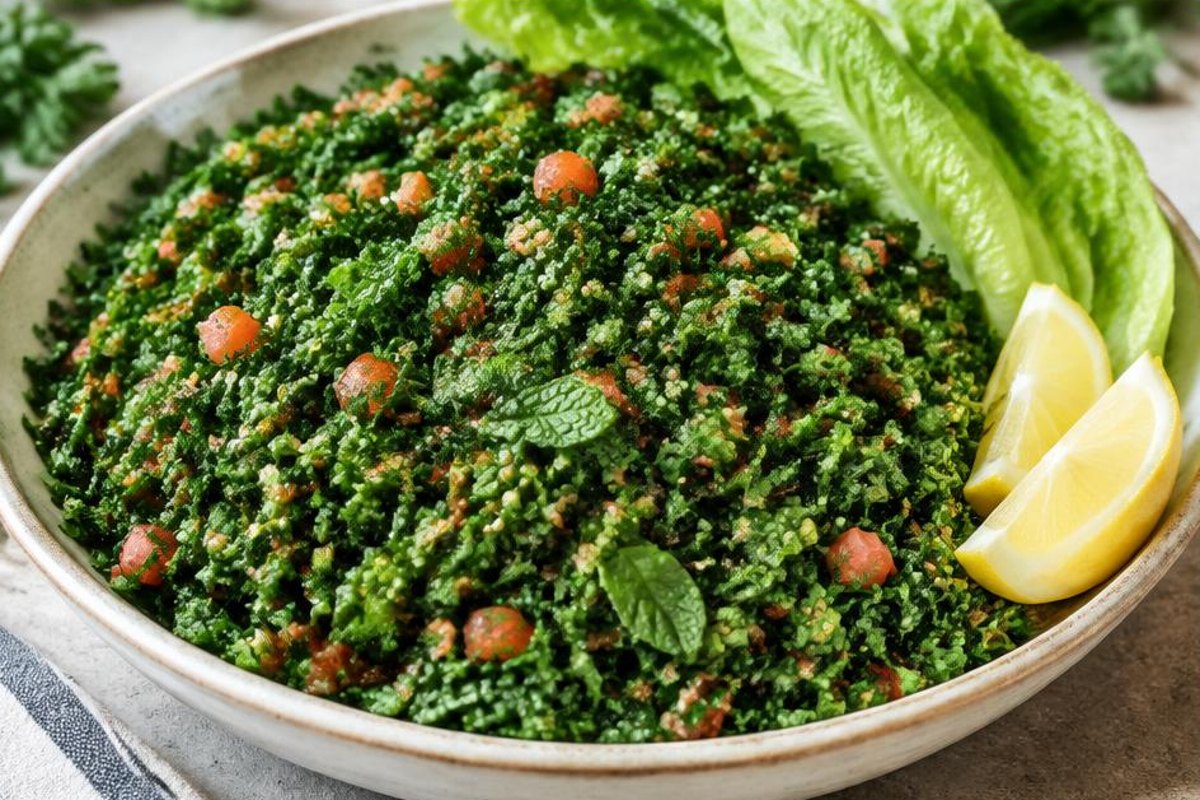
A herb salad, not a bowl of grain
Tabbouleh is widely made across the Levant, and ingredients and proportions vary by place and household. Lebanese-style tabbouleh is often strongly herb-led: parsley and mint are the bulk, with a relatively small amount of fine bulgur, tomato, scallion, lemon, and olive oil. This differs from many versions outside the region that use bulgur or couscous as the main ingredient. The New York Times describes Lebanese tabbouleh as a lemony herb salad with a little fine bulgur, while Serious Eats likewise emphasizes parsley as the principal ingredient. 1 2
There is no single ratio that every family follows. This recipe uses three large bunches of parsley with a modest amount of bulgur. In Lebanon, tabbouleh belongs naturally to a mezze table, but its exact herbs, acidity, and grain can change regionally. 3
Ingredients
- 3 large bunches flat-leaf parsley, thick stems removed
- ½ cup (85 g) fine bulgur (#1), not coarse pilaf bulgur
- 2 medium ripe tomatoes, finely diced
- 4 scallions, thinly sliced, white and green parts
- ½ cup fresh mint leaves, finely chopped
- ¼ cup fresh lemon juice, plus more to taste
- ⅓ cup extra-virgin olive oil
- ¾ tsp fine salt, then adjust
- Romaine leaves, for serving
The secret is dry herbs and a fine cut
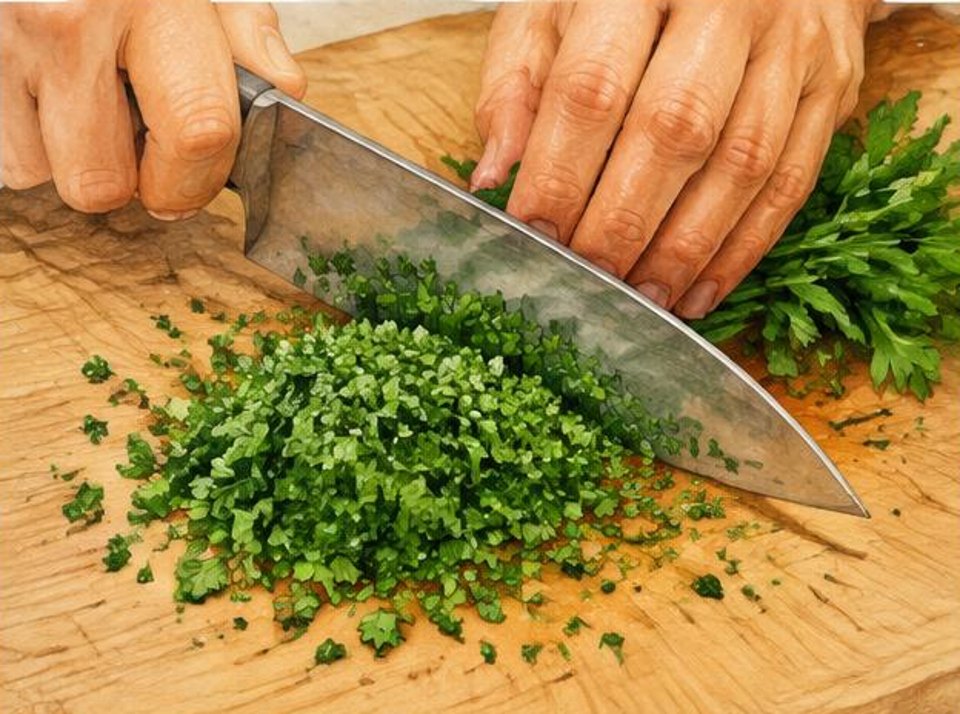
Wash parsley and mint thoroughly, then dry completely in a salad spinner or clean towels. Wet herbs dilute dressing and can make the salad watery. Remove thick parsley stems; tender upper stems are fine if finely chopped. Gather leaves into manageable bundles and chop with a sharp knife. Avoid crushing them with a dull blade, which bruises the herbs and makes them dark faster.
Finely dice tomatoes. If they are extremely juicy, set them in a strainer for a few minutes and reserve their juice. Sprinkle the tomatoes lightly with a pinch of salt while you prepare the herbs; salt draws out moisture. Serious Eats describes salting tomatoes and herbs and using tomato liquid to hydrate bulgur as a way to control excess water while retaining flavor. 2
Hydrate fine bulgur carefully
Place bulgur in a small bowl. Add 2–3 tablespoons lemon juice and, if desired, a tablespoon of reserved tomato juice. Let stand 15–20 minutes, then taste. Fine bulgur should soften while retaining a slight bite; it should not become mushy. Some very fine bulgur may need only a short soak, while coarser types need more liquid and time. Follow the package if its grind differs. Drain any excess liquid.
Do not cook bulgur like rice for this salad. The goal is a small, tender grain that blends into the herbs rather than taking over the bowl. If you only have coarse bulgur, soak it longer or briefly cook it according to package directions, then cool completely and use a smaller quantity.
Mix and season in stages
In a large bowl, combine parsley, mint, scallions, tomatoes, and softened bulgur. Add lemon juice, olive oil, and salt. Toss thoroughly. Let sit 10 minutes, then taste and adjust: tabbouleh should be fresh, lemony, and well-seasoned, with the olive oil rounding the acidity. Add lemon in small amounts if the tomatoes are already tart.
Serve on romaine leaves, which can be used as scoops, or with a fork as part of a mezze spread. Tabbouleh pairs well with hummus, grilled vegetables, falafel, kibbeh, or simple grilled meat. The New York Times recipe notes romaine leaves as a traditional-style way to scoop the salad. 1
Troubleshooting
- Salad is watery: Herbs were damp, tomatoes were very juicy, or bulgur was over-hydrated. Dry herbs thoroughly, drain tomatoes briefly, and add bulgur gradually.
- Too much grain: Add more parsley, mint, tomato, lemon, and oil to rebalance rather than making a larger bulgur portion.
- Bulgur is hard: The grind may be too coarse or soaking time too short. Add a tablespoon warm water or lemon juice and wait 10 minutes; if still tough, follow package cooking directions next time.
- Herbs turn dark: They were chopped too early, bruised, or left in acidic dressing too long. Chop close to serving and dress shortly before eating.
- Tastes flat: Add salt first, then lemon. Olive oil alone cannot correct underseasoning.
- Too sour: Add a little olive oil and more tomato and herbs, rather than sugar.
Make-ahead and variations
Wash and dry herbs several hours ahead, then refrigerate wrapped in a clean towel. Bulgur can be soaked ahead and chilled. For the brightest color, chop and dress near serving time. Leftovers can be refrigerated until the next day, though lemon causes greens to lose some brightness over time; the NYT recipe also notes the color fades as the salad rests. 1
Some regional Lebanese variations include different seasonal greens or acidic ingredients such as sour grape juice or pomegranate juice. These are part of a broader food tradition, not errors. 3