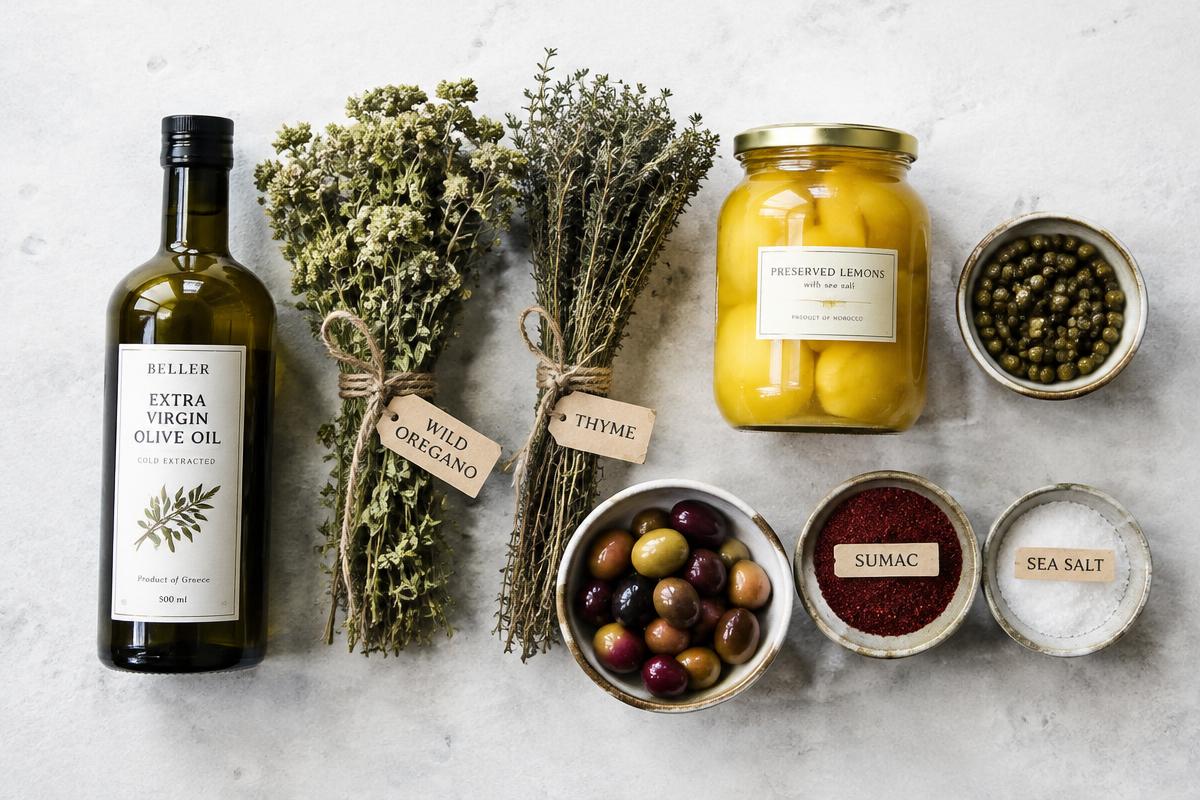
The Mediterranean basin encompasses three continents—Southern Europe, the Levant, and North Africa. What unites the food culture of this diverse geographic region is not a single dish, but a shared agronomy anchored in the olive tree (Olea europaea), wild hillside aromatics, sun-dried legumes, and ancient fermentation. Mediterranean cooking is ingredient-forward: success depends not on intricate kitchen trickery, but on understanding the biological grading and handling of raw materials.
1. Extra Virgin Olive Oil (EVOO): The Science of Liquid Gold
In Mediterranean cooking, olive oil is treated as fresh fruit juice and a finishing seasoning, not merely an inert frying fat.
The Chemistry of EVOO
- Free Acidity: To legally qualify as Extra Virgin, olive oil must be mechanically extracted below 27°C (80°F) without heat or chemical solvents ("first cold-pressed"), and it must have a free fatty acid level (expressed as oleic acid) of less than 0.8% (ultra-premium artisan oils often test below 0.2%).
- Polyphenols & Sensory Cues: The peppery catch in the back of your throat (amertume and piquant) is caused by oleocanthal, a powerful anti-inflammatory polyphenol.
- Culinary Rule of Thumb:
- Robust, high-polyphenol oils (Greek Koroneiki, Spanish Picual, Italian Coratina): Bold, grassy, artichoke-like. Use for drizzling over hearty bean stews, bitter greens, and roasted meats.
- Delicate, buttery oils (Spanish Arbequina, French Niçoise): Mild, floral. Ideal for delicate fish, emulsion dressings, and baking.
The Heat Myth
Quality EVOO has an average smoke point between 375°F and 410°F (190°C–210°C)—well above standard sautéing and baking temperatures. It is extraordinarily stable under heat due to its high concentration of monounsaturated oleic acid (73%) and protective antioxidant polyphenols. Cook your vegetables gently in good everyday EVOO, and reserve your single-estate, unheated oil for raw finishing at the table.
2. Wild Herbs & Ancient Spices
Mediterranean herbs evolved in rocky, sun-drenched, water-scarce landscapes, forcing plants to produce concentrated terpene oils to survive:
- Greek Wild Oregano (Rigani / Origanum vulgare hirtum):
- Botanically distinct from supermarket sweet marjoram. Harvested wild from mountainsides, hung to dry, and crushed between the palms directly over food. Pungent, peppery, and rich in carvacrol.
- Sumac (Rhus coriaria):
- Coarsely ground wild red berries from the sumac bush. Deep burgundy in color. Rich in malic and citric acids, sumac provides clean, sharp, astringent lemony acidity without adding moisture—crucial for fattoush salads, grilled kebabs, and onion marinades.
- Za'atar:
- A sacred Levantine herb blend consisting of wild hyssop (Origanum syriacum), toasted sesame seeds, sumac, and sea salt. Eaten daily with olive oil and warm flatbread.
- Aleppo Pepper (Halaby Pepper / Pul Biber):
- Sun-dried Syrian chili flakes semi-cured with olive oil and salt. Fruity, sweet, raisin-like, with a slow-blooming, mild heat (approx. 10,000 SHU) and zero harshness.
3. Preserved Sun-Staples
- 100% Pure Tahini:
- Sesame paste made exclusively from hulled, lightly roasted sesame seeds ground into a pourable liquid. Look for sesame sourced from the Humera region of Ethiopia, which yields a sweet, velvety paste with no chalky bitterness. Tahini must be emulsified slowly with ice water, lemon juice, and garlic to reach a silky, pale ivory sauce.
- Salt-Preserved Lemons:
- Lemons packed in sea salt and their own juice for 30+ days. The osmotic pressure and lactic acid bacteria break down the bitter albedo (white pith), turning the rind soft, translucent, and intensely aromatic with complex, salty-citrus umami. The pulp is discarded; only the minced rind is used in tagines and grain salads.
- Pomegranate Molasses (Dibs Rumman):
- Pure pomegranate juice slowly reduced until its natural sugars caramelize into a tart, viscous, dark ruby syrup. Provides deep sweet-acid balance to dressings and braised meats.