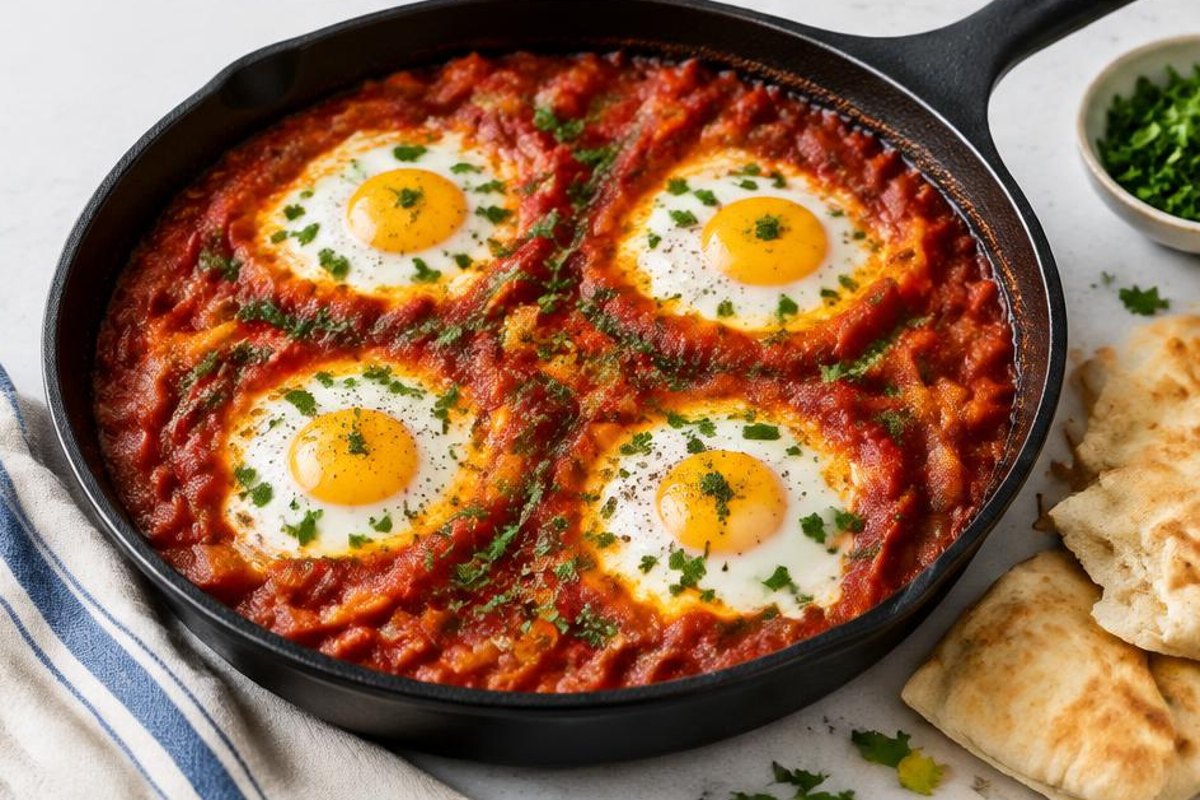
Context and technique
Shakshuka’s exact origin is contested. Food reporting traces likely roots to Tunisia, Egypt, Libya, and Morocco, while describing how the dish became widely adopted in Israel through Maghrebi Jewish migration. Rather than claim one definitive birthplace, this recipe treats shakshuka as a shared, evolving North African and regional food tradition. 1 2
The process is simple but benefits from patience: soften peppers and onions, reduce the tomatoes until thick enough to hold eggs, then poach gently. Household versions vary in spice, herbs, and add-ins; this is a pepper-forward tomato base with cumin and paprika.
Ingredients
- 2 tbsp extra-virgin olive oil
- 1 large red or yellow bell pepper, seeded and diced
- 1 medium onion, sliced; 4 garlic cloves, chopped
- 1 tsp ground cumin; 1 tsp sweet paprika; ½ tsp ground coriander
- Pinch cayenne or 1 fresh chile, optional
- 1 tbsp tomato paste
- 1 can (28 oz / 800 g) whole peeled tomatoes, crushed by hand
- ½ tsp salt to start; black pepper
- 4–6 large eggs
- 2 tbsp chopped parsley or cilantro
- Optional feta, olives, harissa; warm flatbread
Method
Heat oil in a wide lidded skillet over medium. Add onion and pepper with a pinch of salt. Cook 8–10 minutes until soft and sweet; lower heat if edges brown too fast. Add garlic and spices and stir for 30 seconds until fragrant. Spices should smell warm, never scorched.
Stir in tomato paste for one minute. Add crushed tomatoes, salt, and pepper. Bring to a gentle simmer and cook uncovered 20–30 minutes, stirring now and then, until thick. A spoon drawn through the pan should leave a path that slowly fills. Fresh tomatoes vary in water content and may need longer. Taste and adjust salt; a little acidity is welcome.
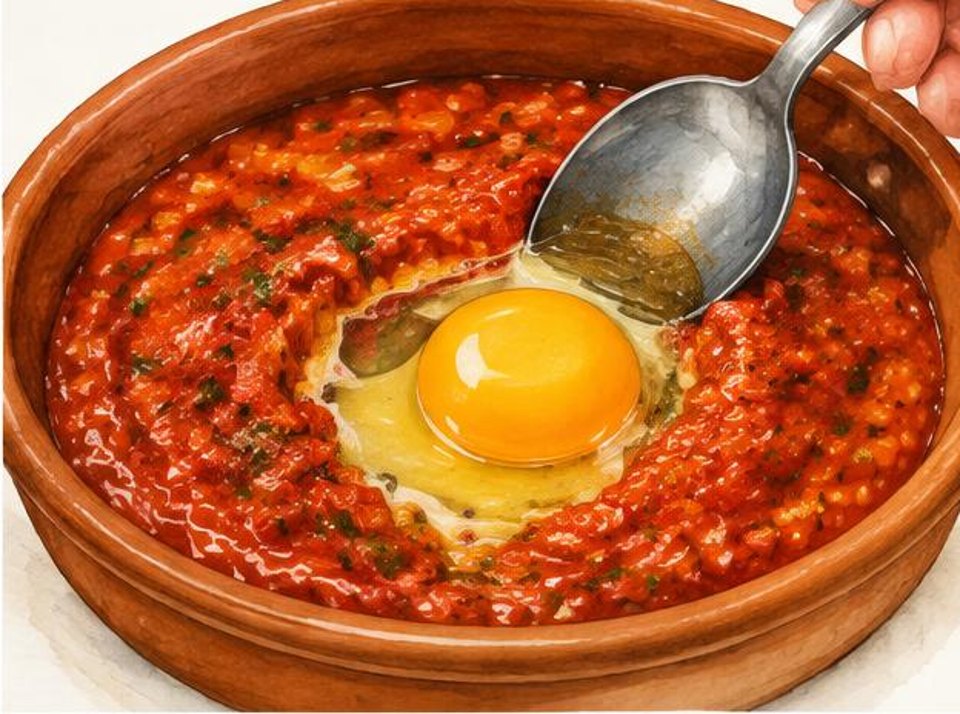
Make four to six shallow wells with the back of a spoon. Crack each egg into a small cup, then slide it into a well. Cover and cook over low heat for 5–8 minutes, checking early. Whites should be opaque and set; yolks can remain soft. If whites need help, add a tablespoon water to the pan’s edge and cover again. Avoid a hard boil, which can toughen whites and overcook yolks.
Remove from heat; add herbs and optional feta or olives. Serve directly from the skillet with flatbread. The sauce should be thick enough to support the eggs but still spoonable.
Choosing a pan and managing heat
Use the widest skillet that still has a tight-fitting lid. The pan should allow the sauce to spread shallowly enough that vegetables cook down rather than stew in a deep pool. A heavy skillet moderates temperature changes; with a thin pan, lower heat and stir more often during reduction.
Tomatoes release water at different rates. Canned whole tomatoes offer consistent results; crush them by hand for a rustic texture. If using fresh tomatoes, choose ripe fruit and expect a longer simmer. The sauce is ready when it is cohesive and spoonable, with no separate watery ring around the edge. This matters because eggs cook best when their whites sit above the sauce and can set under trapped steam.
A lid gives the eggs gentle top heat. If your skillet has no lid, cover loosely with foil or place the pan in a 350°F (175°C) oven until the whites set. The oven method heats more evenly but can firm yolks quickly, so begin checking after a few minutes. For diners who prefer fully set yolks, cook longer over low heat rather than boiling the sauce.
Spice and topping variations
Cumin, paprika, coriander, and chile make a warm, savory base, but household versions differ. Add harissa by the spoonful if you want a North African chile note; stir it into the vegetables before tomatoes so its aroma disperses. Merguez or another spiced sausage can be browned first, with excess fat removed if needed. Feta, olives, or preserved lemon can be added at the end. These are options, not requirements for every shakshuka tradition.
If serving a group, prepare the sauce in advance and poach eggs in batches shortly before the meal. Individual small pans are useful for brunch service, but make sure the sauce is already hot before adding eggs. Toast or warm bread while eggs cook, and set out small plates for herbs and toppings. Shakshuka is commonly shared from the pan, with bread used to scoop sauce and yolk.
Troubleshooting and make-ahead
- Watery sauce: Reduce uncovered longer before adding eggs. If eggs are already set, lift them out, reduce sauce, then return briefly.
- Overcooked eggs: Lower heat and check early; residual heat continues cooking after removal.
- Whites spread: Make deeper wells and use fresh eggs; cracking into a cup gives more control.
- Flat flavor: Add salt gradually, then a little lemon juice or vinegar if it needs brightness.
- Scorched spices: Lower the heat; add tomatoes promptly after blooming spices.
Make the pepper-tomato base a day ahead and refrigerate. Reheat until simmering, then poach eggs to order. Shakshuka with cooked eggs stores safely refrigerated, but yolks firm as they chill and reheat.