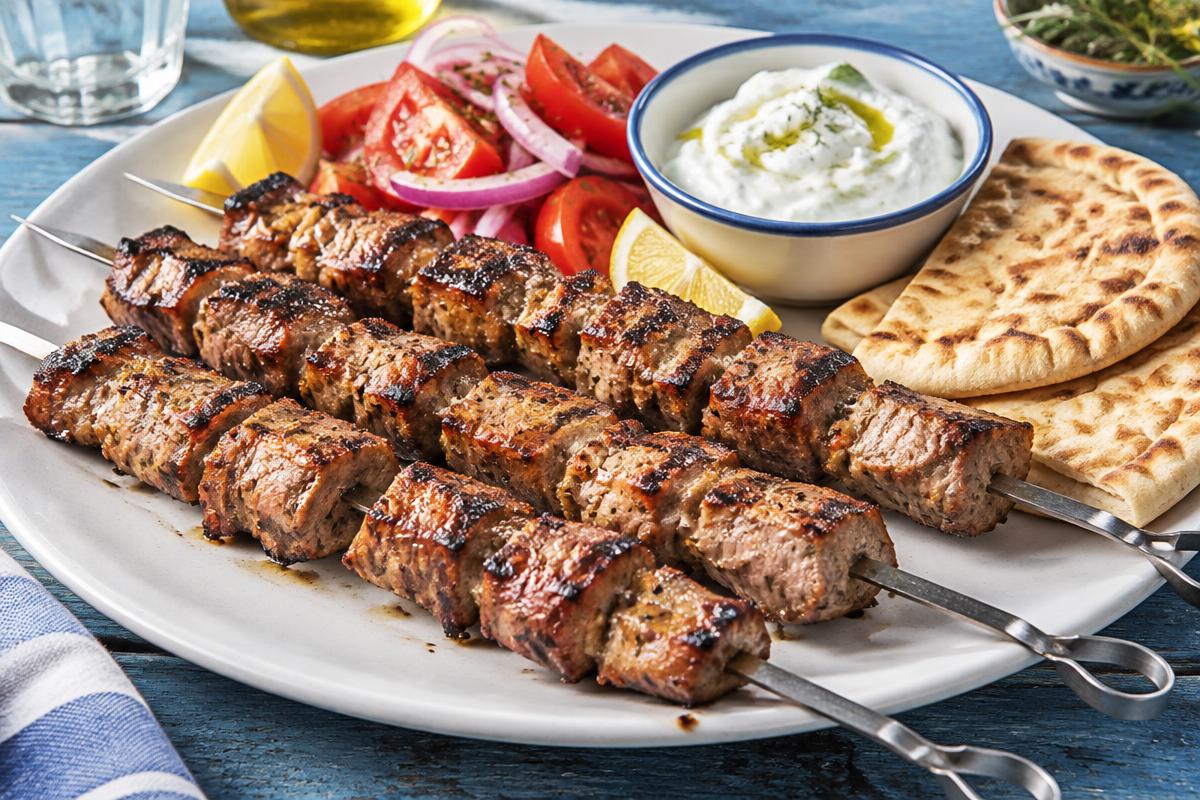
Souvlaki is more than a marinade
Souvlaki refers to meat cooked on skewers and is commonly served on the skewer, on a plate, or wrapped in pita with accompaniments. The word is linked to the Greek souvla, a spit or skewer; accounts of its culinary history connect present-day street food with much older practices of cooking meat over fire, though modern souvlaki culture developed in its own context. 1 2
This version uses pork shoulder for juiciness, a restrained lemon-olive oil-oregano marinade, and high direct heat. Pork loin can be leaner and cooks quickly, but is easier to dry. Souvlaki recipes vary: some marinades include onion, vinegar, garlic, or a little honey; some neighborhood grill-house styles keep seasoning minimal and add lemon and oregano after grilling. 3 4
Ingredients
Pork and marinade
- 2 lb (900 g) boneless pork shoulder, trimmed of very tough exterior fat
- 3 tbsp extra-virgin olive oil
- 2 tbsp lemon juice, plus zest of ½ lemon
- 1 tbsp red wine vinegar
- 2 garlic cloves, finely grated
- 1 tbsp dried Greek oregano, crushed between palms
- 1 tsp kosher salt; ½ tsp black pepper
- 1 small red onion, cut into wedges for grilling or serving
- 8 wooden skewers, soaked 30 minutes, or metal skewers
Tzatziki
- 1 cup (240 g) thick Greek yogurt
- ½ English cucumber, coarsely grated
- 1 small garlic clove, finely grated
- 1 tbsp olive oil
- 1 tbsp lemon juice or red wine vinegar
- 1 tbsp chopped dill or mint, optional
- Salt and pepper to taste
To serve
- 4–6 pocketless Greek-style pitas or flatbreads
- Tomato slices, red onion, parsley, lemon wedges
- Optional fries for pita wraps
Choose and cut the pork
Pork shoulder has enough intramuscular fat to stay juicy over high heat. Cut into even 1¼-inch (3 cm) cubes. Pieces that are too small overcook before they char; oversized cubes brown outside while remaining cool in the center. Trim thick, hard pieces of exterior fat, but leave small seams of fat for flavor.
Make tzatziki first
Grate cucumber, sprinkle lightly with salt, and let stand 10 minutes. Squeeze firmly in a clean towel until most liquid is removed. Combine with yogurt, garlic, olive oil, lemon, herbs if using, salt, and pepper. Chill at least 20 minutes. Draining cucumber prevents watery sauce; garlic grows stronger as it sits, so start with one small clove and adjust later.
Marinate with restraint
Whisk olive oil, lemon juice and zest, vinegar, garlic, oregano, salt, and pepper. Toss with pork until coated and refrigerate 2–4 hours. A longer marinade is possible, but acidic marinades are not a guarantee of tender meat and can make small cubes’ exterior texture soft if held too long. Serious Eats describes a marinade of olive oil, onion, garlic, oregano, lemon, and vinegar, while other Greek recipe sources favor lemon and oregano with minimal additions. 3 4
Thread cubes with a small gap between pieces so hot air can circulate. If using onion wedges on the skewers, separate their layers and avoid packing them tightly with pork; onion may need longer to char. Alternatively grill onion separately.
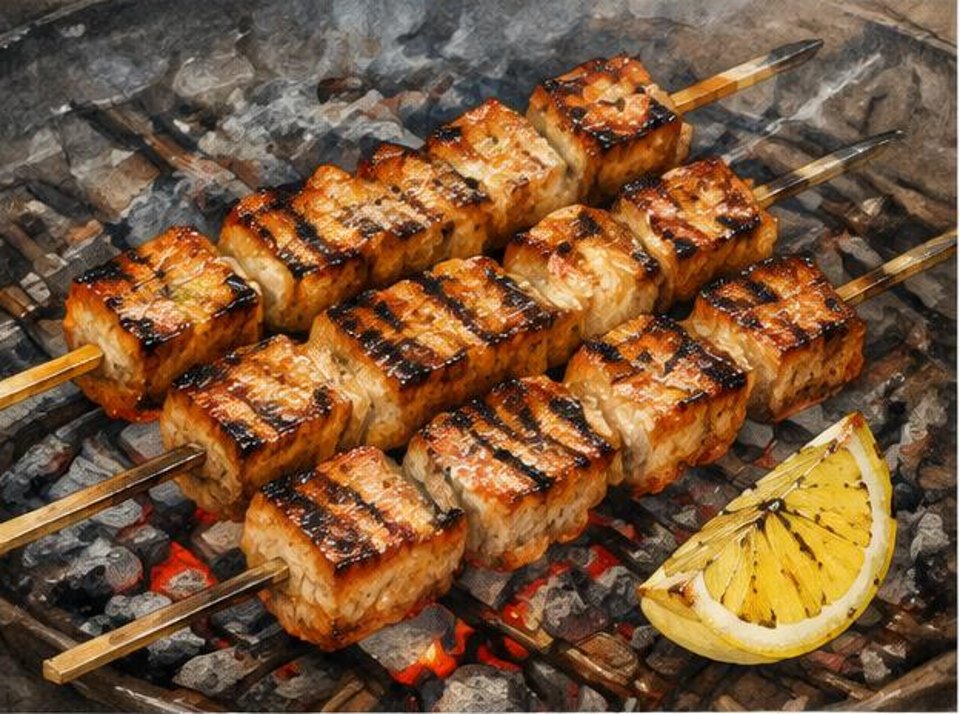
Grill for browned edges and juicy centers
Heat a grill to high, about 450–500°F (230–260°C), and clean the grates. Oil the grates lightly using a folded paper towel held with tongs. Grill skewers, turning every 2–3 minutes, until browned on multiple sides and cooked through. Time depends on cube size, grill, and cut; use an instant-read thermometer in the largest piece. Whole-muscle pork is safe at 145°F (63°C) followed by a 3-minute rest, though shoulder cubes may be more tender when cooked beyond that. For tender shoulder, many cooks prefer a slightly higher endpoint, balancing juiciness and connective tissue; avoid treating one exact time as universal.
If the outside is browning too fast, move skewers to a cooler part of the grill and finish with indirect heat. Let rest 3–5 minutes. Squeeze lemon over the meat and dust lightly with oregano. The rest lets juices redistribute and reduces the loss of moisture when the cubes are first cut or bitten.
No grill? Heat a heavy cast-iron grill pan or skillet until very hot. Cook in batches without crowding, turning to brown several sides. Ventilate the kitchen. Broiling on a preheated tray also works; turn once and watch closely for flare-ups.
Warm pita and build a plate or wrap
Warm pita briefly on the grill or in a dry skillet until pliable. For a plate, serve skewers with tzatziki, tomato, onion, lemon, and pita. For a wrap, slide pork off the skewer, spread tzatziki on warm pita, add meat, tomato, onion, and parsley. Fries are a popular optional filling in Greek-style pita wraps; keep them crisp and add just before serving.
Troubleshooting
- Dry pork: Pieces were too small, the cut too lean, or cooking too long. Use shoulder, cut evenly, and check temperature rather than relying only on time.
- Little browning: Grill was not hot enough, meat was wet, or skewers were overcrowded. Pat off excess marinade and leave airflow between cubes.
- Burned garlic: Fine grated garlic can scorch over intense heat. Wipe off excess marinade before grilling and use lemon/garlic dressing at the end if desired.
- Tough pork: Large shoulder cubes may need a little more cooking; very lean loin may have been overcooked. Choose cut-specific doneness and cube size.
- Watery tzatziki: Cucumber was not drained. Salt, rest, then squeeze firmly; use thick yogurt.
- Wooden skewers burn: Soak 30 minutes and keep the exposed ends away from direct flame, or use metal skewers.
Make-ahead and safety
Tzatziki can be prepared a day ahead; stir before serving. Marinate pork in a covered container in the refrigerator, not on the counter. Keep raw meat utensils separate from cooked food. Cooked leftovers can be refrigerated promptly and reheated gently in a skillet or wrapped in foil in a low oven. For best texture, store meat and tzatziki separately.