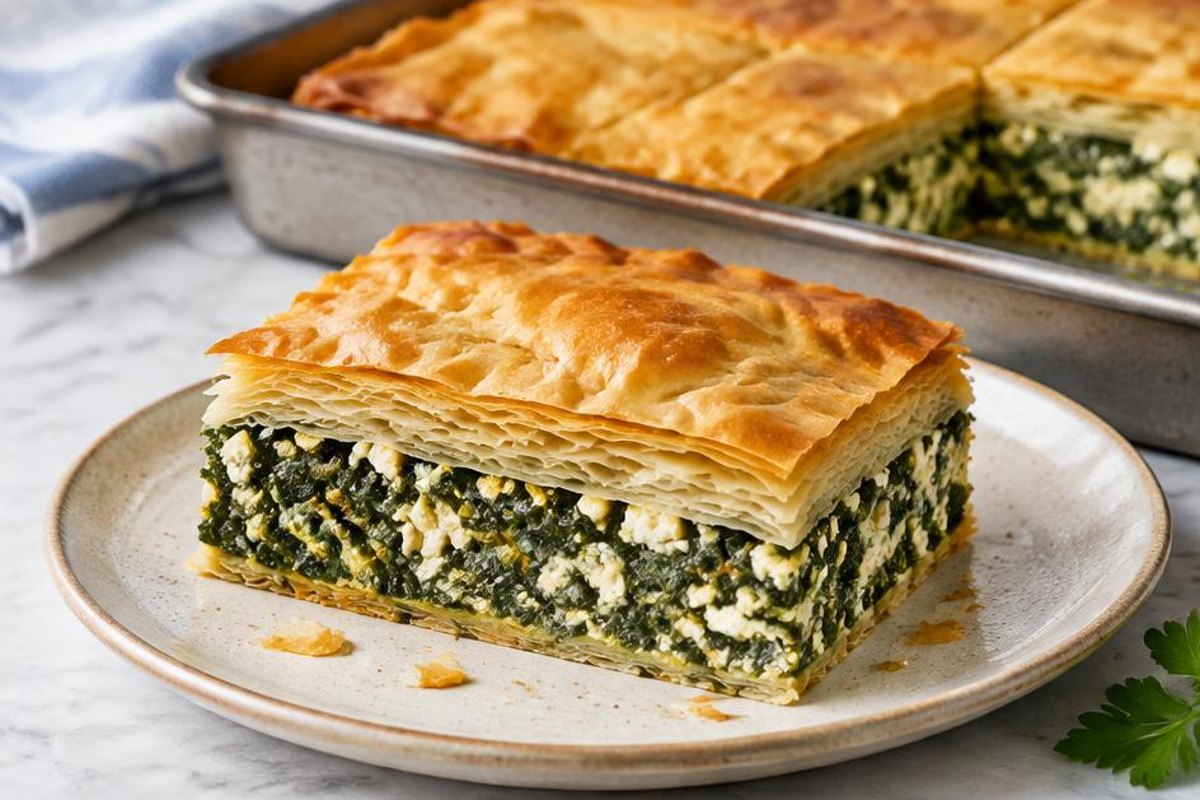
What is spanakopita?
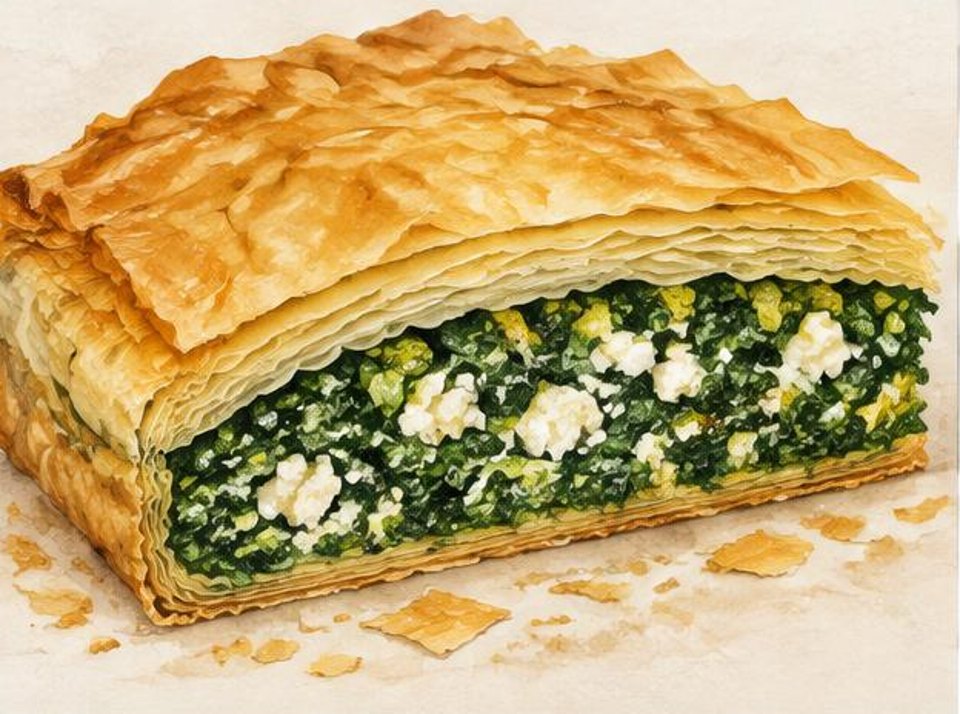
Spanakopita is a Greek spinach pie with many family and regional versions. Common preparations layer spinach and feta between phyllo sheets; some add herbs, scallions, or eggs, while others use different greens or shape the pastry into triangles. It belongs to a wider eastern Mediterranean and Balkan family of savory layered pies. 1 2
Two details largely determine the result: wring out the spinach thoroughly and keep phyllo covered while assembling. NPR’s family recipe account specifically stresses both the surprising amount of water in spinach and the need to protect paper-thin phyllo with a clean, damp towel. 2
Ingredients
- 1 lb (450 g) fresh spinach, or 12 oz (340 g) frozen, fully thawed
- 2 tbsp olive oil, plus more for brushing
- 1 bunch scallions, sliced; 1 small onion, diced
- 2 garlic cloves, minced
- ½ cup chopped dill; ¼ cup chopped parsley
- 8 oz (225 g) feta, crumbled
- 2 large eggs, lightly beaten
- ¼ tsp grated nutmeg; black pepper
- 12–14 phyllo sheets, thawed according to package instructions
- 6 tbsp (85 g) melted butter, or butter mixed with olive oil
Prepare the filling
Wash fresh spinach and remove tough stems. Wilt in batches in a pan, or blanch briefly and cool. Drain and squeeze firmly in handfuls. If using frozen spinach, thaw completely and squeeze in a clean towel until liquid stops running. Chop coarsely.
Heat 2 tablespoons olive oil. Cook onion and scallions 5–7 minutes until soft, not browned. Add garlic for 30 seconds. Add spinach and stir 2 minutes to evaporate surface moisture. Spread on a tray to cool; hot filling can soften pastry fat. When cool, mix with dill, parsley, feta, eggs, nutmeg, and pepper. Taste before adding salt because feta varies. If liquid pools, drain it.
Assemble and bake
Heat oven to 375°F (190°C). Lightly oil a 9-by-13-inch baking dish. Keep phyllo under a barely damp towel; a wet towel can make sheets sticky. Lay one sheet in the pan with edges overhanging and brush lightly with melted butter. Add another sheet, rotate slightly, and brush. Continue with 6–7 sheets. Tears can be patched with another sheet.
Spread filling evenly. Fold overhanging pastry over the filling, brushing between layers. Top with 6–7 more sheets, brushing lightly between each; tuck edges neatly into the pan. Do not press down, because air between sheets helps crisp them. Score the top into 8 portions with a sharp knife, cutting through pastry but not through filling.
Bake 45–55 minutes, rotating once if needed, until the top is deeply golden and crisp and the center is hot. If the top browns too early, tent loosely with foil for the final 10 minutes. Rest 15 minutes before cutting along the score lines.
For triangles, cut phyllo into strips about 3 inches wide. Brush a strip, place a small spoonful of filling at one end, then fold diagonally like a flag to the end. Set seam-side down and bake at 375°F (190°C) for 25–30 minutes until golden. Keep unused sheets covered.
Phyllo handling in practice
Phyllo dries quickly when exposed to moving air. Fully thaw it in its package before opening, following the package instructions; trying to separate partly frozen sheets often causes tears. Unroll onto a clean, dry surface and cover the unused sheets with plastic wrap and then a barely damp towel. Butter each sheet with a soft pastry brush using light strokes. A few small tears are not a problem because successive layers overlap and reinforce one another.
Do not saturate the pastry with fat. A thin, even film between sheets encourages crisp, distinct layers; pools of butter can make the bottom greasy. If butter begins to solidify, warm it gently. If using olive oil, choose a mild one or combine it with butter for flavor. The filling should be cool and relatively dry before it touches the bottom layers.
Tray pie or triangles?
A tray pie is efficient for family meals and keeps the filling generous. Individual triangles are convenient for picnics and appetizers, but require more wrapping time and careful portioning. In either format, make the filling compact rather than loose, and avoid overfilling: a bulging parcel can leak and soften the pastry. The triangle folding method gives a useful rhythm—place filling near one end, fold diagonally, then continue flipping the triangle along the strip.
Spanakopita is good warm, but it can also be served at room temperature, which makes it practical for a buffet. Pair it with tomato and cucumber salad, olives, or lentil soup. A squeeze of lemon brightens the feta and spinach. For clean slices, allow the tray pie to rest before cutting; for triangles, cool briefly on a rack so steam does not condense beneath them.
Troubleshooting and serving
- Soggy base: Spinach retained water, filling was hot, or pie was underbaked. Squeeze well, cool filling, and bake until crisp.
- Phyllo cracks: It may be dry or partly frozen. Thaw sealed according to package directions and cover while assembling.
- Sheets sticky: The towel is too wet or pastry has been covered too long in humid conditions. Use barely damp fabric and work steadily.
- Top browns too soon: Tent loosely with foil while the center finishes.
- Pie falls apart: Let it rest 15–20 minutes and cut with a sharp knife along pre-scored lines.
Assemble a day ahead, cover and refrigerate, then bake from chilled with extra time. Or bake fully and reheat in a 325°F (165°C) oven to restore crispness. Serve warm or at room temperature with lemon, olives, or tomato salad.