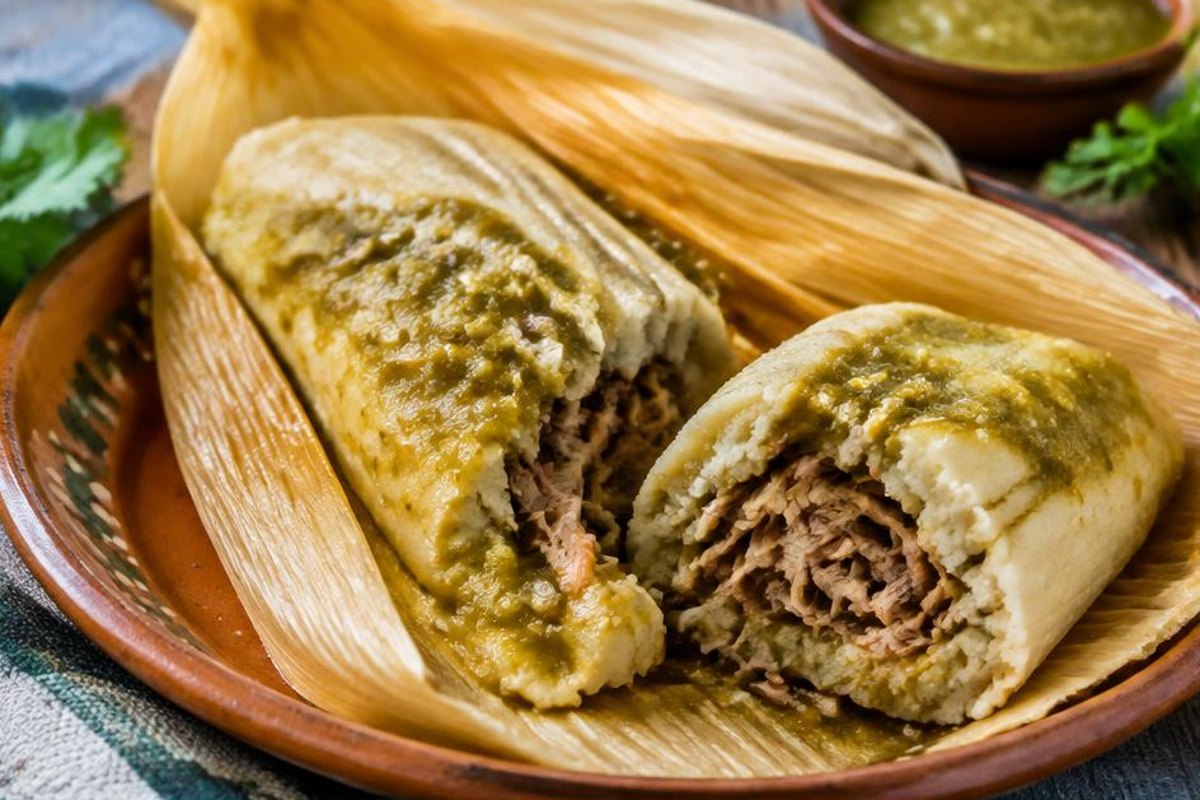
Tamales are a dish and a way of gathering
A tamal is masa filled or seasoned, wrapped, and cooked, often by steaming. Mexico has many regional forms: corn-husk-wrapped tamales are familiar in central styles, while banana-leaf-wrapped versions appear in other regions, including Chiapas. Fillings and masa vary widely. Tamales are often associated with celebrations partly because making many requires time and coordination; a tamalada turns the work into a shared event. 1 2
This guide makes pork shoulder in salsa verde, wrapped in corn husks. The recipe is organized as a make-ahead project: cook pork and sauce, hydrate husks, prepare masa, assemble, and steam. It is not necessary to finish everything in one exhausting session. A family-style tamalada can divide tasks among people: one shreds the pork, one spreads masa, another fills and folds, while someone manages the steamer.
Ingredients
Pork and broth
- 3 lb (1.35 kg) boneless pork shoulder, cut into 3-inch chunks
- 1 medium white onion, quartered
- 5 garlic cloves, lightly crushed
- 2 bay leaves
- 1 tsp black peppercorns
- 1 tbsp kosher salt, plus more to taste
- Water to cover, about 8 cups
Salsa verde
- 1½ lb (680 g) tomatillos, husked and rinsed
- 2–3 serrano peppers, stems removed
- ½ white onion
- 2 garlic cloves
- ½ cup chopped cilantro
- ½ tsp salt to start
- 1 tbsp pork fat or neutral oil
Masa
- 4 cups (about 500 g) masa harina for tamales, not regular cornmeal
- 1½ cups (340 g) lard, softened but not melted
- 2 tsp baking powder
- 1½ tsp fine salt, or to taste
- 3 to 3½ cups warm reserved pork broth, as needed
Wrapping and steaming
- 24–30 dried corn husks, plus a few extra for patching
- Water for soaking and steaming
Before you start: equipment and schedule
Use a large stockpot for pork, a blender for salsa, a stand mixer or large bowl for masa, and a tall steamer pot with a rack. The tamales should sit above simmering water rather than touch it. A ball of crumpled foil or an inverted heatproof bowl can support a rack if you do not own a tamalera, provided the arrangement is stable and leaves room for steam to circulate.
Day-before option: Cook pork, strain and chill the broth, make salsa, and soak or rinse the husks according to your workflow. Refrigerate pork and sauce separately. The next day, bring the filling to a spoonable consistency and prepare fresh masa. Cold broth is easy to skim; warm broth is easier to incorporate into dough.
Step 1: Cook tender pork and save the broth
Place pork, onion, garlic, bay leaves, peppercorns, salt, and water in a pot. Bring just to a boil, skim foam, then lower to a gentle simmer. Partially cover and cook 1½–2 hours, until a fork slides in easily and the meat pulls apart. A hard boil can make the broth cloudy and may toughen the outside before the center softens.
Transfer pork to a tray. Strain and reserve the broth; discard aromatics. When cool enough, shred the pork finely, removing large pieces of connective tissue. Keep it moist with a few spoonfuls of broth. Taste a small bite before adding more salt. Pork shoulder contains connective tissue that becomes tender with sustained moist heat; the practical endpoint is easy shredding, not an exact timer.
Step 2: Make the salsa verde
Simmer tomatillos and serranos in water for about 5–8 minutes, just until the tomatillos change from bright green to olive and soften. Do not let them burst and disintegrate into the pot. Drain, reserving a little cooking water. Blend tomatillos, chiles, onion, garlic, cilantro, and salt to a slightly textured sauce. Taste for heat and salt.
Heat pork fat or oil in a saucepan. Add salsa carefully and simmer 8–12 minutes, stirring, until its raw edge softens and the color deepens. If it is very thick, add a splash of reserved liquid. Mix enough salsa into shredded pork to make a moist filling that holds together on a spoon; reserve the rest for serving. A watery filling can seep through masa and make the tamales difficult to handle, so reduce it rather than adding a large amount of liquid.
Step 3: Soften the corn husks
Separate the husks and rinse away dust. Cover with very hot water and weigh them down with a plate. Soak 30–60 minutes, until pliable. Drain and pat dry. Keep the husks covered with a clean towel while you work. Select medium and large husks; overlap small ones to make a wider wrapper. Tear a few narrow strips to use as ties if needed.
Step 4: Make soft, spreadable masa
Whisk masa harina, baking powder, and salt in a bowl. Beat the lard in a stand mixer with the paddle, or by hand with a sturdy spoon, until lighter and creamy, 3–5 minutes. This incorporates air and helps the cooked masa feel less dense. A comprehensive tamales guide also emphasizes aerating the fat and seasoning/hydrating masa with broth. 3
Add dry ingredients in portions. Gradually beat in warm broth until the dough is soft and spreadable, like thick hummus or soft peanut butter. It should cling to a spoon without crumbling, but not run. The amount of broth varies with the masa harina and humidity. Rest 10 minutes, then recheck; masa continues to absorb moisture. If stiff, add broth one tablespoon at a time. If loose, mix in a little masa harina and allow it to hydrate.
About the float test: Some family recipes use a small ball of masa in water as an informal lightness check. It is not a universal or definitive test: hydration and the air incorporated affect the result. Texture and a test-steamed tamal are more reliable. Cook a small spoonful in a husk or a ramekin for 15–20 minutes; it should set and taste tender rather than gritty or pasty. Adjust salt and broth before assembling the full batch.
Step 5: Spread, fill, and fold
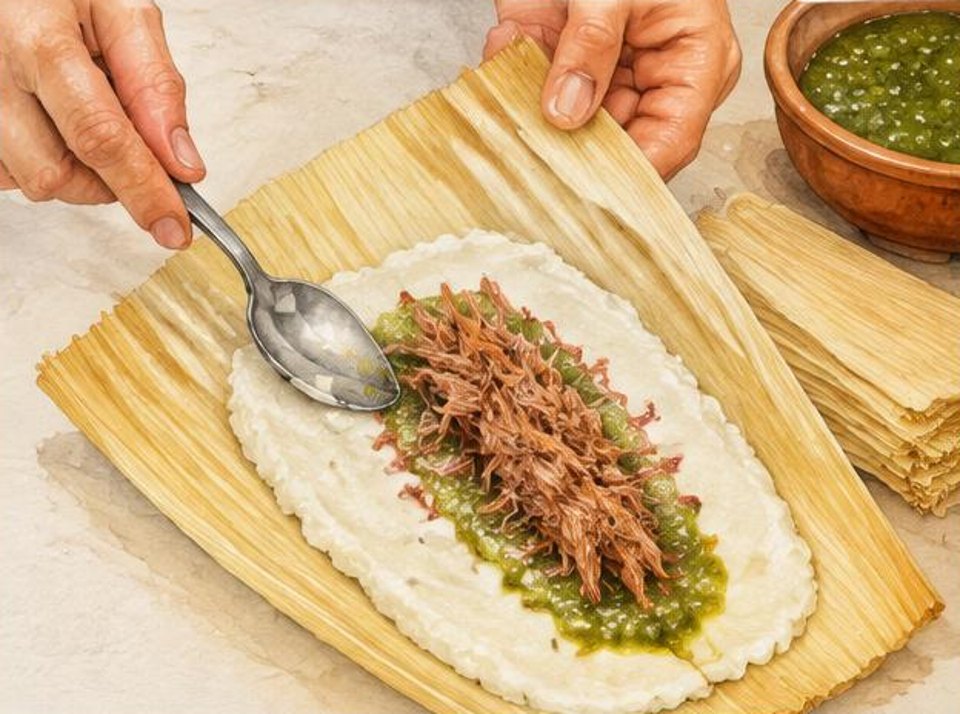
Place a husk smooth-side up, with the wide end nearest you and the narrow end pointing away. Spread about 2 tablespoons masa into a thin rectangle over the broad center, leaving a 1-inch border at the sides and 2 inches at the narrow tip. A thin, even layer cooks more predictably than a thick mound. If the husk is narrow, overlap two husks.
Add 1–2 tablespoons pork filling down the middle. Fold one long side over the filling, then the other side over it, so the masa encloses the center. Fold the narrow tail upward. Leave the top open if the masa is contained, or fold the top down for a compact parcel. Tie loosely with a husk strip if desired. Do not wrap tightly: masa expands as it steams. Set finished tamales upright, open ends up, in a tray or steamer basket.
Step 6: Steam until the masa releases
Add water to the steamer below the rack. Line the bottom with spare husks. Stand tamales upright, open ends up, with enough space for steam to move. Cover the top with a damp towel or extra husks, then a tight lid. Bring water to a steady simmer and steam approximately 75–100 minutes. Check the water every 25–30 minutes; replenish with hot water before it runs dry.
To test, lift one tamal and let it rest 5 minutes. Open the husk. Fully cooked masa should pull away cleanly and feel set, not wet or gummy. If it clings, rewrap and steam another 10–15 minutes, then retest. Rest the finished batch in the covered steamer, off heat, for 10–15 minutes. This settling period improves texture as the masa firms slightly. 3
Troubleshooting
- Masa is crumbly while spreading: It is too dry or has not rested. Add broth in small increments and wait several minutes for absorption.
- Masa is greasy or dense: The fat may have been melted instead of whipped, or the filling layer is too thick. Use softened fat, beat until creamy, and spread evenly.
- Tamal sticks to husk: It may be under-steamed, overly wet, or not rested. Steam longer in short increments and rest before opening.
- Filling leaks: Too much filling, a watery salsa, or an incomplete masa seal. Use less filling and reduce the sauce until thick.
- Tamales cook unevenly: The steamer is overcrowded or water is not simmering steadily. Leave a little room, rotate the pot if needed, and replenish water.
- Tamal tastes bland: Masa itself needs seasoning. Taste a steamed test portion; filling alone cannot season a thick layer of dough.
Serving, storage, and variations
Serve with extra salsa verde, crema, pickled onions, or beans. To refrigerate, cool promptly and store in a covered container for up to 4 days. Reheat in a steamer until hot, or microwave wrapped in a damp paper towel. Freeze cooked tamales individually; thaw overnight in the refrigerator or reheat from frozen by steaming longer. For food safety, do not leave cooked pork or tamales at room temperature for extended periods.
Corn husks are common in central-style tamales, while banana leaves are used in other regional preparations; banana leaves are not interchangeable in flavor or texture but are a useful route to a different tamal tradition. PBS's program on Mexican tamales documents both husk-wrapped central styles and denser banana-leaf Chiapaneco tamales. 1