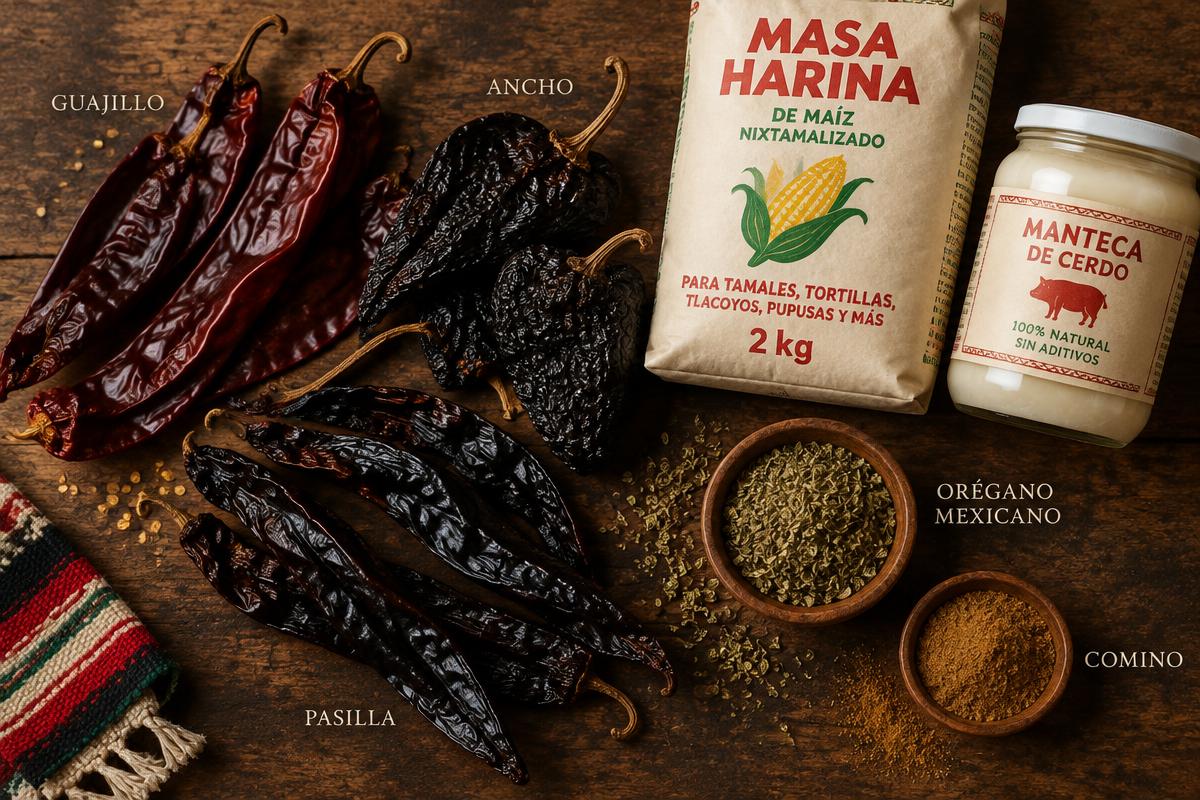
Traditional Mexican cooking—recognized by UNESCO as an Intangible Cultural Heritage of Humanity—is a continuous, living dialogue between Mesoamerican indigenous agriculture and 16th-century Spanish, African, and Middle Eastern influences. To cook Mexican food faithfully in a domestic kitchen, one must first abandon the Western misconception that the cuisine is defined by melted yellow cheese or incendiary raw heat. At its heart, Mexican flavor architecture is built upon three foundational pillars: enzymatic dried chilies, nixtamalized corn, and animal fats.
1. The Anatomy & Chemistry of Dried Chilies
Dried chilies (chiles secos) are the undisputed soul of Mexican sauces (moles, adobos, pipianes, and salsas). When a chili dries, volatile water leaves the fruit, concentrating natural sugars and initiating enzymatic browning. This transforms raw vegetal heat into deep notes of dried stone fruit, bittersweet cocoa, roasted tobacco, and mild leather.
The Three Essential Varieties
- Chile Guajillo (The Color and Brightness Engine)
- Fresh Form: Chile Mirasol ("looking at the sun," named for its upright growth habit).
- Visual Profile: Smooth, glossy, translucent, deep burgundy-red skin with minimal wrinkling.
- Flavor & Pungency: Tart, tannic, reminiscent of unsweetened cranberry, green tea, and dried cherries. Mild-to-moderate heat (2,500–5,000 Scoville Heat Units).
- Culinary Role: Guajillo is high in carotenoid pigments, providing the brilliant crimson hue essential for consomé de birria, pozole rojo, and adobos.
- Chile Ancho (The Earth and Sweetness Anchor)
- Fresh Form: Chile Poblano (harvested fully ripe and red before drying).
- Visual Profile: Broad, heart-shaped, heavily wrinkled, dark mahogany to near-black. Soft and pliable to the touch.
- Flavor & Pungency: Deeply sweet, with pronounced notes of dried prune, dark raisin, bittersweet cocoa, and mild leather. Very mild heat (1,000–1,500 SHU).
- Culinary Role: Provides viscosity, body, and sweetness. It tempers the sharp acidity of guajillo and balances the heat of sharper chilies.
- Chile Pasilla / Chile Negro (The Smoke and Licorice Base)
- Fresh Form: Chile Chilaca (long, slender, dark green pepper).
- Visual Profile: Elongated, twisted, heavily furrowed, dark brownish-black skin resembling an elongated raisin.
- Flavor & Pungency: Herbal, woodsy, with distinct overtones of black licorice, dried mushroom, and subtle forest floor. Mild heat (1,500–2,500 SHU).
- Culinary Role: Essential in Mole Negro, Salsa Borracha, and Oaxacan braises.
The Physics of Toasting and Rehydration
- The Activation Flash: Dried chilies contain aromatic terpenes and pyrazines dormant in their dried cell walls. Place chilies on a dry, medium-hot cast-iron comal. Press them flat with a wooden spatula for 10–15 seconds per side. As soon as the skin blisters slightly and an aroma of toasted nuts fills the room, remove them immediately. Over-toasting produces acrid, burnt pyrazines that permanently ruin sauces.
- The Pectin Swell: Soak toasted chilies in hot water (180°F–190°F / 82°C–88°C) for 15–20 minutes. This softens the cell walls, hydrating pectin so high-speed blender blades can shear the skins into a micro-emulsion rather than gritty flakes.
2. The Science of Nixtamalization & Masa
Every taco, tamale, and tostada begins with corn—specifically, corn that has undergone an ancient chemical transformation called nixtamalization (nixtamal from Nahuatl nextli [ashes] and tamalli [corn dough]).
The Chemical Reaction
Field corn (dent corn) possesses a hard, indigestible outer hull called the pericarp, and its vital nutrients (protein and niacin/vitamin B3) are locked in chemical complexes inaccessible to human digestion. Indigenous Mesoamericans discovered that simmering dry corn in an alkaline solution—water mixed with wood ashes or slaked lime (calcium hydroxide, cal)—causes profound biochemical changes:
- The alkaline solution dissolves the hemicellulose in the pericarp, loosening the outer skin.
- It breaks the bonds binding niacin, preventing pellagra (the deficiency disease that historically plagued European populations who consumed unprocessed corn).
- Calcium ions cross-link the corn proteins and starches, enabling the ground kernels to form a pliable, cohesive dough (masa) without gluten.
Modern Home Kitchen Sourcing
- Masa Harina (Nixtamalized Corn Flour): Brands like Maseca or artisanal heirloom brands (such as Masienda, made from single-origin Mexican landrace corn) have dehydrated nixtamalized masa into stable flour. For fresh tortillas, mix masa harina with warm water (1:1.25 ratio by weight) and 1% salt, letting the dough rest for 30 minutes to fully hydrate the starches before pressing.
3. Fats: The Flavor Conduit
In Mexican culinary mechanics, fat is not just a cooking medium; it is a primary flavor solvent for fat-soluble chili pigments and volatile terpenes.
- Manteca (Pork Lard): High-quality, unhydrogenated rendered pork fat has a high smoke point (375°F / 190°C) and contains savory oleic and palmitic fatty acids. Refried beans (frijoles refritos) cooked in manteca emulsify into a silky, luscious velvet; cooked in vegetable oil, they remain starchy and separate.
- Mexican Oregano (Lippia graveolens): Botanically unrelated to European Mediterranean oregano (Origanum vulgare), Mexican oregano belongs to the verbena family. It is rich in thymol and essential oils with sharp, citrusy, and resinous notes that cut through the richness of braised meats.
- Mexican Canela (Ceylon Cinnamon): Fragrant, soft, paper-thin layered bark from Sri Lanka (Cinnamomum verum), which Mexico adopted centuries ago. It crumbles effortlessly between fingers and imparts delicate floral sweetness, distinctly superior to the woody, aggressive spice of Cassia bark.