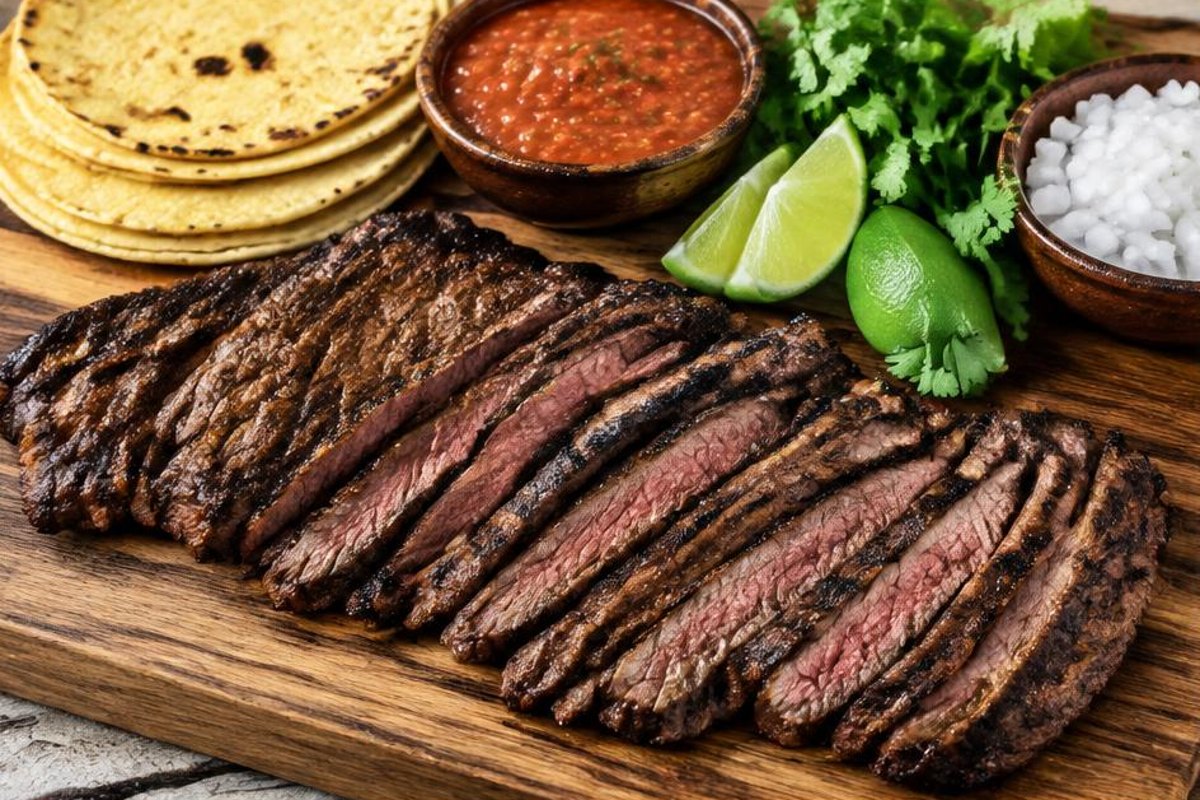
Carne asada is a gathering as much as a recipe
Carne asada translates simply as grilled beef, but the meal often means more than one marinated steak. In Mexico and Mexican communities in the United States, an asada can be a barbecue gathering with grilled meats, seafood, sides, tortillas, salsa, and friends or family gathered around the fire. Northern Mexican grilling traditions are especially associated with the practice, while the exact marinade and preferred cut vary by household and region. The formula below is citrus-forward but not intended to overpower the beef. Skirt steak gives generous surface area for browning and a satisfying grain; flap steak or flank steak can also work. A simple salt-and-pepper version is equally within the broad meaning of grilled beef. This guide gives one marinade route and explains how to keep the meat juicy and slice it tenderly.
Ingredients
Steak and marinade
- 2 lb (900 g) skirt steak, flap steak, or flank steak
- ¼ cup (60 ml) fresh lime juice
- ¼ cup (60 ml) orange juice
- 2 tbsp neutral oil
- 2 tbsp soy sauce or Worcestershire sauce
- 4 garlic cloves, finely minced
- 1 tsp ground cumin
- 1 tsp Mexican oregano, lightly crushed
- ½ tsp black pepper
- 1 tsp kosher salt to start, adjusted for saltiness of sauces
- 1–2 chipotle chiles in adobo, minced, optional
To serve
- 12 small corn tortillas
- 1 white onion, finely diced
- 1 cup chopped cilantro
- 2 limes, cut into wedges
- Salsa roja or salsa verde, sliced radishes, grilled scallions
Choose the cut and understand the grain
Skirt steak is thin and flavorful, with long visible muscle fibers. It cooks quickly, so the margin between charred and overcooked is narrow. Flap steak is also flavorful and can be thicker; flank steak is leaner and broad. Serious Eats favors skirt steak for its surface-area-to-volume ratio and recommends very high heat for a charred exterior and tender interior.
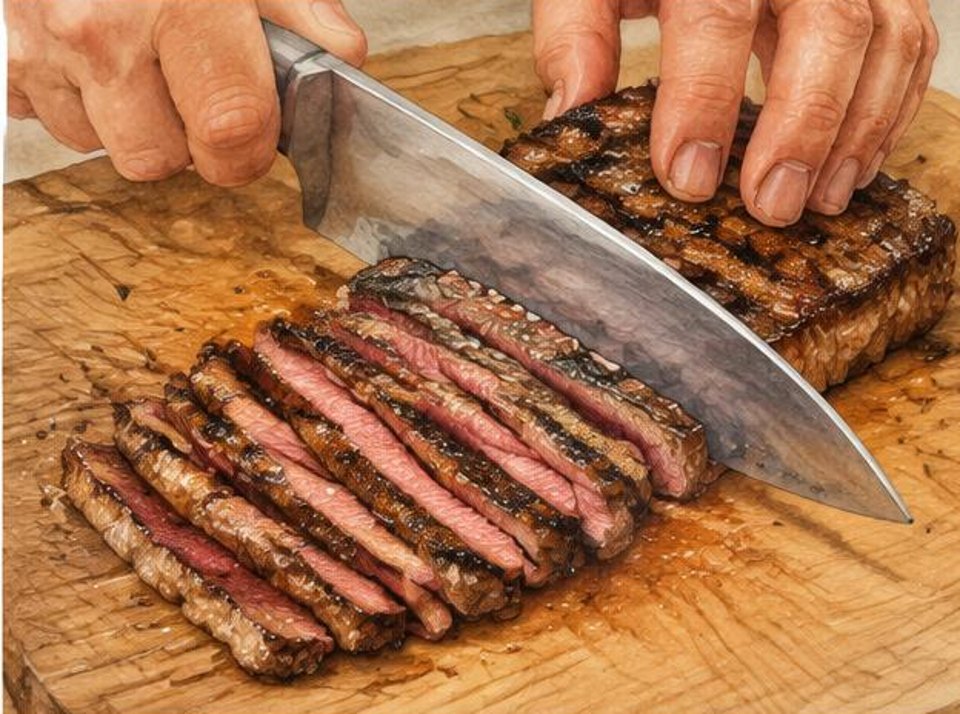
Before marinating, inspect the direction of the fibers. If the steak is especially long, cut it into manageable pieces across the grain for serving later, but keep pieces wide enough to handle on the grill. After cooking, slice thinly across the visible fibers; this shortens muscle strands and makes each bite easier to chew.
Build the marinade without turning it into a cure
Whisk lime juice, orange juice, oil, soy or Worcestershire, garlic, cumin, oregano, black pepper, salt, and optional chipotle. Reserve a few tablespoons before adding raw meat if you want a clean finishing drizzle; never reuse raw-meat marinade without boiling it thoroughly.
Place steak in a shallow nonreactive dish or a sealed food-safe bag and coat evenly. Refrigerate 1–4 hours, turning once. Citrus adds brightness and seasons the surface, but it does not need to sit overnight. Long exposure to acid can make the outside of thin steak mealy. Some cooks prefer a dry rub and add citrus after cooking; a Bon Appétit approach notes that citrus can turn bitter if exposed to fire and instead dresses grilled steak afterward.
About 30 minutes before grilling, remove the meat from the refrigerator. Lift it from the marinade and pat the surface dry. Drying improves browning; wet meat steams before it chars. Discard marinade that touched raw beef.
Prepare the grill and cook fast
Set up a hot two-zone fire if using charcoal: a concentrated bed of coals on one side and a cooler zone on the other. For gas, preheat one side high and leave another side lower. Clean the grates and oil them lightly with a paper towel held in tongs. Charcoal contributes smoke, but a very hot cast-iron pan or grill pan can work indoors.
Lay steak over the hottest zone. Thin skirt steak may need only 2–4 minutes per side; thicker flap or flank cuts take longer. Do not chase an exact time: grill heat, thickness, and starting temperature change the result. Turn when the first side has developed deep brown patches and releases easily. If flare-ups occur, move meat to the cooler zone rather than letting fat burn continuously.
Use an instant-read thermometer in the thickest section. For whole-muscle beef, 145°F (63°C) with a 3-minute rest is the USDA minimum safe recommendation; many diners prefer a lower doneness, but that choice carries greater food-safety risk, especially for vulnerable diners. Follow current local food-safety guidance. Transfer to a board and rest at least 5–10 minutes. Add a squeeze of lime after grilling if desired.
Slice, season, and serve
Find the grain again; it may change direction in different portions of a skirt steak. Cut thin slices perpendicular to the fibers. Taste a slice before adding extra salt; marinades vary in saltiness. Serve as a platter with tortillas, onion, cilantro, lime, and salsa, letting guests build tacos. A carne asada can be served with beans, rice, grilled green onions, and other shared accompaniments.
Warm corn tortillas on a dry skillet or the cooler area of the grill until pliable, turning once. Keep warm in a clean towel. For burritos, slice steak smaller and pair with beans, salsa, guacamole, and modest amounts of cheese so the beef remains noticeable.
Troubleshooting
- Steak is gray rather than charred: The surface was wet, the grill was not hot enough, or the grill was crowded. Pat dry and cook in batches.
- Outside is bitter: Garlic or citrus solids may have burned. Wipe off excess marinade and add fresh lime after cooking instead.
- Meat is chewy: It may be cut with the grain, overcooked, or from a particularly lean/tough section. Slice thinly across the grain and use a shorter cook for thin cuts.
- Flare-ups: Move steak to the cooler zone. Do not pour water onto hot coals or flaming grease.
- Too salty: Reduce salt in the marinade when using soy or Worcestershire, and balance serving portions with unsalted tortillas and fresh salsa.
- Steak tastes only of lime: Shorten the marinating time, dry the meat well, and use less acid relative to the meat.
Make-ahead and leftovers
Prepare the marinade and toppings ahead. Marinate the steak in the refrigerator for up to about 4 hours for this formula. Cooked steak keeps refrigerated in a sealed container for 3–4 days; reheat gently in a hot skillet with a spoonful of water or broth, or use chilled slices in tacos and salads. Do not leave raw or cooked meat at room temperature for extended periods.