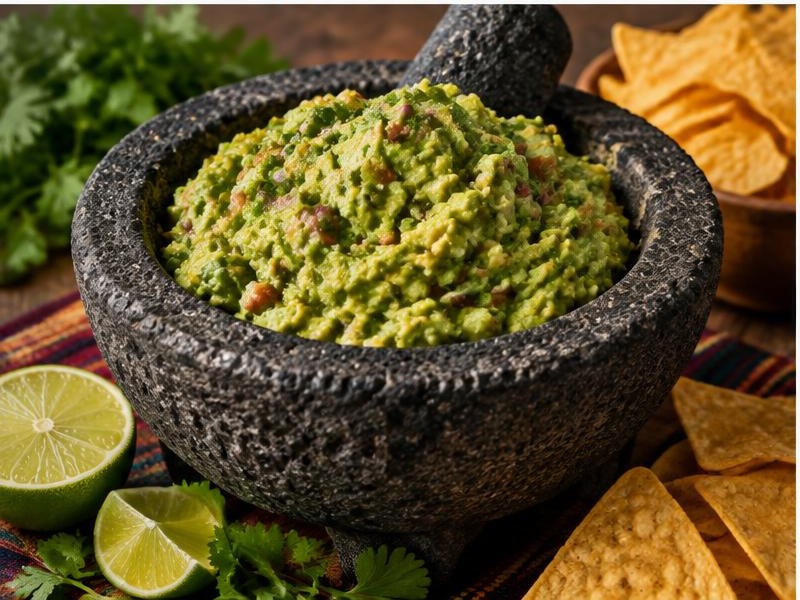
Guacamole looks like a short recipe. It is also a useful lesson in seasoning, texture, ripe produce, and timing. The difference between a memorable bowl and a bland green paste is rarely a secret ingredient. It is usually the avocado’s ripeness, the order in which the aromatics are crushed, how much salt is used, and whether the cook stops mashing while the avocado still has texture.
This guide teaches a dependable molcajete method, a practical bowl-and-fork alternative, how to judge avocados without bruising them, and how to manage browning without believing the avocado-pit myth. The goal is not one rigid “authentic” formula. Guacamole varies between households and regions. The base below is deliberately restrained: avocado, chile, onion, cilantro, lime, and salt. Tomato is an optional variation, not a requirement.
The flavor architecture: rich fruit, salt, acid, heat, herbs
A balanced guacamole has several jobs to do at once. Avocado provides fat and a mild, buttery flavor. Salt makes that flavor more vivid and draws attention to the aromatics. Fresh chile supplies green, vegetal heat. Onion adds sharpness and crunch; cilantro brings a fresh, resinous note. Lime gives lift, but too much can make the dip taste sour and watery.
The sequence matters. Crushing salt with chile and a little onion first turns those ingredients into a concentrated seasoning paste. The rough stone surface of a molcajete tears and crushes rather than merely slicing the aromatics. A food processor can make a smooth paste, but it quickly turns the avocado into purée and adds unnecessary air. A molcajete is traditional and effective, not mandatory. A sturdy bowl and fork can produce excellent guacamole if the aromatics are finely chopped and the cook handles the avocado gently. Serious Eats also emphasizes mashing aromatics before the avocado and preserving a chunky texture in its guacamole method and technique notes.
Ingredients: a calibrated base for four snack portions
- 3 ripe Hass avocados, approximately 600–700 g whole
- 1 small serrano chile, finely chopped; use half for mild heat or 2 for hot guacamole
- 30 g finely minced white onion, plus more to taste
- 10 g fresh cilantro leaves and tender stems, finely chopped
- ¾ teaspoon fine salt to start, then adjust; coarse salt is useful in a molcajete
- 1 tablespoon fresh lime juice, plus more only if needed
- Optional: 1 small firm tomato, seeded, drained, and diced
These are starting ratios, not a test of authenticity. Avocados vary in size and salt crystals vary in density. Season in stages, taste with a tortilla chip if that is how you intend to serve the dip, and remember that the chip contributes salt. If serving guacamole alongside tacos, keep it slightly brighter and less salty than if it will be eaten with unsalted vegetables.
Choosing and checking avocados
A ripe Hass avocado yields to a gentle palm press with slight, even softness. It should not feel hollow, collapse under a light touch, or have deep bruises. Color alone is unreliable: Hass skins darken as they ripen, but a dark peel does not guarantee good flesh. If the small stem cap comes away easily and the area beneath is green, that is a useful clue, but not a guarantee. Avoid repeatedly pressing the same fruit with fingertips; pressure points bruise the flesh beneath the skin.
If the avocados are firm, let them ripen at room temperature. A paper bag can trap naturally released ethylene and may speed ripening; check daily. Once ripe, refrigeration slows further softening. Do not try to force a hard avocado into readiness by microwaving it. Heat softens tissue but does not create the balanced flavor and creamy texture of natural ripening.
Choosing a chile
Serranos are usually hotter and more direct than jalapeños, though individual peppers vary. Taste a tiny piece before deciding how much to use. Removing seeds does not reliably remove most heat because much of the capsaicin is concentrated in the pale inner membranes, and heat is distributed unevenly. For a mild bowl, use a small amount of chile and add more after tasting. Handle chiles with clean hands, avoid touching eyes, and wash the knife and board after cutting.
Before the recipe: use the molcajete correctly
A traditional molcajete is a porous volcanic-stone mortar with a rounded pestle called a tejolote. A new one may release grit unless it has been properly cured. Follow the maker’s instructions; commonly, curing involves grinding uncooked rice or another abrasive grain repeatedly, discarding it, and rinsing until the ground material is clean. Do not use soap on an unsealed porous stone unless the manufacturer specifically recommends it; soap can linger in the pores. Dry the molcajete thoroughly between uses.
If you do not own one, use a medium bowl and the back of a fork. The method is still sound: make the chile-onion-salt base first, then fold and lightly mash the avocado. The objective is controlled texture, not possession of a particular tool.
Step-by-step: chunky molcajete guacamole
1. Make the aromatic paste
Add the salt and chopped serrano to the molcajete. Grind with short, firm circular strokes until the chile becomes a coarse green paste. Add about one tablespoon of the minced onion and crush it into the chile. The paste should smell strongly of fresh chile and onion, with no large hard pieces of salt. If your molcajete is small, do this in batches rather than overcrowding it.
For the bowl-and-fork method, sprinkle the salt over the chopped chile and onion and mash them against the side of the bowl for 30–45 seconds. This will not be identical to stone grinding, but it disperses the salt and chile flavor throughout the dip.
2. Add avocado in stages
Halve the avocados lengthwise, remove the pits safely, and scoop the flesh into the molcajete. Use a spoon to make broad, deliberate presses with the pestle. Start with three or four presses, then inspect the texture. The target is a mix of creamy avocado and distinct pieces, not a perfectly smooth emulsion. If the molcajete is shallow, mash only part of the avocado and fold in the remaining pieces with a spoon.
A common failure is to pound continuously. Avocado has no structural need to be pulverized; overworking it releases more water and creates a gluey, uniform dip. Stop earlier than you think, then use the spoon to finish.
3. Add lime, cilantro, and remaining onion
Squeeze in one tablespoon of lime juice and fold gently from the bottom. Add the remaining onion and cilantro. Taste a small spoonful. The first taste should be creamy and savory, followed by fresh chile and herb, with lime present but not dominant. Add salt in small pinches if the flavor seems flat. Add lime a teaspoon at a time if it tastes heavy or dull.
Lime is not a substitute for salt. If the guacamole tastes muted, adding more acid can make it sour without fixing the underlying seasoning. Correct salt first, then assess the acid.
4. Decide whether tomato belongs
Tomato is a welcome variation when it is ripe, flavorful, and not watery. Remove the core and seeds, dice the flesh, and blot excess juice. Fold it in at the end. Adding tomato early and crushing it releases liquid, diluting the avocado and making the texture loose. If tomatoes are bland or out of season, leave them out. The dish does not need them to be complete.
5. Serve promptly
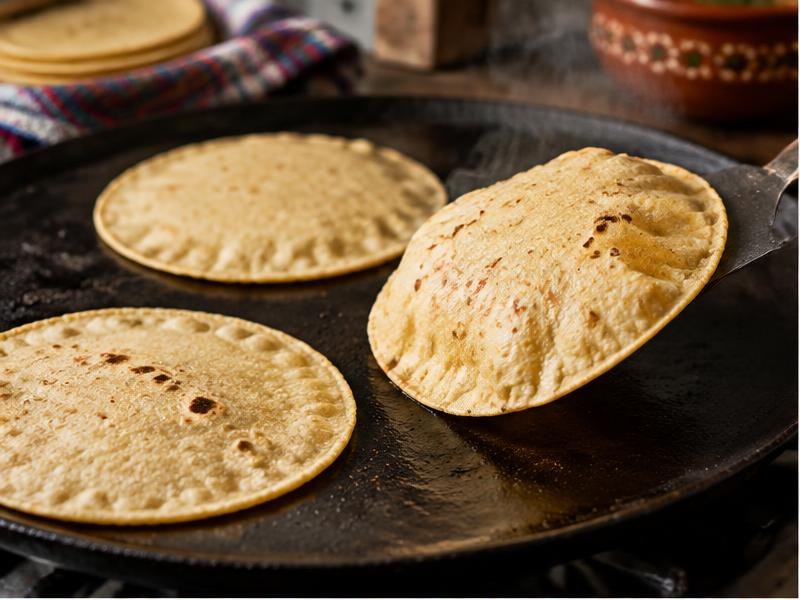
Spoon the guacamole into a serving bowl or serve directly from the molcajete. Add a few cilantro leaves, a fine scattering of onion, or a small drizzle of lime only if it improves the bowl. Serve with warm tortilla chips, fresh corn tortillas, tacos, or grilled meat. With tacos al pastor, keep the guacamole simple so it complements the adobo and pineapple instead of competing with them.
How to keep guacamole green, and what actually works
Avocado browns when cut flesh is exposed to oxygen. This is enzymatic browning, not spoilage by itself. Lime can slow the visible reaction because acidity helps, but it does not stop it permanently. The pit does not protect the whole bowl; the patch under the pit stays greener mainly because it is physically shielded from air.
For short storage, transfer the guacamole to a small container, press it into an even layer, and smooth the surface. Press food-safe plastic wrap directly against the surface or use a tight-fitting lid, minimizing trapped air. Refrigerate promptly. A thin layer of water is sometimes suggested as a barrier, but it can create a watery surface and is not necessary when direct contact and an airtight container work. Stir before serving and discard if it has been left out too long or shows signs of spoilage.
For the freshest color and flavor, prepare the chile-onion base in advance, but cut and mash the avocados close to serving. If you need to make the finished dip ahead, add lime, reduce air exposure, and keep it cold. Expect some color change at the surface even with careful storage. A thin brown layer can often be scraped off if the guacamole has been safely refrigerated and otherwise seems normal; color alone is not a reliable safety test.
Troubleshooting: diagnose before adding ingredients
It tastes bland
First check salt. Add a pinch, fold, and taste again with the food you plan to serve. Then add a small amount of lime or chile if needed. Blandness can also come from underripe or flavorless avocados; seasoning cannot fully repair fruit that is hard, watery, or rancid.
It is too sour
Fold in more avocado if available. A little more salt can rebalance the perception, but do not add sugar as a default fix. Sugar masks rather than corrects an over-acidified dip.
It is too salty
Add more avocado, or fold in a small amount of unsalted tomato if tomato suits the version. A large quantity of lime will not remove salt; it only changes the balance. Taste before adding more salt, especially when serving salty chips.
It is too hot
Add more avocado and cilantro, or serve with unsalted vegetables and tortillas. Dairy can cool the palate but changes the character of the guacamole. Do not expect removing visible chile pieces after mixing to remove heat already dispersed through the dip.
It is watery
Likely causes are overripe watery fruit, excess lime, or tomato juice. Drain diced tomato, add lime gradually, and mash less. If the bowl is already loose, fold in another avocado or serve it as a taco sauce rather than trying to thicken it with breadcrumbs.
It is stringy or bitter
This often comes from overripe or poorly stored avocado, or from bruised flesh near the stem. Remove dark, fibrous areas before mashing. If the whole fruit smells fermented, rancid, or unpleasant, discard it.
Serving ideas and useful pairings
Guacamole is both a dip and a condiment. For a casual platter, serve it with sturdy, freshly fried tortilla chips and crisp vegetables. For tacos, use a modest spoonful so the filling remains legible. It works particularly well with grilled beef, pork cooked with chile adobo, eggs, and beans. Pair it with carne asada for a bright counterpoint to char and beef fat, or set it alongside the Mexican pantry guide when stocking dried chiles, masa, and salts for a broader meal.
Frequently asked questions
Is guacamole traditionally made with garlic or cumin?
Some households use garlic or other seasonings, and personal versions are legitimate. The restrained base in this guide does not need either. Cumin can dominate fresh avocado, and raw garlic can overpower a delicate chile-onion balance. Add them only if you specifically enjoy their flavor.
Can I make guacamole without lime?
Yes. Lime is a common and useful seasoning, but it is not the only way to make a balanced bowl. Use less, or omit it, if the avocados are already lively and you prefer the fruit’s flavor. Taste and season with salt, chile, onion, and cilantro.
Can I use a blender?
A blender is usually the wrong tool for chunky guacamole. It shears the avocado quickly and can turn it into a smooth paste. If you want a smooth avocado salsa, blend it intentionally with lime, chile, and a little water; that is a different texture and a perfectly useful preparation.
Does leaving the pit in prevent browning?
No. It only shields the small area directly underneath it. Reduce air contact across the entire surface and refrigerate the dip instead.
How long does guacamole keep?
It is best freshly made. For quality, aim to use it the same day. If you store it, cover the surface directly and refrigerate promptly. Food safety depends on time and temperature, not just appearance; do not leave perishable dip at room temperature for extended periods.
The practical standard
Good guacamole is not defined by a long ingredient list. Choose ripe fruit, grind the aromatics first, use salt deliberately, add acid in moderation, and stop mashing while pieces remain. Those habits produce a bowl that tastes unmistakably of avocado, but never flat or heavy.