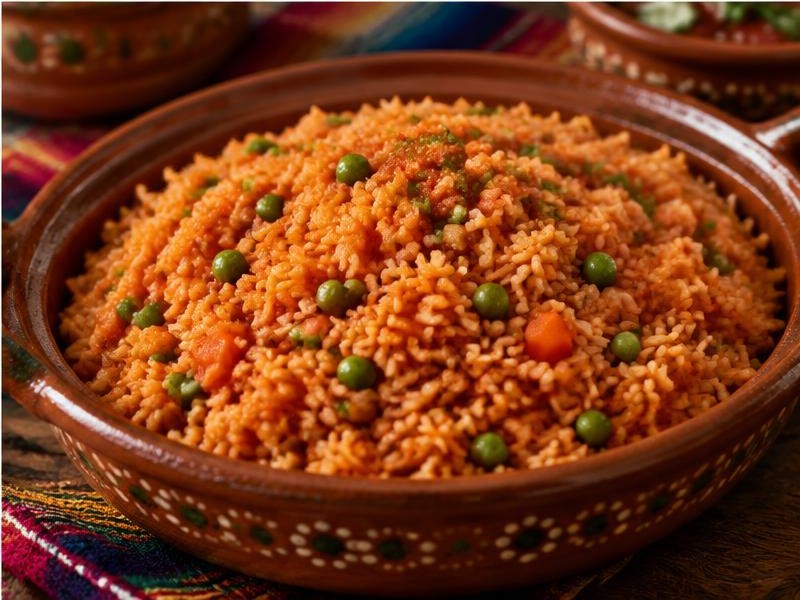
Arroz Rojo is the foundational heartbeat of the Mexican comida corrida and family table, yet it is one of the most frequently botched side dishes in home cooking. Too often, home versions emerge from the pot as a gummy, tomato-tinted porridge, or conversely, as scorched grains surrounding a hard, chalky center.
The difference between a clumped, sticky starch paste and separate, tender grains infused with savory tomato-garlic richness is not luck or seasoning packets. It is an understanding of starch behavior: how surface amylose creates gumminess, how oil-toasting encapsulates individual grains, and how tomato solids alter liquid absorption. Once these three physical variables are controlled, producing restaurant-quality Arroz Rojo becomes completely dependable.
The Chemistry of Why Mexican Rice Fails
Cooking rice in plain water is straightforward because water moves freely between grains. Cooking rice in a purée of fresh tomatoes, onions, and garlic introduces thick plant solids, natural sugars, and fruit acids that dramatically alter heat transfer and fluid dynamics.
Three distinct physical phenomena dictate the texture of Arroz Rojo:
- Surface Amylose and Starch Gelatinization: Rice kernels are packed with two primary starch molecules: linear amylose and branched amylopectin. As raw rice is milled, broken starch dust settles on the exterior of the grains. If this loose surface starch meets hot liquid directly, it absorbs water at roughly 65–70°C (149–158°F), swells, bursts, and forms a viscous, gelatinous slurry that binds the grains together into a sticky mass. Rinsing the raw rice until the water runs clear strips away this excess exterior starch.
- The Maillard Toasting Step (Dorado): In traditional Mexican kitchens, raw rice is never boiled directly. Instead, dried, rinsed grains are fried in hot lard or oil until they turn chalky white, then pale golden-blonde. This step does two things simultaneously. First, high dry-heat roasting partially dextrinizes the surface starches, altering their structure so they absorb water more slowly and retain their physical boundaries. Second, the hot fat coats each individual grain with a lipid barrier, preventing neighboring grains from fusing together during the subsequent simmer.
- Tomato Solids and the Burn Horizon: Tomato purée is dense with insoluble pectin and natural fructose. If raw tomato purée is dumped into simmering water with rice, the heavy solids sink to the bottom of the vessel, forming an insulating sludge against the pan floor. Without adequate fluid circulation, this tomato sludge burns and chars long before the rice grains have absorbed their required water. The purée must be fried in the hot oil (sofrito) until its water evaporates and its acid mellows, then diluted with piping-hot chicken broth before the lid is sealed.
The Formula and Metric Ratios
This master recipe yields 6 generous servings as a table side dish. For the most consistent results, weigh ingredients on a digital kitchen scale rather than using volume cups, which vary based on how tightly rice and chopped aromatics settle.
Ingredients
The Grain & Fat Base
- 300 g long-grain white rice (standard enriched long-grain or Mexican Sierra grain; avoid sticky short-grain or sushi rice)
- 45 g neutral high-smoke oil or fresh rendered pork lard (about 3 tablespoons)
The Fresh Tomato-Allium Purée
- 250 g ripe Roma (plum) tomatoes (about 2 medium-to-large tomatoes), cored and roughly chopped
- 75 g white onion (about ½ small onion), chopped
- 15 g fresh garlic cloves (3 to 4 plump cloves), peeled
- 60 g water (¼ cup) to help the blender blades catch
The Liquid & Aromatics
- 480 g low-sodium chicken broth or vegetable stock, heated to a simmer
- 6 g fine sea salt (about 1 level teaspoon, adjusted if using salted stock)
- 1 g ground cumin, optional (a subtle pinch, roughly ¼ teaspoon; authentic Mexican homes use it sparingly or omit it entirely)
- 1 fresh serrano or jalapeño pepper, left whole with the stem intact
- 3 fresh cilantro sprigs, tied in a bundle, optional
- 75 g frozen or fresh diced carrots and peas, optional
Total liquid volume must equal approximately 520–540 g of fluid once the tomato purée cooks down. A common mistake is measuring 2 cups of broth on top of a full cup of watery tomato purée; that excess moisture is the primary reason home Mexican rice turns mushy.
Step-by-Step Culinary Protocol
Step 1: Rinse and Dry the Grains
Place the raw rice in a fine-mesh sieve set inside a large bowl. Cover with cold tap water and gently swirl the grains with your fingers. The water will turn cloudy and milky with dislodged surface starch. Lift the sieve, discard the cloudy water, and repeat this process 3 to 4 times until the water remains clear.
Shake the sieve vigorously to shed clinging water, then spread the rice across a wide tray or clean kitchen towel for 10 to 15 minutes. Frying dripping-wet rice lowers oil temperature drastically, causing the grains to steam and crack rather than fry.
Step 2: Blend the Aromatics
Combine the chopped Roma tomatoes, white onion, garlic, and 60 g of water in a blender. Purée on high speed for 60 to 90 seconds until silky smooth. Strain the purée through a medium sieve if your blender leaves visible tomato skin fragments; a completely smooth purée coats the grains evenly without creating rough red flecks.
Step 3: Toast the Rice (Dorar el Arroz)
Heat the oil or lard in a wide, heavy-bottomed Dutch oven, cast-iron braiser, or deep skillet (26–28 cm diameter) over medium heat until it shimmers. Add the well-drained rice.
At first, the rice will clump slightly as residual surface moisture releases. Stir continuously with a wooden spoon or heatproof silicone spatula, gently scraping the pan floor. Within 4 to 6 minutes, the grains will separate and make a distinct dry, rustling sound against the pan walls—like dry gravel or pebbles.
Continue frying for another 3 to 5 minutes until the grains transition from translucent to an opaque chalky white, then to a gentle, nutty, pale golden-amber hue. Do not walk away; once toasted, rice can scorch within seconds.
Step 4: Fry the Tomato Purée (Sellar el Jitomate)
Pour the blended tomato-garlic purée directly into the hot rice. The pan will hiss violently and release a cloud of aromatic steam. Stir immediately to combine.
Cook the mixture uncovered over medium-high heat, stirring frequently, for 2 to 3 minutes. Watch the purée transform: it will bubble vigorously, reduce in volume, and darken from pale pinkish-red to a deep, savory brick-orange. Frying the tomato purée cooks out raw fruit acidity and concentrates the sugars, ensuring the finished rice tastes rich and mellow rather than sour.
Step 5: Incorporate Hot Broth and Seal
Pour in the 480 g of simmering chicken broth, salt, and cumin (if using). Stir gently once to incorporate the salt and distribute the grains evenly across the bottom of the pot. Do not stir vigorously after this point; agitating hot rice breaks grain walls and releases internal starch.
Tuck the whole serrano pepper and cilantro sprigs (and diced vegetables, if using) directly into the surface of the liquid. The whole pepper gently perfumes the broth with capsaicin aroma without bursting heat into the grains.
Bring the liquid to a rolling, vigorous boil across the entire surface of the pot.
Step 6: The Hermetic Simmer
As soon as the surface is boiling uniformly, reduce the heat to the lowest possible setting. Cover the pot with a heavy, tight-fitting lid. If your lid has a steam vent or fits loosely, place a sheet of aluminum foil or a clean kitchen towel between the pot and the lid before sealing to trap all escaping steam.
Simmer undisturbed on low heat for exactly 18 minutes. Do not lift the lid. Every time the lid is removed, steam pressure drops, pan temperature plummets by 15–20°C, and the delicate moisture balance is broken.
Step 7: The Essential Off-Heat Steam Rest
After 18 minutes, slide the pot completely off the heat burner. Keep the lid sealed and let the pot rest undisturbed for 12 to 15 minutes.
During this rest period, residual thermal mass in the heavy pot finishes cooking the centers of the grains, while surface moisture redistributes evenly from the bottom to the top of the rice bed. As the grains cool slightly below 60°C (140°F), exterior starches undergo mild retrogradation, firming the grain walls so they do not crush when fluffed.
Remove the lid, discard the cilantro bundle and serrano pepper, and fluff the rice gently from the edges inward using a wide metal fork or rice paddle. Serve warm.
Troubleshooting Common Failures
The rice is mushy, wet, and clumped together.
Causes: Too much liquid, insufficient grain rinsing, or excessive stirring while simmering.
Correction: Always wash off exterior starch dust and let the grains dry before frying. Ensure your tomato purée is properly cooked down before adding broth. Never stir rice while it simmers; stirring ruptures fragile starch granules.
The rice is burnt or scorched on the bottom, but hard on top.
Causes: Heat was too high during the covered simmer, the lid was loose (allowing steam to escape), or the tomato purée was not cooked down and settled to the pan floor.
Correction: Use a heavy-bottomed vessel that distributes heat evenly. Use the lowest burner flame possible during the covered stage. If using a thin pan, place a heat diffuser plate over the burner.
The centers of the grains are chalky and undercooked.
Causes: Broth added cold instead of boiling, or the lid was lifted prematurely.
Correction: Always add boiling broth to hot rice. If you discover undercooked grains after the rest, sprinkle 2 tablespoons (30 g) of boiling water over the surface, seal tightly, and return to very low heat for 5 minutes, followed by an additional 5-minute rest.
The rice tastes acidic or tinny.
Causes: Raw tomato purée was not fried in the oil long enough, or canned tomato sauce was used without reduction.
Correction: Sauté the tomato purée in the toasted rice until its liquid evaporates and the color deepens to brick-red before pouring in the broth.
Storage, Freezing, and Reheating
- Refrigeration: Cool leftover Arroz Rojo rapidly by spreading it across a wide sheet pan. Transfer to an airtight container and refrigerate within 2 hours. Properly stored, it keeps safely for up to 4 days.
- Reheating on the Stovetop: Place rice in a skillet, sprinkle with 1–2 tablespoons of water or chicken broth per cup of rice, cover tightly with a lid, and warm over medium-low heat for 4 to 5 minutes. The trapped steam re-hydrates the starch without making it greasy.
- Freezing: Arroz Rojo freezes exceptionally well. Portion cooled rice into freezer-safe bags, press flat, and freeze for up to 3 months. Reheat directly from frozen in the microwave with a damp paper towel draped over the bowl.
How to Pair Arroz Rojo on Faithful Food Online
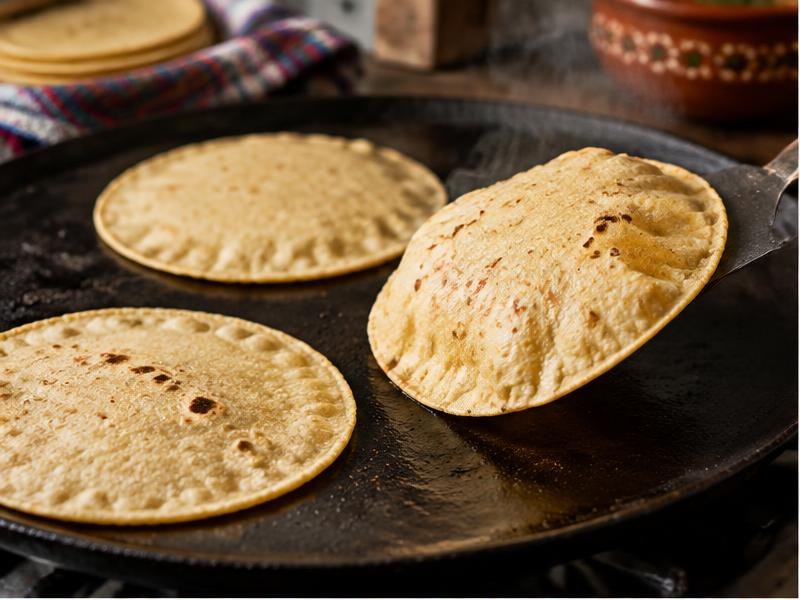
Arroz Rojo is the universal companion plate across regional Mexican gastronomy. Plate it alongside our slow-cooked Michoacán carnitas masterclass with pickled red onions, ladle it next to rich salsa verde enchiladas, or serve it with freshly pressed homemade corn tortillas and seared flank steak carne asada.