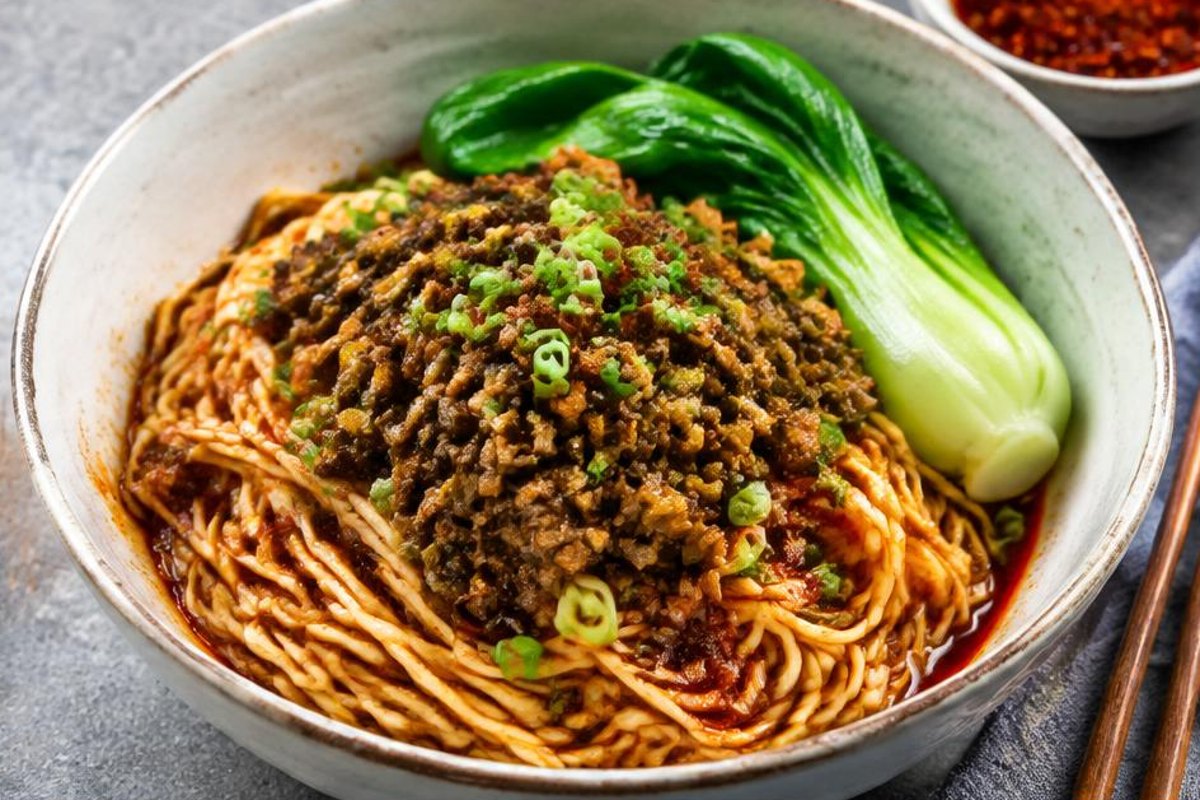
A bowl meant to be mixed
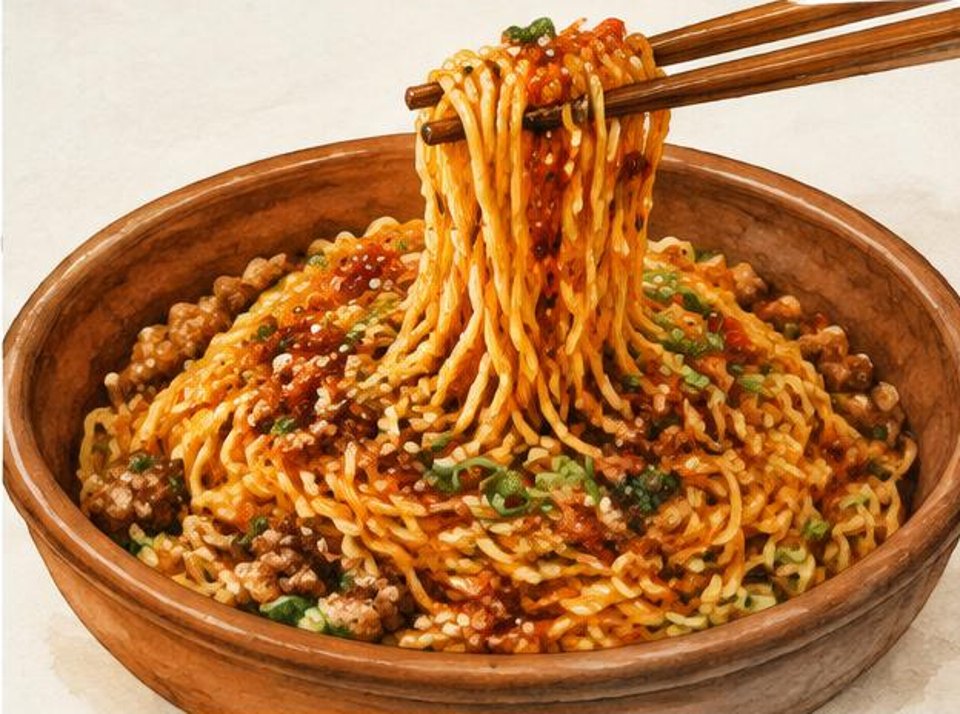
Dan dan noodles, or dandanmian (担担面), are associated with Sichuan street-food culture. The name refers to the carrying pole traditionally used by vendors to transport their cooking equipment and ingredients. Versions differ: some are dry-tossed, with a concentrated sauce clinging to noodles; some restaurant versions include more broth. Many home recipes assemble four components: noodles and greens, seasoned pork, a sesame-chile sauce, and preserved mustard greens called ya cai or related preserved vegetables. 1 2 3
This is a home-friendly, mostly dry version. Its success depends on contrast: savory pork, fragrant chile oil, a little sourness, the tingle of Sichuan pepper, and springy wheat noodles. The noodles should be tossed with sauce at the table; serving sauce as a separate puddle leaves the seasoning uneven.
Ingredients
Pork topping
- 8 oz (225 g) ground pork
- 1 tbsp neutral oil
- 1 tbsp Shaoxing wine or dry sherry
- 1 tbsp light soy sauce
- 1 tsp dark soy sauce, optional for color
- ½ cup finely chopped ya cai (Sichuan preserved mustard greens), rinsed if very salty
- 1 tsp sugar, optional
Sauce per bowl
- 2 tbsp Chinese sesame paste (or well-stirred tahini plus 1 tsp sesame oil)
- 1 tbsp light soy sauce
- 1 tbsp Chinkiang black vinegar
- 1–2 tbsp Sichuan chile oil, to taste
- ¼ tsp ground roasted Sichuan peppercorns, more to taste
- 1 small garlic clove, finely grated
- 1 tsp sugar, optional
- 2–4 tbsp hot noodle water to loosen
Noodles and garnish
- 12 oz (340 g) fresh thin wheat noodles, or dried wheat noodles for four
- 4 baby bok choy or 2 cups spinach
- 2 scallions, sliced
- 2 tbsp roasted peanuts, crushed, optional
Ingredient guide: what is essential and what can flex
Ya cai: This fermented, preserved vegetable contributes salty, savory depth and a distinctive Sichuan character. It is sold in packets or jars at Chinese groceries. Rinse only if it tastes aggressively salty, then squeeze dry and chop finely. A substitute such as finely chopped preserved mustard stem or another salted mustard green can give a related savory note, though not exactly the same flavor. Several recipe sources identify ya cai as a defining part of the topping and sauce architecture. 1 2
Sichuan chile oil: A fragrant chile oil is more useful here than plain hot oil. Start with a moderate quantity and increase after tasting. Sichuan peppercorn: Toast briefly in a dry pan until aromatic, cool, then grind. The tingling sensation is distinct from chile heat, so use a small amount first. Sesame paste: Chinese sesame paste is often darker and more roasted than tahini. If substituting, loosen tahini with a little toasted sesame oil; expect a slightly different flavor.
Noodles: Thin wheat noodles are common in dan dan preparations; recipes vary in width. Fresh noodles cook quickly and cling well. The Epicurious recipe based on Cecilia Chiang calls for extra-thin wheat noodles and describes zha cai as a salty preserved vegetable in its sauce. 4
Step 1: Crisp the pork and season the greens
Heat a wok or skillet over medium-high. Add neutral oil and pork. Break the meat into small crumbles and let it sear before stirring constantly; browned edges add flavor. When most pink has disappeared, add Shaoxing wine, soy sauces, and ya cai. Cook 3–5 minutes, stirring, until the pork is browned and the mixture is relatively dry. Taste before adding sugar or salt; preserved greens and soy already contribute salt. Transfer to a plate.
If ya cai is not available, finely chop preserved mustard greens, rinse if needed, and fry them with the pork. Do not substitute fresh cabbage; the preserved, fermented character is part of the flavor profile.
Step 2: Mix a balanced sauce
For each serving, combine sesame paste, soy, vinegar, chile oil, Sichuan pepper, garlic, and optional sugar in a bowl. Add 2 tablespoons hot noodle water and whisk until smooth. It should be pourable but still cling to a spoon. Sesame paste thickens when it meets water before loosening; add liquid gradually and whisk through the thick stage rather than assuming it has split.
Taste and adjust in small steps:
- Too rich or salty: add a few drops more vinegar or noodle water.
- Too sharp: add a pinch of sugar or a little more sesame paste.
- Too mild: add chile oil and Sichuan pepper a little at a time.
- Too thick: use hot noodle water, not cold water, to loosen.
Step 3: Cook noodles and greens
Bring a large pot of water to a boil. Cook noodles according to their package, stopping when springy and just tender. Fresh noodles may take only a few minutes. In the final 30–60 seconds, add bok choy or spinach until just wilted. Reserve at least 1 cup noodle water before draining. Avoid rinsing unless the package specifically calls for it; surface starch helps sauce adhere.
Step 4: Assemble and toss
Divide sauce among warm bowls. Add noodles and greens, then top with pork, scallions, and peanuts if using. At the table, toss vigorously until each strand is coated and the pork is distributed. If the sauce tightens, add noodle water one tablespoon at a time. The goal is a glossy coating, not a bowl of soup. A noodle bowl tradition of mixing the components at service is highlighted by America's Test Kitchen. 3
Troubleshooting
- Sauce is pasty: Add hot noodle water gradually and whisk. Sesame paste is concentrated; it needs dilution.
- Dish tastes only hot: Add vinegar for brightness, sesame paste for body, and a little soy for savory depth. Chile heat should not erase the other notes.
- Noodles clump: Cook in ample water, stir early, and toss with sauce promptly. Save noodle water to loosen the bowl.
- Pork is wet rather than crisp: Pan was crowded or heat too low. Brown in a broad pan and cook off liquid before adding preserved greens.
- Too salty: Rinse ya cai lightly, reduce soy, and increase plain noodles and greens. Do not add more sugar as the sole correction.
- No numbing sensation: Use freshly toasted Sichuan peppercorns; old ground pepper loses aroma quickly.
Make-ahead and variations
Cook the pork topping up to 3 days ahead and refrigerate. Mix sauce ingredients without noodle water; loosen just before serving. Cook noodles at the last minute. For a vegetarian bowl, replace pork with finely chopped shiitake mushrooms or crumbled firm tofu, browning until concentrated; keep ya cai for savory depth. For a brothier version, add a small ladle of hot stock to each bowl, understanding that the dry-tossed style has a more concentrated coating.
Use a clean utensil for each condiment and refrigerate opened preserved greens as directed on the package. Adjust chile oil for diners rather than making the base sauce overwhelmingly hot. Dan dan noodles are best assembled right before eating because noodles continue absorbing sauce.