Chinese culinary civilization spans thousands of years, formally categorized into the Eight Great Cuisines (Ba Da Cai Xi): Shandong, Sichuan, Cantonese, Jiangsu, Zhejiang, Fujian, Hunan, and Anhui. While their geographic terrains and spice tolerances diverge dramatically, home cooking across all regions adheres to a shared scientific framework of seasoning, heat management, and enzymatic preservation.
1. The Holy Trinity of Aromatics (San Da Jiang)
In Chinese cookery, aromatics are sliced to match the physical dimension of the primary protein or vegetable, and they are added at precise heat thresholds:
- Scallions (Green Onions / Cong):
- Scallion Whites: Contain firm fibers and concentrated allicin. Sliced into rounds, batons, or crushed; added to warm oil at the start to perfume the cooking fat.
- Scallion Greens: Delicate and moisture-rich. Added during the final 30 seconds of cooking or used as raw garnish to provide a crisp, grassy counterpoint.
- Fresh Ginger (Sheng Jiang):
- Contains gingerol, a potent anti-oxidant that neutralizes gamey protein odors (qu xing). Sliced into flat coins for slow braises, finely julienned for flash-steamed fish, or minced for dumpling fillings.
- Garlic (Da Suan):
- High in sugar and prone to burning. Gently smashed to split the skin and release volatile oils into medium-heat oil; never browned past golden straw color in stir-fries, which introduces harsh bitterness.
2. The Liquid Seasoning Hierarchy
Understanding Chinese seasonings requires distinguishing between salt sources, color agents, acids, and cooking wines.
A. Soy Sauces: Light vs. Dark
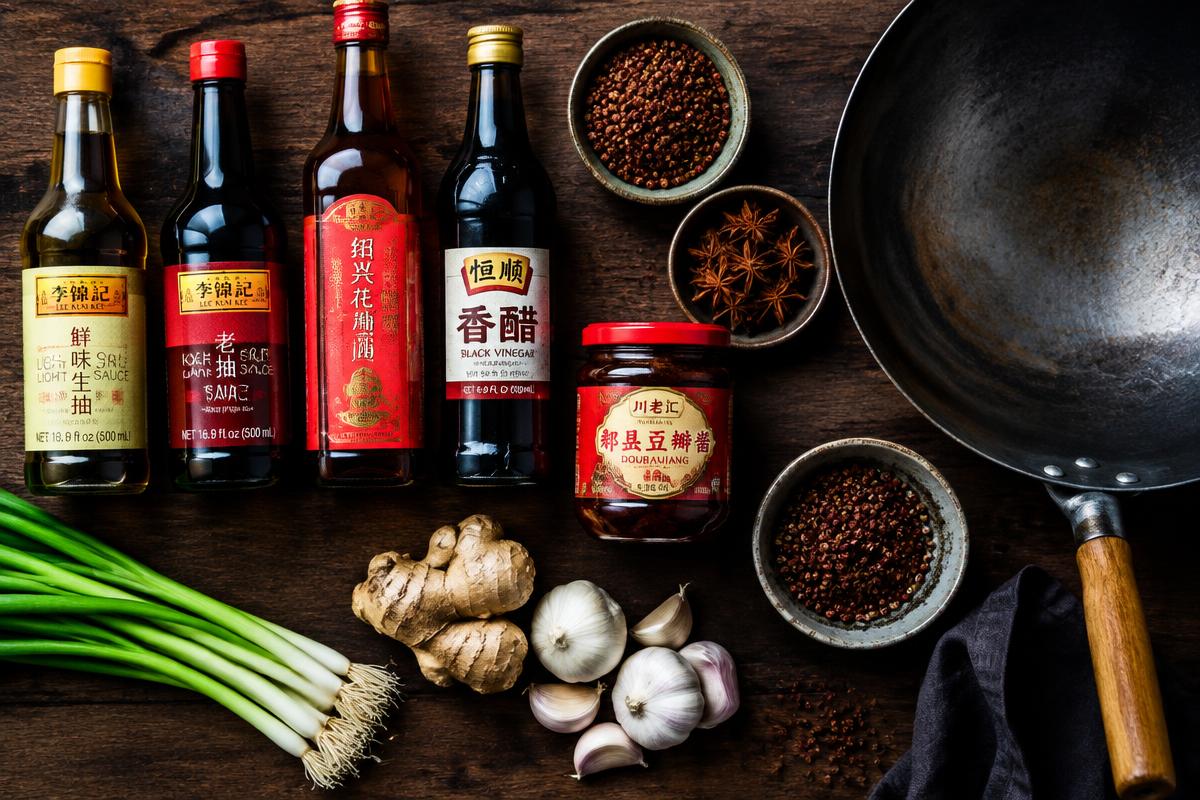
- Light Soy Sauce (Sheng Chou): Fermented from soybeans and roasted wheat over several months. Thin, translucent, amber-brown, and intensely savory with high sodium content (approx. 1,000mg sodium per tbsp). Used for foundational seasoning, marinades, and dipping sauces.
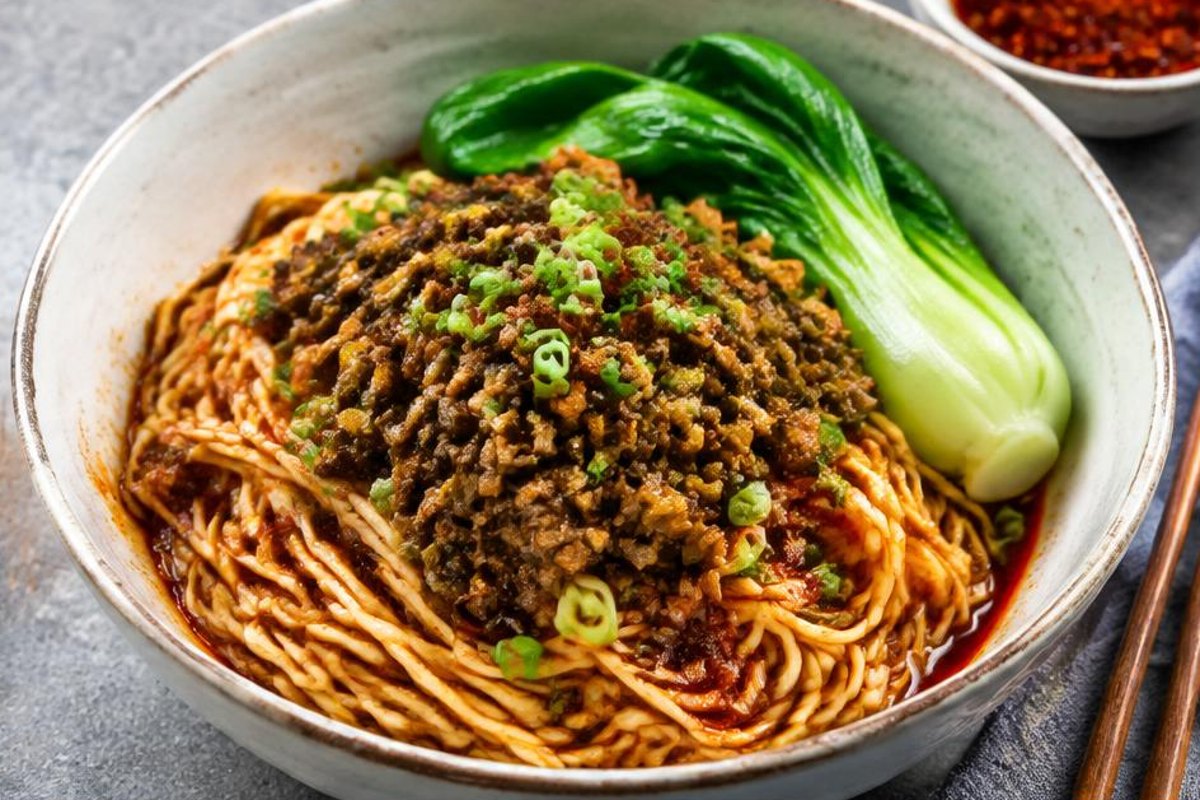
- Dark Soy Sauce (Lao Chou): Aged significantly longer and enriched with caramel molasses. Thick, viscous, opaque black, with a slightly sweet, malty finish and lower perceived saltiness. Its primary culinary purpose is visual: providing the deep, glossy mahogany lacquer seen in red-braised pork (Hong Shao Rou) and soy sauce noodles.
B. Shaoxing Rice Wine (Shaoxing Jiu)
Originating from the historic city of Shaoxing in Zhejiang province, this traditional fermented glutinous rice wine is aged in earthenware jars for years. It contains alcohol (14–18% ABV), complex amino acids, and lactic acid.
- Culinary Function: When splashed into the perimeter of a blistering-hot wok, the alcohol flash-evaporates, carrying off volatile sulfur compounds and fishy/gamey amines from meats while leaving behind a rich, nutty, caramelized bouquet.
C. Chinkiang Black Rice Vinegar (Zhenjiang Xiang Cu)
Aged for minimum 6 to 12 months in Jiangsu province, this vinegar is brewed from glutinous rice, wheat, and rice husks.
- Flavor Profile: Unlike sharp white distilled vinegar or fruity Western cider vinegars, Chinkiang vinegar is dark, malty, complex, and gently smoky with mild acidity (approx. 5.5%). Indispensable for dipping soup dumplings (Xiao Long Bao) and cutting the fat of braised meats.
D. Pure Toasted Sesame Oil (Zhi Ma You)
Cold-pressed from dark toasted sesame seeds. The intense roasting process creates aromatic pyrazines.
- The Golden Rule: Never use toasted sesame oil as a high-heat cooking oil. Extreme heat destroys its delicate volatile aromatics and creates a bitter taste. It is an aromatic finishing agent—drizzled off the heat immediately before plating.
3. Fermented Umami Pastes
Chinese cuisine mastered microbial fermentation centuries before modern biochemistry:
- Pixian Doubanjiang: The "soul of Sichuan cuisine." Made in Pixian County from fermented broad beans (fava beans), fresh erjingtiao chilies, wheat flour, and salt, aged in open-air earthenware vats for 1 to 3 years. It provides salty, fermented umami, deep rustic red color, and gentle funk to Mapo Tofu and Twice-Cooked Pork. Always fry doubanjiang in warm oil for 60 seconds until the oil turns bright ruby-red before adding other ingredients.
- Douchi (Fermented Black Soybeans): Whole soybeans fermented with Aspergillus oryzae molds, salted, and aged. Imparts intense savory pops in steamed spareribs and Cantonese black bean sauces.
4. The Technique of "Velveting" (Shang Jiang)
The secret to the impossibly tender, silky texture of meat in Chinese restaurants is an enzymatic and starch barrier technique:
- Slice Across the Grain: Cut chicken, beef, or pork thinly perpendicular to muscle fibers.
- The Marinade Matrix: Toss meat with a splash of Shaoxing wine, light soy sauce, a pinch of baking soda (which raises meat surface pH, preventing muscle fibers from contracting tightly when heated), and a beaten egg white.
- The Starch Seal: Massage in cornstarch (creates a protective gelatinous sheath that traps natural meat juices).
- The Oil/Water Pass: Flash-cook meat for 30–45 seconds in warm oil (approx. 275°F / 135°C) or simmering water until barely opaque, then remove before completing the stir-fry.