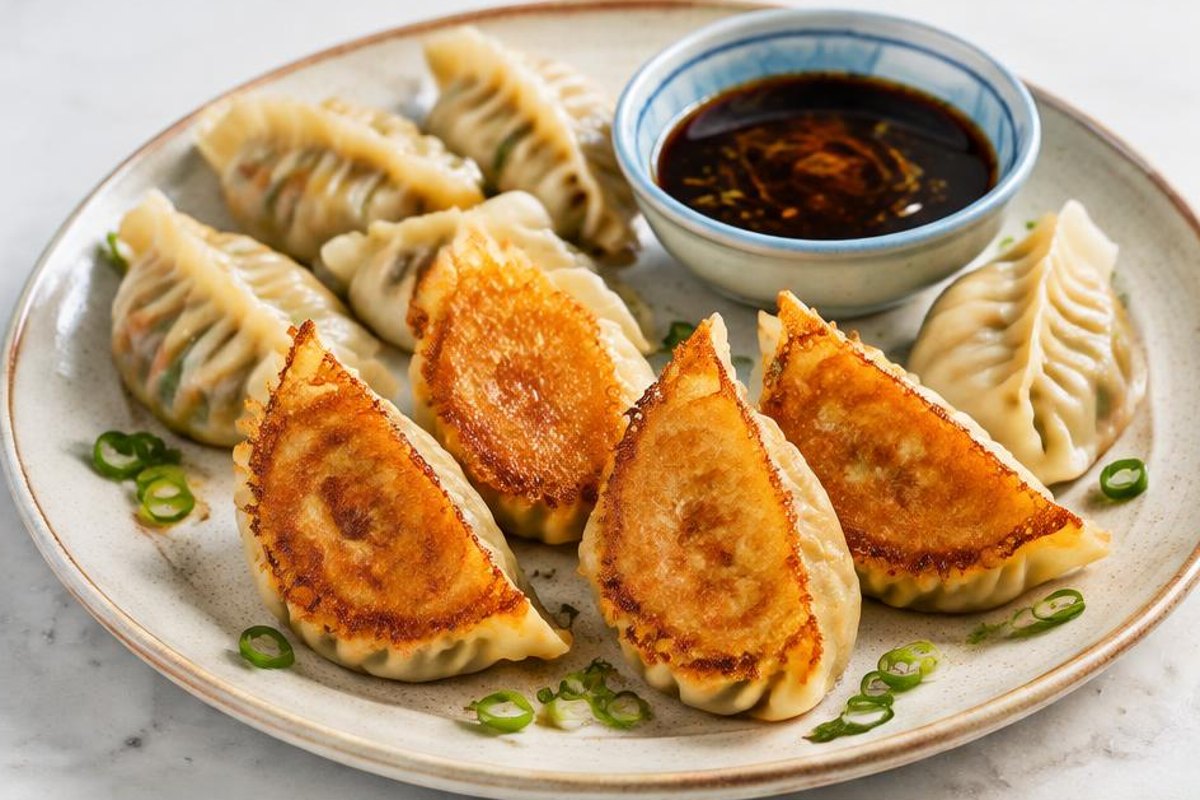
Guotie technique
Guotie (鍋貼) are pan-fried Chinese dumplings. Their signature is a browned underside with a tender, steamed top, achieved by frying, adding water and covering, then uncovering to crisp again. The popular story that potstickers were invented by accident in an imperial kitchen is a legend, not a securely documented origin. 1 2
This version uses store-bought wrappers for convenience. The crucial details are a cohesive but juicy filling, dry cabbage, well-sealed seams, and a covered steam stage. A guotie method published by China Daily also salts and squeezes cabbage before mixing it with seasoned pork. 2
Ingredients
Filling
- 1 lb (450 g) ground pork, ideally 20–25% fat
- 10 oz (280 g) napa cabbage, finely chopped
- 1 tsp fine salt, divided
- 3 scallions, sliced; 1 tbsp grated ginger
- 1 tbsp light soy sauce; 1 tbsp Shaoxing wine or dry sherry
- 1 tsp toasted sesame oil; ¼ tsp white pepper
- ¼ cup (60 ml) cold water or unsalted stock; 1 tsp cornstarch
To cook and serve
- 32–36 round dumpling wrappers, about 3 inches wide
- 2 tbsp neutral oil; ½ cup (120 ml) water
- Dip: 3 tbsp Chinese black vinegar or rice vinegar, 1 tbsp soy sauce, sliced ginger, optional chili oil
Filling and folding
Salt the cabbage with ½ teaspoon salt and leave in a colander for 15 minutes. Squeeze firmly in a clean towel. Removing excess liquid helps prevent a wet filling from leaking through wrappers.
Combine pork, remaining salt, scallions, ginger, soy, wine, sesame oil, pepper, and cornstarch. Stir in one direction for about a minute, until tacky. Gradually add cold water or stock, mixing after each addition until absorbed. Fold in cabbage and chill 20 minutes.
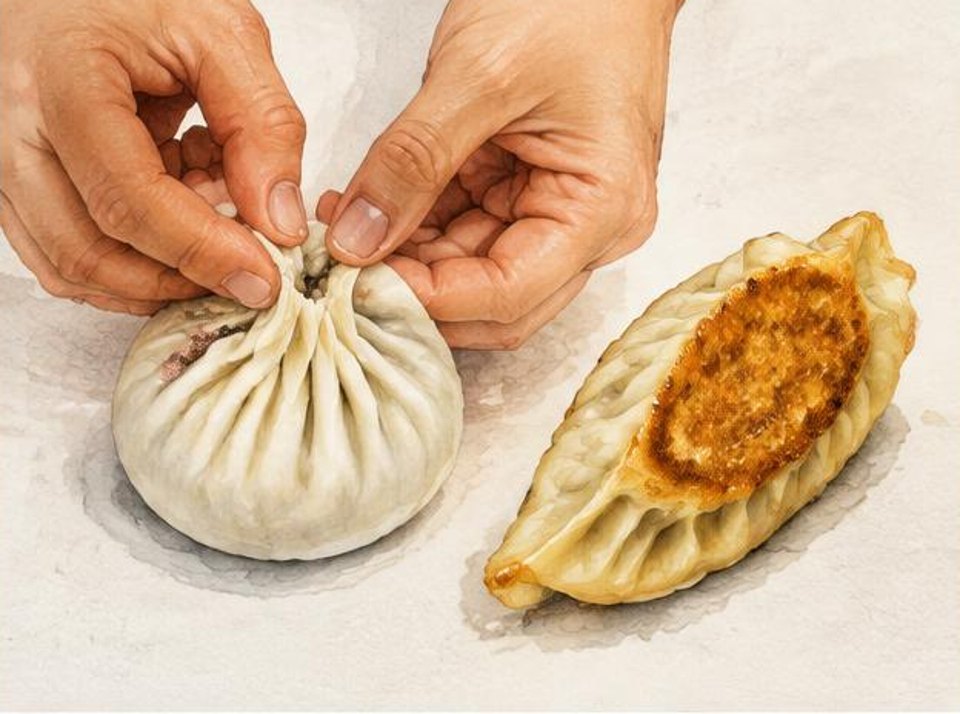
Keep wrappers covered with a barely damp towel. Put about 1 tablespoon filling in the center of a wrapper, leaving a clear border. Moisten half the rim with water, fold into a half-moon, press the center closed, then pleat one side toward the other. A simple flat seal is fine; the essential thing is a tight edge without filling trapped in it or a large air pocket. Place on a lightly floured tray without touching.
Optional hot-water dough: Mix 2 cups (250 g) all-purpose flour with about ¾ cup (180 ml) just-boiled water, added gradually while stirring with chopsticks. When cool enough, knead 8–10 minutes until smooth; cover and rest 30 minutes. Roll into a rope, cut into pieces, and roll each into a 3-inch round, keeping the center slightly thicker than the edge. Hot-water dough is a recognized dumpling technique because boiling water changes dough elasticity. 1
Pan-fry, steam, crisp
- Use a 10–12-inch nonstick or well-seasoned skillet with a tight lid. Heat 1 tablespoon oil over medium.
- Arrange 10–12 dumplings flat-side down, leaving a little space. Fry 2–3 minutes until the bases turn pale gold. Let them set before moving.
- Carefully add ⅓ cup water; it will hiss. Cover immediately and steam 5–7 minutes, depending on wrapper thickness and whether dumplings are chilled. Keep the lid closed to cook the pork through.
- Uncover when water is nearly gone. Add a teaspoon of oil around the edge if dry. Cook 1–2 minutes until bottoms are deep golden and release with a thin spatula.
- Check a thick dumpling: the filling must be steaming hot and fully cooked. Ground pork should reach 160°F (71°C). Transfer crisp-side up and repeat, wiping out burnt starch as needed.
For a lacy starch skirt, whisk 1 teaspoon cornstarch into ⅓ cup cold water and add around dumplings at the steam stage. After evaporation, starch forms a crisp lace. This is easier with a nonstick pan; loosen the skirt before inverting.
Mix the dip ingredients and serve immediately with cucumber or scallions. Potstickers are best fresh, when their bottoms remain crisp and tops tender.
Dough and filling: how to calibrate
A good filling should be seasoned enough to taste pleasant on its own without overwhelming the delicate wrapper. Fry a teaspoon of the raw mixture in a small pan, taste it, and adjust soy or salt before folding the whole batch. The pork filling in some guotie traditions is stirred with seasoning and liquid until it becomes cohesive; this mixing helps distribute moisture, while the cabbage is handled separately to control water. 2
Wrapper size determines how much filling fits. For a 3-inch wrapper, one level tablespoon is a useful starting amount; if you cannot seal without stretching, reduce the filling. Press the seam firmly, especially near the ends. A dumpling should rest flat-side down without leaning or opening. Keep formed dumplings covered loosely and cook them within about an hour, or freeze them promptly.
Pan and heat calibration
A heavy skillet stores heat and browns more evenly than a thin pan. Nonstick is forgiving for beginners; seasoned carbon steel or cast iron can produce excellent browning, but needs enough oil and a confident release. The water quantity is a starting point, not a rigid rule: a broad pan evaporates more quickly than a narrow one, and a thick homemade wrapper needs more steam time than a thin commercial wrapper.
Listen during the covered stage. The initial hiss is expected. When the loud bubbling quiets and changes to a finer frying sound, the water is nearly gone. Lift the lid away from your face because hot steam escapes. If water remains, keep cooking covered briefly. If it has disappeared but the filling is not cooked, add a few tablespoons more water and cover again rather than simply raising the heat and burning the bottoms.
Food-safety and batch workflow
Raw pork filling and wrappers should be kept cold while you work. Wash hands and surfaces after handling raw meat, and do not return cooked dumplings to the raw-filling plate. If making several batches, keep formed dumplings on a tray in the refrigerator while the first pan cooks. Cooked ground pork should reach 160°F (71°C); a thermometer is especially useful when dumplings are large or frozen. Freeze extras uncooked in a single layer so they do not stick together, then bag once solid.
Troubleshooting and storage
- Stuck to pan: Add a tablespoon water, cover briefly, and loosen gently once steam softens the crust.
- Wrapper split: Use less filling; keep unused wrappers covered and leave space between dumplings.
- Burned base, raw center: Lower heat and add water earlier; a thin pan may have hot spots.
- Watery filling: Salt and squeeze cabbage, and add liquid to the pork gradually.
- Soft bottoms: The pan may be crowded or the steam stage too long. Uncover fully and allow water to evaporate before crisping.
Freeze uncooked dumplings on a tray until solid, then store in a sealed bag. Cook from frozen, adding a few minutes to covered steaming and checking the center is fully cooked. Do not thaw on the counter.