A Cantonese dish with a global life
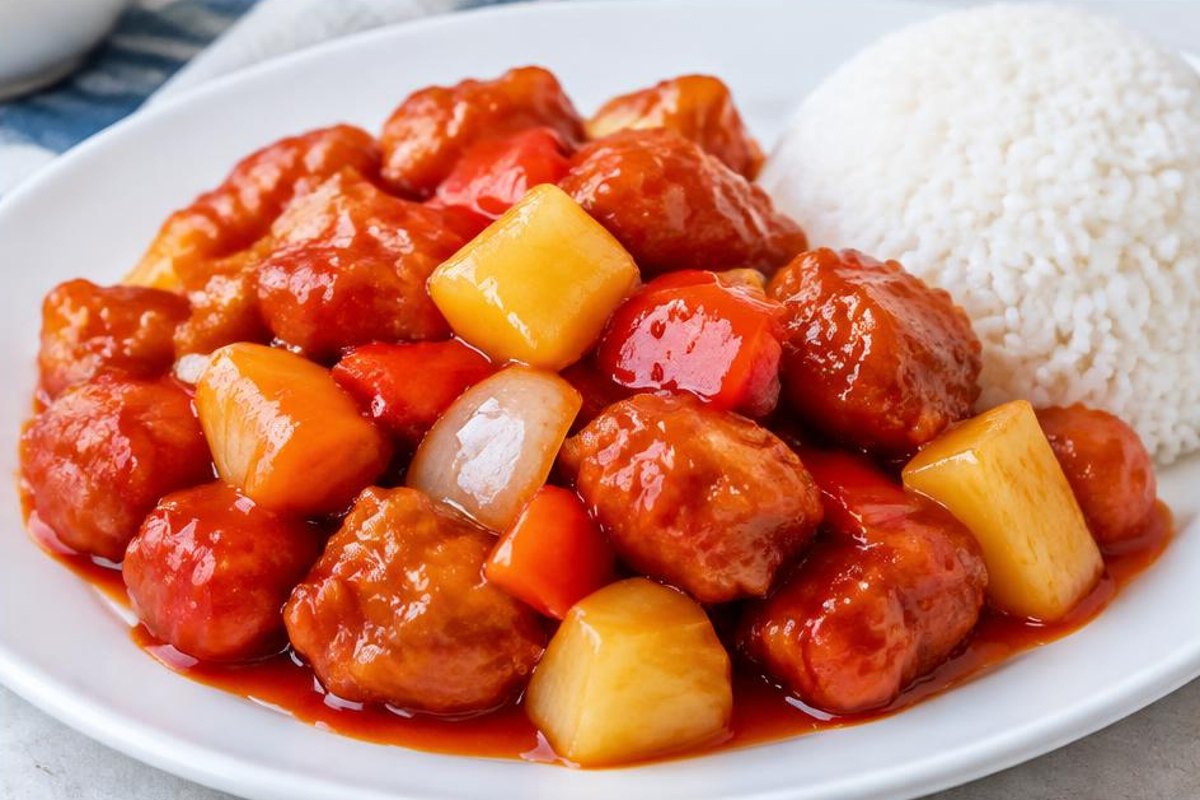
Sweet-and-sour flavors appear in many Chinese cooking traditions, but the pork-and-pineapple dish familiar in many Western Chinese restaurants is associated with Cantonese gu lou yuk (咕咾肉). Its history is connected to Guangdong and the spread of Cantonese cooking abroad; versions differ in meat cut, batter, sauce, and fruit. It should not be collapsed into other regional sweet-sour pork dishes with different cuts and coatings. The Guardian discusses the Cantonese roots and global evolution of the familiar version. 1
This recipe aims for crisp pork that stays crisp briefly after saucing, bright sweet-sour flavor, and vegetables that still have bite. The most dependable home technique is to fry the pork in batches, let it rest, then fry again. Serious Eats describes double-frying as a route to a crisp exterior, while a 2025 recipe also uses a baking-soda marinade to keep the pork tender. 2
Ingredients
Pork and coating
- 1 lb (450 g) pork tenderloin or boneless shoulder, cut into ¾-inch cubes
- 1 egg, lightly beaten
- 1 tbsp Shaoxing wine
- ½ tsp fine salt
- ¼ tsp baking soda
- ½ cup (65 g) cornstarch
- ½ cup (65 g) all-purpose flour
- ½ tsp baking powder
- Neutral oil for frying, about 1½ inches deep
Sauce and stir-fry
- ½ cup (120 ml) pineapple juice
- 3 tbsp rice vinegar or distilled white vinegar
- 3 tbsp ketchup
- 3 tbsp brown sugar, adjust to taste
- 1 tbsp soy sauce
- 1 tbsp cornstarch mixed with 2 tbsp cold water
- 1 tbsp neutral oil
- 1 cup pineapple chunks, fresh or canned, drained
- 1 red bell pepper, cut into ¾-inch pieces
- ½ small onion, cut into bite-size pieces
Prepare the pork without over-tenderizing
Cut pork into even cubes so they cook at the same rate. Combine with egg, Shaoxing wine, salt, and baking soda. Mix to coat and refrigerate 20–30 minutes. Baking soda raises surface pH and can improve tenderness, but excess or prolonged use can leave a soapy taste and soft texture. Measure accurately and do not extend the rest unnecessarily.
Whisk cornstarch, flour, and baking powder together. Sprinkle over the pork in several additions, tossing to coat evenly. The coating should look dry and cling to each piece; if it forms wet clumps, separate the pieces and dust lightly with a little more starch mixture.
Fry for a crisp crust
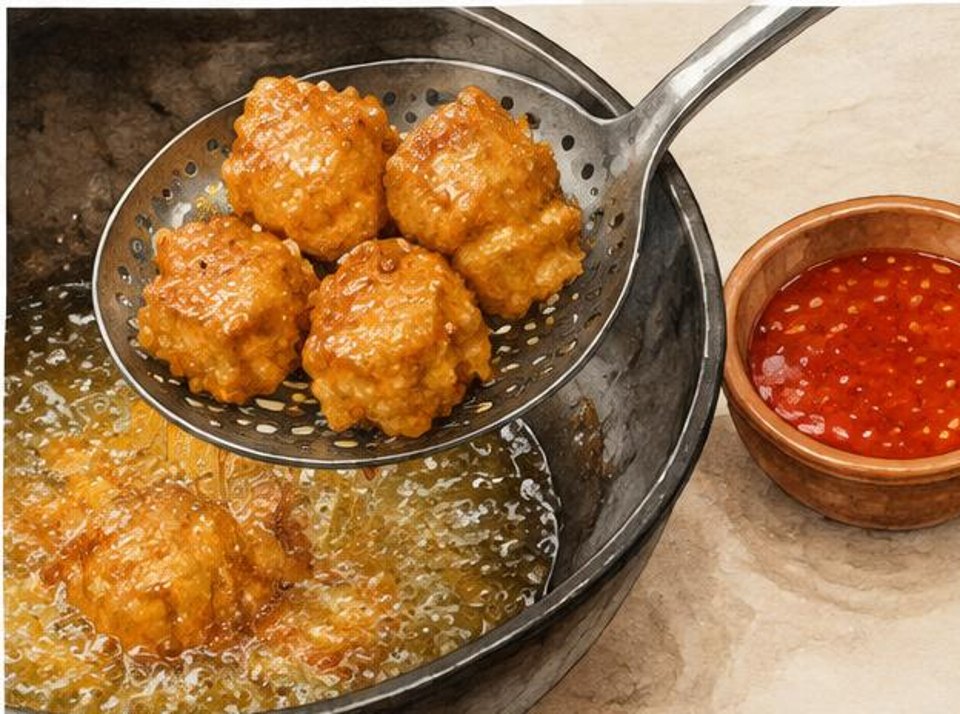
Heat oil in a wok or heavy Dutch oven to 350°F (175°C). Fry pork in batches, keeping oil between about 325–350°F (163–175°C). Do not overcrowd; too much cold pork lowers the oil temperature and makes the crust greasy. Fry each batch 3–4 minutes, until lightly golden and cooked through, then transfer to a rack. Let rest about 10 minutes. A two-stage fry is used in recipes to set the coating and then restore crispness. 2
Return the pork to hot oil for a second fry of 1–2 minutes until deeper golden. Work in batches. Check the thickest piece with a thermometer; pork should reach at least 145°F (63°C) with a 3-minute rest according to USDA guidance for whole cuts. If the meat is cubed and treated as a mixed preparation, check local food-safety guidance and ensure it is fully cooked. Drain on a rack, not directly on a flat plate, which traps steam.
Make the sauce and keep vegetables crisp-tender
Whisk pineapple juice, vinegar, ketchup, sugar, soy, and the cornstarch slurry in a bowl. Taste the uncooked mixture cautiously for balance; final heat will soften the sharpness. Heat a wok over medium-high and add 1 tablespoon oil. Stir-fry onion and bell pepper 1–2 minutes; they should brighten and retain some crunch. Add pineapple and toss briefly.
Pour in sauce and stir until it boils and turns glossy. It should coat the back of a spoon without becoming gummy. If too thick, add water or pineapple juice one tablespoon at a time. If too thin, simmer a little longer; do not pour dry cornstarch directly into the hot wok, as it can clump.
Toss just before serving
Add crisp pork and toss quickly to coat. Serve immediately, ideally with steamed rice. For maximum crispness, serve sauce on the side or spoon it over the pork at the table. The coating will soften as it sits in sauce, so do not hold it covered for a long time.
Troubleshooting
- Pork coating falls off: Surface was wet or pieces were crowded. Pat dry before marinating, coat in stages, and fry in batches.
- Crust is greasy: Oil temperature dropped too low. Use a thermometer and allow oil to recover between batches.
- Pork is tough: Cut may be too lean or overcooked. Keep cubes uniform, monitor temperature, and do not exceed the baking-soda rest.
- Crust softens immediately: Sauce sat on pork too long or was too thin. Reduce sauce to a glaze and toss only at serving.
- Sauce tastes cloying: Increase vinegar gradually, then add a little soy. Avoid adding lots of extra ketchup, which can make it sweeter.
- Sauce is lumpy: Cornstarch was not mixed into cold liquid first or added too quickly. Whisk a fresh slurry and stir it into simmering sauce gradually.
- Vegetables are limp: Stir-fry them briefly before sauce; they continue cooking once combined.
Serving, storage, and safer workflow
Serve with rice and a simple green vegetable. Store leftover pork and sauce separately when possible. Refrigerate promptly; reheat the pork in an oven or air fryer to restore some crispness, then warm sauce separately and combine. Deep-frying requires care: use a stable pot, do not fill it more than halfway, keep water away from hot oil, and never leave the pan unattended. If the oil smokes, turn off the heat and let it cool safely.