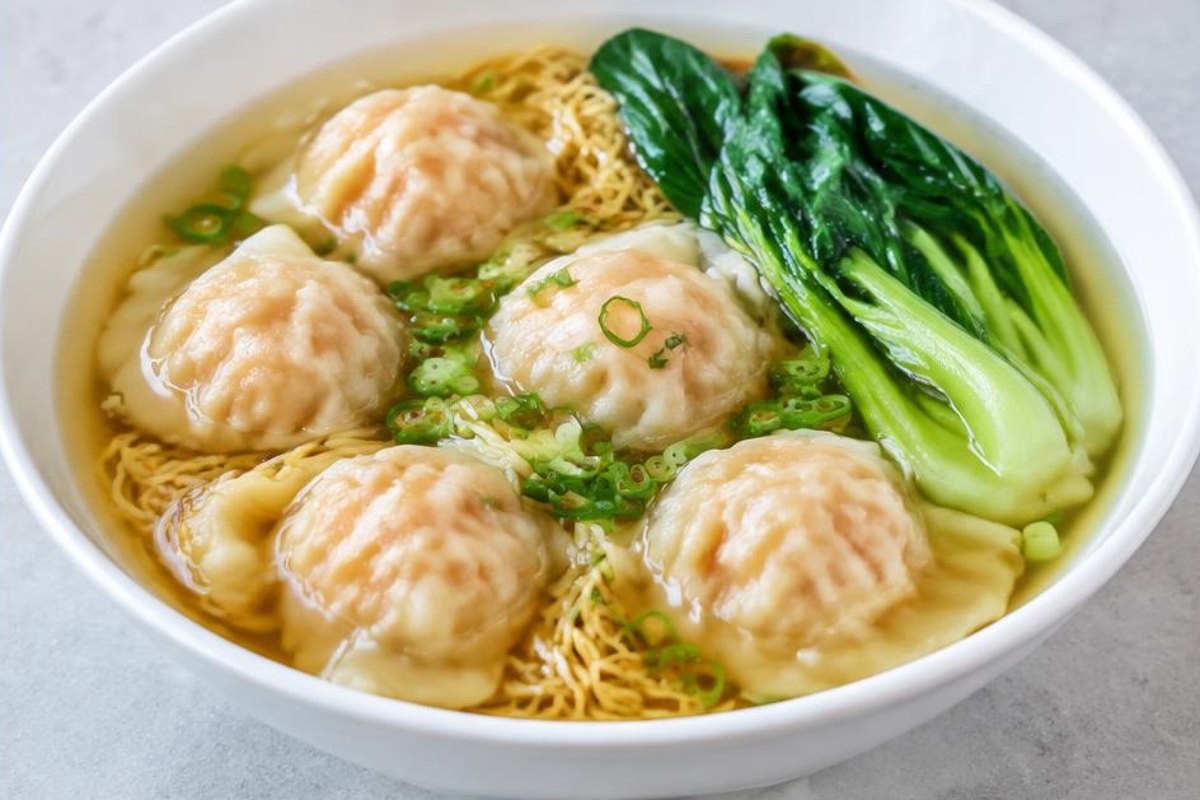
Three separate elements make the bowl
Cantonese wonton noodle soup is not just dumplings dropped into any broth. A satisfying bowl balances clear, savory stock, thin springy egg noodles, and small wontons with a delicate wrapper and a concentrated shrimp filling. Hong Kong-style examples often include dried flounder or shrimp elements in broth and filling, while restaurant methods vary. A South China Morning Post feature on a Hong Kong shop describes thin wrappers, shrimp-centered filling, dried flounder, and broth built from pork bones and seafood ingredients. 1
This home version offers a practical chicken-pork broth with an optional dried flounder boost, plus shrimp-and-pork wontons. A good store-bought low-sodium chicken broth can shorten the project. The soup is assembled at the last minute so the noodles do not swell and the wonton skins do not become waterlogged.
Ingredients
Broth
- 2 lb (900 g) chicken wings or backs
- 1 small piece ginger, sliced
- 2 scallions, cut into lengths
- 10 cups (2.4 L) cold water
- 1 tsp salt, then adjust
- Optional: 1 small piece dried flounder, toasted briefly, or 1 tsp dried flounder powder
- Optional shortcut: 6 cups unsalted chicken broth plus 2 cups water
Wonton filling
- 8 oz (225 g) raw shrimp, peeled, deveined, and finely chopped
- 6 oz (170 g) ground pork, preferably not ultra-lean
- 1 scallion, finely sliced
- 1 tsp grated ginger
- 1 tsp light soy sauce
- 1 tsp Shaoxing wine
- ½ tsp sesame oil
- ¼ tsp white pepper
- 1 tsp cornstarch
- 24–28 square wonton wrappers, about 3 inches wide
Noodles and garnish
- 12 oz (340 g) fresh thin wonton egg noodles
- 2 baby bok choy, leaves separated
- 1 scallion, thinly sliced
- Optional: a few drops sesame oil, white pepper, or red vinegar
Make a clean, light broth
Place chicken wings or backs in a stockpot and cover with cold water. Bring slowly toward a boil, skimming foam from the surface. Lower to a gentle simmer, add ginger and scallions, and cook uncovered or partially covered 1½–2 hours. Avoid a vigorous boil, which breaks fat and particles into the liquid and makes the broth cloudy. Strain through a fine sieve and season lightly; remember the wontons and noodles also carry salt.
For a more characteristic seafood savor, toast dried flounder in a dry skillet just until fragrant, then simmer it with the broth for about 20–30 minutes before straining. Dried flounder is optional and can be hard to source; a home recipe using it notes that omitting it makes a less full-bodied broth, while warning against substituting heavily seasoned fish powders. 2
Cool leftover broth promptly in shallow containers and refrigerate. For a fast version, combine good-quality unsalted chicken broth with water and ginger, simmer 20 minutes, then strain. The result will be simpler but still provides a clean base.
Make a bouncy shrimp-pork filling
Chop shrimp by hand into small pieces; do not purée. Combine with pork, scallion, ginger, soy, wine, sesame oil, white pepper, and cornstarch. Stir briskly in one direction for 1–2 minutes until the mixture looks cohesive and tacky. A feature on a Hong Kong wonton shop describes vigorous mixing to develop a springy texture in the shrimp filling. 1
Cover and refrigerate 15–20 minutes. Keep the filling cold while shaping. It should hold together when scooped but not feel rubbery. Overmixing can produce a dense texture; stop once the proteins bind the mixture.
Fold small wontons without overfilling
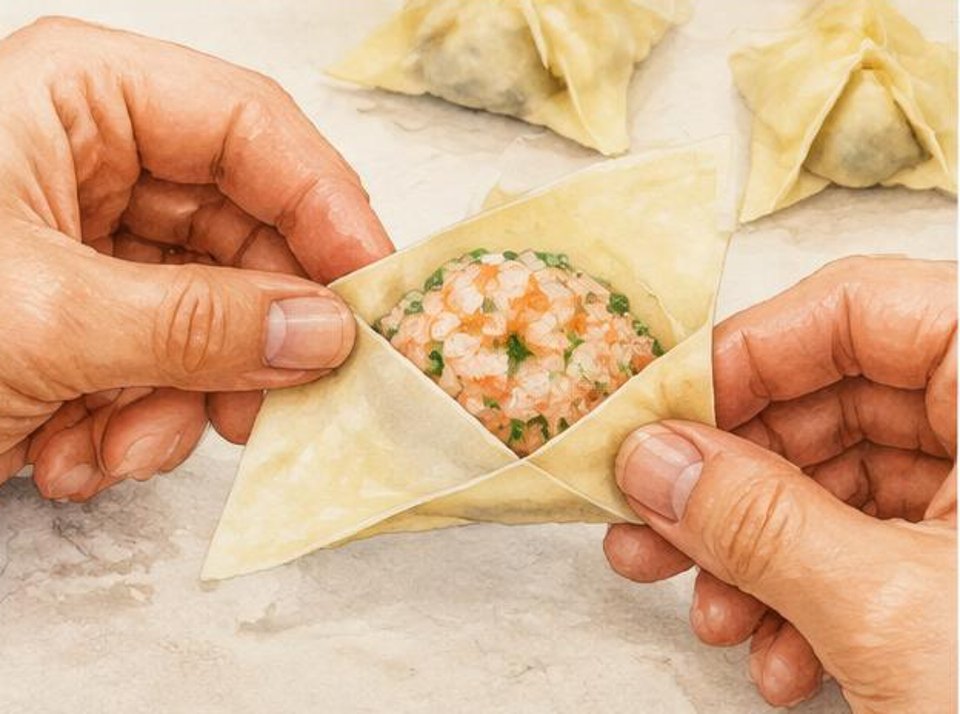
Place a wrapper like a diamond. Put a scant teaspoon of filling in the center. Moisten two adjacent edges lightly with water. Fold the wrapper in half to form a triangle and press around the filling to remove air. Bring the two outer corners together beneath or around the filling and press to seal. There are many accepted folds; the priorities are a secure seam and a small amount of filling relative to wrapper.
Place shaped wontons on a lightly floured tray, not touching. Cover with a towel. If making ahead, freeze on the tray until firm, then transfer to a freezer bag. Cook from frozen with an extra minute or two, checking that the filling is fully cooked.
Cook noodles and wontons separately
Bring a large pot of water to a rolling boil. Cook wontons in batches so the water stays hot. Stir gently once to prevent sticking. Fresh wontons usually cook in a few minutes; they are ready when they float and the wrapper looks tender, but floating alone is not a guarantee that pork is safely cooked. Cut one open or check the filling temperature; ground pork should reach 160°F (71°C). Transfer to warm bowls with a slotted spoon.
Cook noodles in a separate pot of boiling water according to package directions, often only 1–3 minutes for fresh thin noodles. Separate strands with chopsticks. Add bok choy in the last 30–60 seconds. Drain and briefly rinse with hot water if the noodles have excess starch or the package recommends it. Cantonese noodle shops may blanch noodles separately and rinse to preserve springiness; the South China Morning Post describes the alkaline egg noodle structure and very thin wonton wrapper used by a Hong Kong shop. 1
Assemble the bowl
Warm bowls with hot water, then empty. Add noodles and bok choy. Ladle steaming broth around the noodles and place 5–7 wontons in each bowl. Finish with scallion, white pepper, and a few drops of sesame oil or red vinegar if desired. Serve immediately.
Troubleshooting
- Cloudy broth: It boiled too hard or was not skimmed. Keep a gentle simmer and strain carefully; cloudy broth is still usable, just less clear.
- Bland broth: Simmer longer, season in small increments, or add a small amount of dried flounder if available. Avoid oversalting before adding soy-seasoned wontons.
- Dense filling: Chop shrimp rather than puréeing and mix only until tacky.
- Wontons open: The wrapper edge was dry or filling touched the seam. Use less filling, moisten lightly, press out air, and seal firmly.
- Noodles gummy: They were overcooked or left sitting in hot broth. Cook separately and assemble right before serving.
- Wontons burst: The pot was at a violent boil, wrappers were damaged, or filling was excessive. Keep water at a steady boil and use a scant teaspoon.
Storage and serving notes
Store broth, cooked noodles, and wontons separately. Refrigerate broth for up to 3–4 days, or freeze. Raw shaped wontons should be cooked promptly or frozen. Leftover assembled soup is best eaten the same day because noodles continue to absorb broth. For a lighter meal, serve with blanched greens; for a larger Hong Kong-style bowl, use a little more noodles and broth.