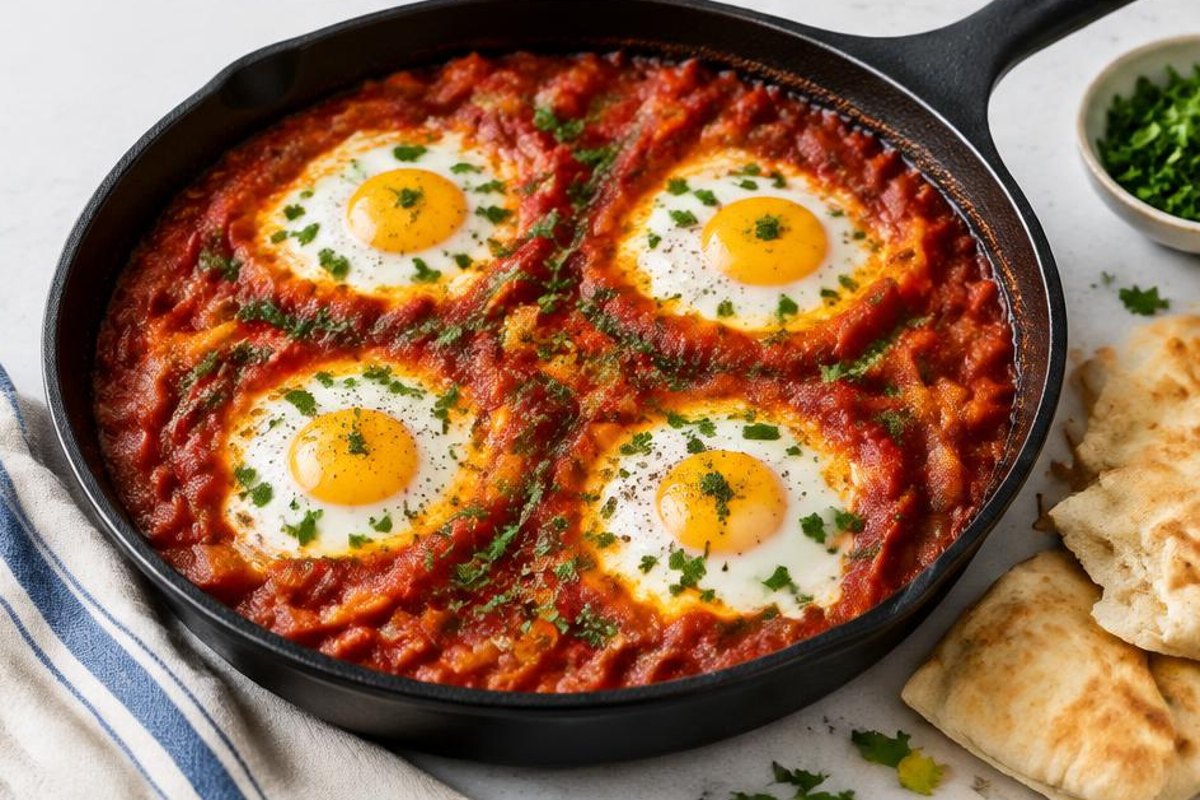
Tracing its roots to Ottoman North Africa (Tunisia and Libya) before spreading across the Maghreb and the Levant, Shakshuka (meaning "a mixture" or "shaken" in Arabic) is the undisputed crown jewel of one-skillet cooking. It showcases how simple pantry staples—bell peppers, onions, whole peeled tomatoes, and eggs—can be transformed through spice-blooming and gentle poaching into a deeply nourishing feast.
The Food Science of Shakshuka
1. The Chemistry of Spice Blooming (Vaghar / Tadka Mechanics)
Ground spices like cumin, coriander, and smoked paprika contain lipid-soluble volatile compounds (such as cuminaldehyde and pinene) trapped within dry powder cells. If spices are simply dumped into a watery tomato sauce, these flavor compounds remain muted and chalky.
- The Technique: Stir spices into hot olive oil and caramelized peppers for exactly 60 seconds before adding any liquid. The hot oil extracts and dissolves these aromatic terpenes, multiplying their aromatic impact and dispersing flavor evenly throughout the dish.
2. The Delicate Poaching Physics of Eggs
Egg yolks begin to thicken at 149°F (65°C) and solidify at 158°F (70°C).
- To achieve firm, opaque egg whites with warm, molten liquid yolks, create defined depressions (wells) in the bubbling sauce so the eggs nestle near the pan base.
- Covering the skillet traps steam, which cooks the delicate top albumen (white) from above while the bubbling sauce cooks the base from below.
Comprehensive Ingredient Roster
- 3 tbsp (45ml) robust extra virgin olive oil
- 1 large yellow onion, finely diced (approx. 1.5 cups)
- 1 large red bell pepper, halved, cored, and sliced into thin 1/4-inch strips
- 1 medium yellow or orange bell pepper, sliced into thin 1/4-inch strips
- 4 garlic cloves, thinly sliced
- 1 1/2 tsp ground cumin, freshly toasted and ground
- 1 1/2 tsp Spanish smoked paprika (Pimentón de la Vera dulce)
- 1/2 tsp ground coriander seed
- 1/4 tsp crushed red pepper flakes or Aleppo pepper (adjust for heat)
- 1 can (28 oz / 800g) whole peeled San Marzano tomatoes, crushed coarsely by hand with juices
- 1 tbsp tomato paste (concentrates savory glutamates)
- 1 tsp kosher salt and freshly cracked black pepper, to taste
- 5 to 6 large eggs, cold
- 3/4 cup (100g) authentic Greek sheep/goat milk feta cheese, coarsely crumbled
- 1/4 cup fresh flat-leaf parsley and cilantro leaves, roughly chopped
- Crusty sourdough, challah, or warm pita, for dipping
Step-by-Step Execution Protocol
- Sweat & Caramelize the Aromatics: Heat the olive oil in a wide 12-inch heavy skillet (cast iron or heavy stainless steel) over medium heat. Add the diced onion and sliced bell peppers with 1/2 tsp of salt. Sauté for 8–10 minutes, stirring occasionally, until the onions are soft and translucent, and the peppers are tender with slight caramelized browning on the edges.
- Bloom the Spices: Add the sliced garlic, tomato paste, ground cumin, smoked paprika, coriander, and chili flakes. Cook, stirring constantly, for 60 to 90 seconds. The spices will release their essential oils, darkening slightly and perfuming the oil.
- Simmer the Sauce Matrix: Pour in the hand-crushed tomatoes and their juices. Season with the remaining salt and black pepper. Bring to a vigorous simmer, then reduce heat to medium-low. Cook uncovered for 10–12 minutes, stirring occasionally, until the sauce thickens into a rich, cohesive stew and oil starts to bead around the edges.
- Create the Nests: Use the back of a large spoon to make 5 or 6 evenly spaced shallow wells in the bubbling tomato sauce.
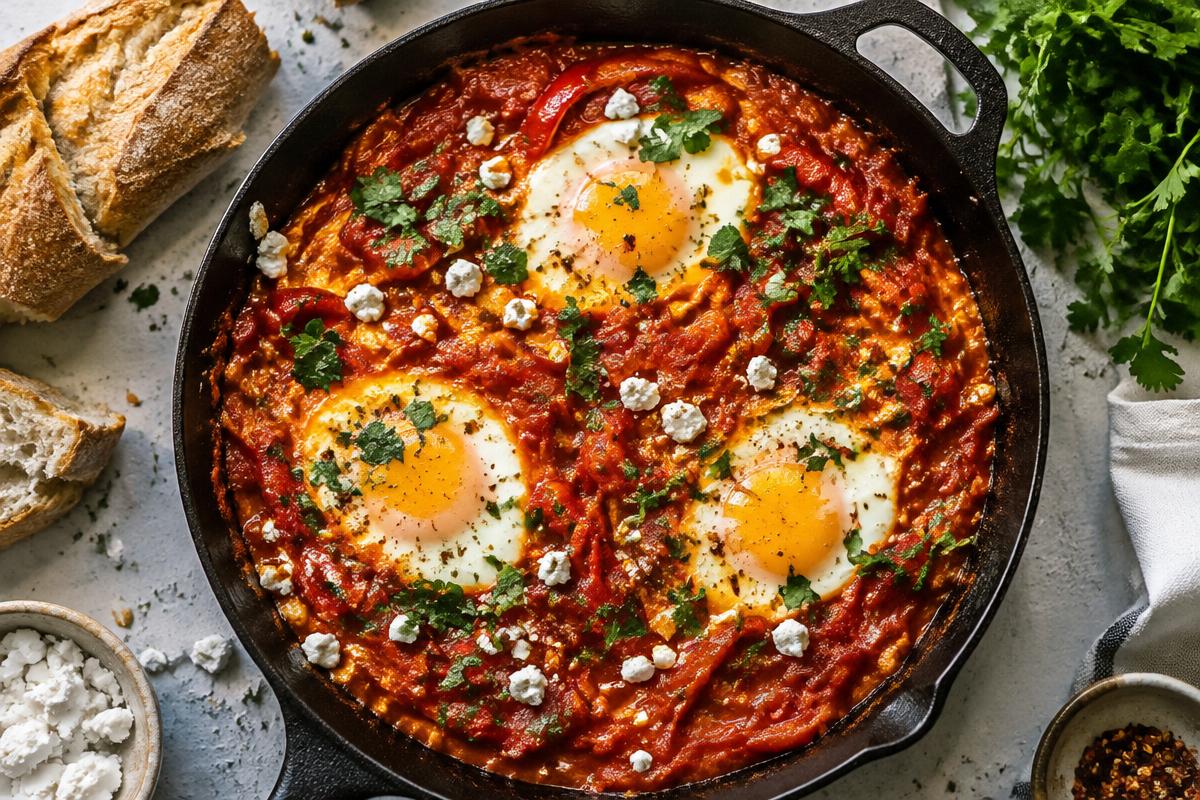
- Add the Eggs: Crack an egg into a small ramekin and gently slide it into one of the wells. Repeat for all eggs. Scatter half of the crumbled feta cheese directly over the tomato sauce between the eggs.
- The Gentle Poach: Turn heat to low. Cover the skillet with a tight lid. Cook undisturbed for 5 to 7 minutes. Watch closely: the eggs are ready when the egg whites are just opaque and set, but the yolks still jiggle gently when the pan is nudged. (Remember that residual pan heat will continue cooking the eggs off the burner).
- Garnish & Serve: Remove from heat. Scatter the remaining crumbled feta, chopped fresh parsley, and cilantro across the top. Finish with cracked black pepper, a pinch of flaky sea salt on each yolk, and a liberal drizzle of raw extra virgin olive oil. Serve immediately straight from the skillet with crusty bread.
Troubleshooting Matrix
- Problem: Egg yolks are hard and overcooked.
Fix: The pan was covered for too long, or heat was too high. Remove the lid as soon as the whites turn milky-opaque (around 5 minutes) and let residual heat finish setting the albumen. - Problem: The tomato sauce is overly watery, diluting the eggs.
Fix: Simmer the tomato sauce uncovered for an extra 4–5 minutes before cracking in the eggs. The sauce should hold its shape when a spoon creates a well.