
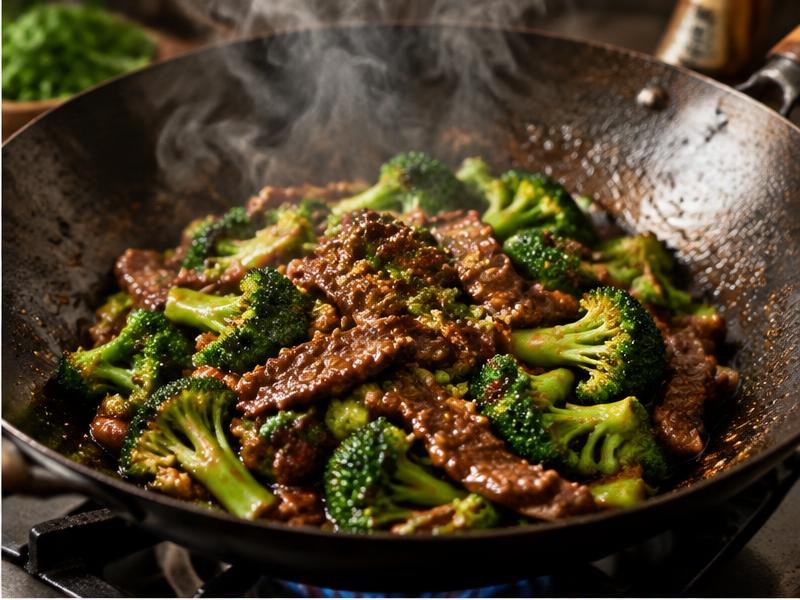
Restaurant-style stir-fried beef is not the result of one secret ingredient. Tenderness comes from choosing a suitable cut, slicing it across the grain, controlling surface moisture, and avoiding prolonged cooking. Velveting can help, but the word covers several related preparations rather than a single mandatory formula. A light starch-and-egg coating protects the meat's surface; a small amount of baking soda is an optional alkaline tenderizer, especially useful for leaner or firmer cuts. These techniques should not be confused or used indiscriminately.
This is a flexible Chinese-style home method, not a claim that every region or household uses one canonical recipe. The word stir-fry itself covers an enormous range of Chinese cooking, and restaurant methods vary by cuisine, equipment, and dish. The goal here is to teach a reliable base technique that works with a home burner and can be adapted to beef and broccoli, pepper beef, or greens.
Ingredients: one main protein, one vegetable, one sauce
For 2–3 servings:
Beef and marinade
- 350 g flank steak, skirt steak, or another reasonably tender beef cut
- 1 tbsp light soy sauce
- 1 tbsp Shaoxing wine or dry sherry, optional
- 1 tsp cornstarch
- 1 tbsp water
- 1 tsp neutral oil
- Optional alkaline step: ¼ tsp baking soda (about 1 g), used only for a firmer cut; rinse after a short treatment and pat dry
Sauce
- 1½ tbsp oyster sauce
- 1 tbsp light soy sauce
- 1 tsp dark soy sauce, optional for color and rounded flavor
- 1 tsp sugar
- ½ tsp cornstarch
- 3 tbsp water or unsalted stock
- ½ tsp toasted sesame oil, added at the end
Stir-fry
- 250–300 g broccoli florets, thinly sliced bell pepper, or another quick-cooking vegetable
- 2 tbsp neutral high-heat oil, divided
- 2 garlic cloves, finely chopped
- 1 tsp finely chopped ginger
- 2 scallions, cut into short lengths
- Optional: 1 tsp black vinegar or a few drops of chili oil to finish
Mix the sauce before heating the wok. Stir again just before using because cornstarch settles. The sauce is intentionally modest: it should coat the beef and vegetables, not turn them into soup.
Slice the beef across the grain
Find the direction of the muscle fibers. They appear as long parallel lines. Cut perpendicular to those lines into pieces roughly 3–4 mm thick. If the fibers are hard to see, chill the beef in the freezer for 20–30 minutes so it firms up; do not freeze it solid. Cutting across the grain shortens the fibers that you chew, making each bite easier to manage. Slicing with the grain leaves long strands that can feel chewy even when the meat has been cooked well.
Try to keep pieces similar in thickness. A thin edge and thick center cook at different speeds, which makes it difficult to get a quick sear without overcooking some pieces. For very small strips, cut them into bite-size lengths after slicing.
Velveting, carefully explained
A common light velveting method mixes meat with water, soy, and starch, then adds oil. The starch makes a thin coating that helps hold surface moisture and gives the finished meat a smooth feel. Egg white is another option, especially for a more substantial coating, but it is not necessary for every home stir-fry. In some methods, the coated meat is briefly passed through warm oil or water before the final stir-fry; at home, cooking it directly in a hot pan is simpler and avoids extra oil.
Baking soda is a separate, optional intervention. Because it raises the meat's surface pH, it can improve water retention and soften the texture, but too much or too long produces a spongy, slippery, or alkaline-tasting result. A small amount for a short time is enough: toss the sliced beef with ¼ teaspoon baking soda and 1 tablespoon water for 15 minutes in the refrigerator. Rinse thoroughly under cold water, drain, and pat very dry. Then continue with the soy, wine, starch, water, and oil marinade. If using a naturally tender cut and thin slices, skip the baking soda entirely.
For the light starch marinade, combine the beef with soy, wine, and 1 tablespoon water; massage until the liquid is absorbed. Sprinkle in the cornstarch and mix until no dry pockets remain, then add the oil. Marinate 15–25 minutes in the refrigerator. The coating should look thin and moist, not like a thick batter. Keep raw beef refrigerated, and wash hands, utensils, and surfaces after handling it.
In professional Cantonese and banquet kitchens, the standard sequence passes this starch-coated meat through a brief bath of moderate oil or warm water (guò yóu, 过油) to set the surface albumin and starch before the final flash stir-fry. At home, searing the well-drained, thinly coated slices directly in a scorching skillet or wok achieves the same tender protective barrier without managing a separate pot of hot oil.
Prepare the wok around the limitations of a home stove
A commercial wok burner can deliver intense heat; most household burners cannot. Do not overcrowd the pan to compensate. A large quantity of cold meat or vegetables releases water, drops the pan temperature, and steams instead of searing. A 30–35 cm (12–14 inch) wok or a large heavy skillet is useful. Heat it until a drop of water evaporates quickly, then add oil and swirl to coat. The oil should shimmer but not smoke heavily.
If your pan is small, cook the beef in two batches. Let each batch make contact with the pan for a few seconds before stirring. Stirring constantly can cool the pan and prevent browning. Remove the beef while it is just cooked through or slightly shy of your preferred doneness; it will return to the heat briefly with the sauce. For food safety, cook beef strips to a safe internal temperature appropriate to your jurisdiction and preferences; use a thermometer for larger pieces, and avoid leaving partially cooked meat at room temperature.
The cooking sequence
- Par-cook the vegetable. For broccoli, blanch florets in boiling water for 60–90 seconds, until vivid green and just beginning to turn tender. Drain very well. Alternatively, stir-fry them with a splash of water and cover for 1–2 minutes, then uncover and let excess water evaporate. Dry vegetables brown more readily.
- Sear the beef. Heat half the oil. Add half the beef in a single layer. Leave it undisturbed for about 20 seconds, then toss and cook just until the pink has mostly disappeared, usually 45–75 seconds total for thin slices. Transfer to a plate. Repeat with the remaining oil and beef if needed.
- Aromatics. Reduce heat slightly if the wok is smoking. Add garlic and ginger and stir for 10–15 seconds, just until fragrant. Burnt garlic tastes bitter, so add it only when the pan is ready for the next ingredients.
- Vegetables and sauce. Add the broccoli and scallions. Stir the sauce, pour it around the hot side of the pan, and toss. It should bubble and turn glossy within 20–40 seconds as the cornstarch thickens.
- Return beef briefly. Add the beef and any juices. Toss just long enough to coat and reheat, about 20–30 seconds. Turn off the heat and finish with sesame oil or black vinegar if using. Serve immediately with rice or noodles.
Why the sauce turns glossy, and how to balance it
Cornstarch thickens when heated in water, so it should be suspended in cool liquid before it meets the hot pan. Too much starch creates a sticky, opaque glaze; too little leaves a watery sauce. Oyster sauce and soy sauce already bring salt, while sugar rounds the savory edges. Taste the sauce before it goes into the wok. If it tastes too salty on its own, remember it will coat plain beef and vegetables, but you can still dilute it with a tablespoon of water. If it is too sweet, add a little vinegar at the end rather than more soy sauce.
Dark soy is mainly for color and a deeper, less sharp note; it is not a direct substitute for all the light soy. Sesame oil is aromatic and best used sparingly at the end, not as the main frying oil.
Common failures and direct fixes
Beef is tough. Check the grain direction first. Slicing with the grain is a frequent cause. Next check thickness and cook time: thick pieces and long cooking both make toughness more likely. Use a more tender cut or slice thinner. If using baking soda, reduce the quantity or contact time if the texture turned spongy.
Beef is tender but strangely soft or slippery. There may be too much baking soda, too long a treatment, or insufficient rinsing. Omit it next time or shorten the treatment to 10–15 minutes. Starch alone often gives a pleasing result.
The beef boiled in liquid. The pan was crowded or insufficiently hot, the beef was wet, or the vegetables released water. Pat the beef dry before marinating, sear in batches, and drain/blot vegetables after blanching.
The coating is gummy. Reduce the starch and avoid leaving a thick layer of marinade on the meat. Make sure the pan is hot enough for the coating to set quickly. Do not pour the whole marinade into the wok.
The sauce clumps. Stir the cornstarch slurry immediately before adding it. Pour while tossing, and give it a brief simmer to thicken evenly. If clumps have already formed, add a splash of water and keep moving the ingredients; severe clumping may require removing the solids and whisking the sauce separately.
Everything tastes salty. Use low-sodium stock or water, reduce soy by a teaspoon, or choose one salty sauce to adjust rather than adding more of all of them. Oyster sauce brands vary considerably.
Variations and links for a useful recipe cluster
For beef and broccoli, keep the sauce as written and cut the broccoli into small, even florets. For pepper beef, use thinly sliced bell pepper and onion, adding them before the beef returns. For a Sichuan-leaning version, add doubanjiang and a measured pinch of ground Sichuan pepper; that changes the flavor direction, so reduce the soy and oyster sauce slightly instead of simply piling on more seasoning.
Continue to the site's Sichuan dan dan noodles guide for a contrasting noodle technique, or explore Kung Pao chicken to see how high-heat wok sequencing applies to poultry and dried chilies.
The lasting lesson: slice across the grain, use only as much marinade as the meat can absorb, cook in uncrowded batches, and add sauce at the end. Heat matters, but organization and moisture control matter just as much on a home stove.