Cultural Provenance: The Siu Mei Rotisseries of Guangdong and Hong Kong
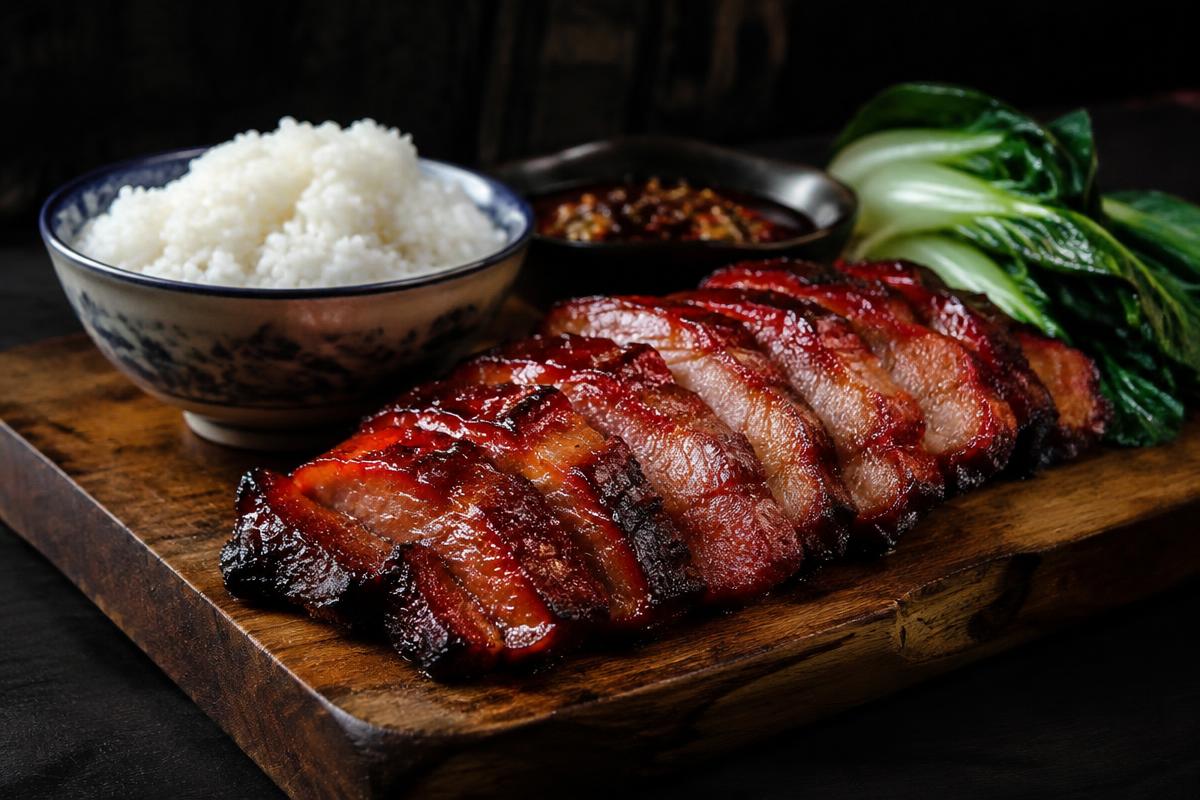
In the culinary pantheon of Cantonese cuisine (Yue Cai), nothing commands immediate street reverence quite like the crimson-tinted, glistening display windows of a traditional Siu Mei (roast meats) establishment in Hong Kong or Guangzhou. Hanging alongside crisp-skinned roast geese and golden soy-sauce chickens are long, glossy, lacquered batons of Char Siu (叉烧).
The Cantonese name literally translates as "fork roast" (Char meaning fork or skewer, Siu meaning roast or burn). Historically, seasoned strips of boneless pork were skewered on long, heavy iron forks and suspended inside upright, wood-fired cylindrical brick ovens known as Apollo ovens or bell ovens. Over roaring charcoal made from lychee wood, the pork rendered out excess fat while the intense radiant heat and sweet basting juices caramelized the meat's surface into charred, crunchy tips known to Cantonese gourmands as Gau Chiew (焦焦—the prized, flavorful scorched edges).
Authentic Cantonese Char Siu is a masterclass in balance: it must never taste like Western barbecue sauce. It should possess an aromatic balance of savory fermentation, floral Chinese five-spice, aromatic wine, and a lacquered, glassy shell created by traditional maltose that leaves fingers sticky and palates craving another slice.
The Molecular Science of the Lacquer: Maltose vs. Table Sugar
The quintessential failure of Western internet adaptations of Char Siu is relying solely on honey, brown sugar, or corn syrup for the glaze. This invariably produces either a burnt, bitter crust or a watery, sticky puddle that slides off the pork.
1. The Chemistry of Traditional Wheat Maltose (Mai Ya Tang 麦芽糖)
Authentic Chinese roasters use maltose, a disaccharide formed from two units of glucose produced through the enzymatic fermentation of sprouted wheat grains and glutinous rice.
- The High Glass Transition Point: Maltose has a significantly higher melting point and higher viscosity than sucrose (table sugar) or fructose (honey). While table sugar burns into bitter, acrid carbon at 320°F (160°C), maltose withstands temperatures up to 360°F (182°C) while maintaining an elastic, glass-like molecular structure.
- The High-Gloss Mirror Finish: When brushed onto hot pork during the final roasting minutes, maltose undergoes controlled caramelization, creating a flexible, jewel-like lacquer that solidifies as it cools, sealing the rendered pork juices inside the meat.
2. The Color Chemistry: Red Yeast Rice vs. Fermented Red Bean Curd (Nam Yu)
In modern cheap takeout, Char Siu's bright red color is achieved with synthetic Red Dye No. 40. Authentic Cantonese kitchens achieve a natural, rustic crimson-burgundy hue and deep umami through two traditional agents:
- Fermented Red Bean Curd (Nam Yu 南乳): Tofu cubes fermented with red yeast rice (Monascus purpureus), Shaoxing wine, and chiles. Nam Yu provides savory glutamates, complex wine aroma, and a natural ruby color.
- Ground Red Yeast Rice Powder (Optional natural enhancer): Derived from rice fermented with red mold, providing a natural scarlet tint without synthetic chemicals.
3. Meat Anatomy: The Butcher’s Cut
Relying on lean pork tenderloin or boneless pork loin results in dry, leathery Char Siu. Authentic Siu Mei chefs insist on one of two cuts:
- The Gold Standard: Pork Collar / Pork Neck (Mui Tau 梅头肉): Cut from the upper neck and shoulder. It features a spiderweb of fine intramuscular fat that renders slowly under direct oven heat, yielding an unbelievably juicy, tender, bouncy texture that melts in the mouth.
- The Decadent Choice: Pork Belly (Ng Fa Yuk 五花肉): Skin removed. Delivers alternating ribbons of rich fat and savory meat, ideal for those who prefer rich, unctuous Char Siu.
Complete Ingredient Roster
- The Meat:
- 2.5 lbs (1.2 kg) fresh pork collar (pork neck butt) or boneless Boston butt, cut with the grain into long strips roughly 1.5 inches (4 cm) thick and 6–8 inches long
- The Deep Fermented Marinade Base:
- 2 cubes Fermented Red Bean Curd (Nam Yu), mashed with 1 tablespoon of its brine
- 3 tablespoons Chinese light soy sauce
- 1 tablespoon premium dark soy sauce (for rich color)
- 2 tablespoons Shaoxing cooking wine
- 2 tablespoons Hoisin sauce
- 1.5 tablespoons Lee Kum Kee premium oyster sauce
- 1/4 cup granulated white sugar (or finely grated yellow Chinese rock sugar)
- 1 teaspoon Chinese five-spice powder (must be fresh; heavy in star anise, fennel, cinnamon, clove, Sichuan pepper)
- 1/2 teaspoon finely ground white pepper
- 4 cloves garlic, grated into a fine paste
- 1 tablespoon fresh ginger, grated into a fine paste
- 1/2 teaspoon pure toasted sesame oil
- 1 teaspoon red yeast rice powder (optional, for vibrant natural red color)
- The Signature Siu Mei Roasting Lacquer:
- 3 tablespoons traditional Chinese maltose (warm the jar in hot water to make it scoopable)
- 2 tablespoons raw clover honey
- 1 tablespoon reserved marinade liquid (boiled)
- 1 teaspoon hot water (to adjust brushable viscosity)
Step-by-Step Master Method
Phase 1: Butchery & Marination (18–24 Hours)
- Trim any excessive hard gristle or loose connective tissues from the pork collar. Cut the meat with the grain into long, uniform strips approximately 1.5 inches thick and 1.5 inches wide. Uniformity ensures even roasting.
- In a medium mixing bowl, mash the fermented red bean curd cubes into a smooth paste. Add the light soy sauce, dark soy sauce, Shaoxing wine, hoisin sauce, oyster sauce, sugar, five-spice powder, white pepper, grated garlic, ginger, sesame oil, and red yeast rice powder. Whisk vigorously until the sugar is fully dissolved.
- Reserve 2 tablespoons of the marinade in a small sealed container in the refrigerator (this will form the base of the roasting lacquer).
- Place the pork strips into a large zip-top bag or glass container and pour the remaining marinade over the meat. Massage the marinade thoroughly into every crevice of the meat for 2 minutes.
- Seal tightly and refrigerate for at least 12 hours, preferably 24 hours, turning the bag once or twice to ensure even penetration.
Phase 2: Oven Architecture & Preparation
- Remove the marinated pork from the refrigerator 45 minutes prior to cooking to take the chill off.
- The Water Pan Technique: Authentic roasting requires high ambient humidity to prevent surface sugars from scorching before the internal pork cooks through. Line a heavy rimmed baking sheet with heavy-duty aluminum foil (for easy cleanup). Pour 2 cups of boiling water into the base of the pan.
- Set an oven-safe stainless steel wire cooling rack directly over the water-filled baking sheet.
- Position your oven rack in the upper-middle third of the oven. Preheat the oven to 425°F (220°C).
Phase 3: The Initial High-Heat Roast (25 Minutes)
- Lift the pork strips from the marinade, letting excess liquid drip off for 3 seconds. Arrange the pork strips on the wire rack, leaving at least 1 inch of space between each piece so the hot convective air circulates freely around all sides.
- Slide the baking sheet assembly into the oven. Roast at 425°F for 15 minutes.
- Using tongs, carefully flip each strip of pork over. Return to the oven and roast for another 10 minutes. The edges of the pork will begin to sizzle, darken, and display initial caramelized brown spots.
Phase 4: Preparing the Maltose Lacquer
- While the pork roasts, place the jar of Chinese maltose into a bowl of boiling water for 5 minutes to soften its rock-hard consistency.
- In a small saucepan, combine the 3 tablespoons softened maltose, 2 tablespoons honey, the 2 tablespoons reserved marinade, and 1 teaspoon hot water.
- Heat over low heat for 2 minutes, whisking constantly until the maltose completely dissolves into a thick, glossy, pourable syrup.
Phase 5: The Basting Cascade & Gau Chiew Charring (10–12 Minutes)
- Remove the pork from the oven. Using a silicone pastry brush, liberally paint all surfaces of each pork strip with the warm maltose lacquer.
- Flip the pork and brush the other side generously.
- Return the pork to the oven for 5 minutes at 425°F. The sugars will bubble fiercely and meld into the crust.
- Pull the tray out once more. Apply a second thick layer of maltose glaze over all surfaces.
- The Broiler Finish (Gau Chiew): Turn the oven from BAKE to BROIL (HIGH). Watch the pork like a hawk through the oven door. Broil for 2 to 3 minutes, allowing the edges and corners to scorch into crispy, blistered, blackened bits (Gau Chiew). Flip and broil the second side for 1 to 2 minutes.
- The internal temperature in the thickest piece should register between 160°F and 165°F (71°C–74°C).
Phase 6: The Rest & Precision Bias Slice
- Transfer the Char Siu to a clean cutting board. Do not cut immediately. Allow the pork to rest for 10 minutes. During this rest, the molten maltose lacquer cools into a glassy, sticky candy shell, and the internal juices redistribute throughout the muscle fibers.
- Using a razor-sharp chef's knife or slicing cleaver, slice the pork across the grain on a slight diagonal into 1/4-inch to 1/3-inch thick medallions.
- Drizzle any residual resting juices and a drop of remaining maltose glaze across the cut slices. Serve immediately with hot steamed Jasmine rice and steamed gai lan (Chinese broccoli).
Crucial Kitchen Errors & Troubleshooting Matrix
| Problem | Root Culinary Cause | Emergency Kitchen Fix | Long-Term Prevention |
|---|---|---|---|
| Meat is tough, dry, and stringy | Wrong cut selected (e.g., pork tenderloin or loin) or overcooked past 175°F. | Slice ultra-thin and toss in a warm sauce made of hoisin, stock, and sesame oil. | Always use pork collar (Mui Tau) or well-marbled Boston butt; do not exceed 165°F internal temp. |
| Glaze burned into bitter black soot | Honey/sugar applied too early in the roasting cycle, or water pan ran dry. | Scrape away bitter black char with a serrated knife before slicing. | Apply maltose glaze only in the final 8 minutes of roasting; always maintain water in the drip pan. |
| Glaze is thin, watery, and slides off | Table syrup or thin honey used instead of high-viscosity wheat maltose. | Simmer the glaze on the stovetop until reduced by half, brush on hot meat after slicing. | Use authentic wheat maltose (Mai Ya Tang); its molecular viscosity guarantees a lacquered shell. |
| Meat lacks deep flavor penetration | Pork marinated for under 4 hours, or cuts were sliced too thick before soaking. | Serve with a side dish of warm, boiled marinade reduced with a dash of light soy sauce. | Marinate for a full 18 to 24 hours to allow salt, alcohol, and fermented bean curd to penetrate muscle core. |