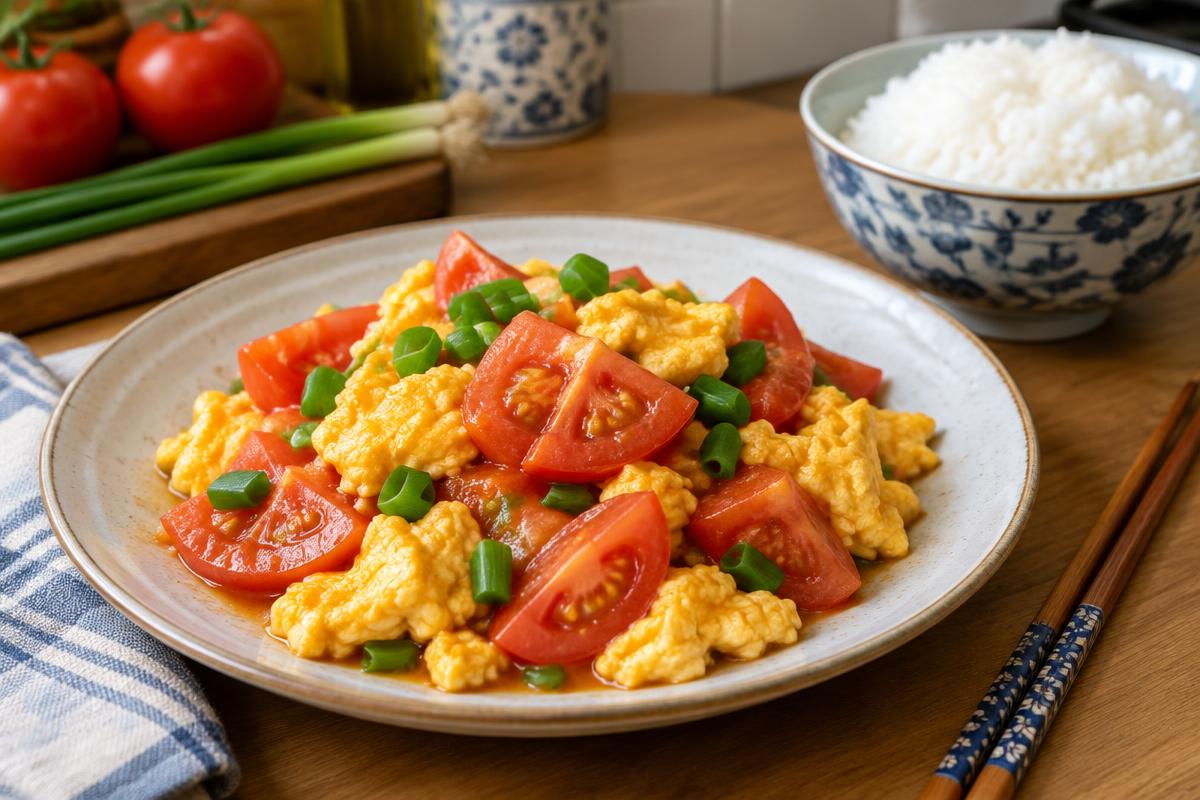
If Chinese home cooking had a national anthem, it would be Fan Qie Chao Dan. Found on dining tables from Harbin in the northeast to Guangzhou in the south, this iconic dish requires modest ingredients yet illustrates vital principles of egg protein coagulation, starch gelatinization, and sugar-acid balance.
The Food Science of Perfect Eggs and Tomatoes
1. Egg Protein Coagulation Dynamics
Egg whites coagulate at 144°F–149°F (62°C–65°C), while egg yolks set at 149°F–158°F (65°C–70°C). When scrambled over high heat, proteins can contract too quickly, wringing out water and leaving dry, rubbery curds.
- The Secret Additions: Adding 1 tablespoon of water (or Shaoxing wine) per 4 eggs creates steam pockets during cooking, keeping the curds tender. A pinch of cornstarch slurry (1/2 tsp cornstarch in 1 tbsp water) stabilizes the egg proteins, preventing them from overcooking even in a smoking wok.
2. Glutamate & Nucleotide Synergy (Natural Umami)
Tomatoes are extraordinarily rich in free glutamic acid. When paired with eggs (rich in nucleotides and savory fats), a dramatic flavor synergy occurs, amplifying perceived savory richness four- to eightfold.
Comprehensive Ingredient Roster
- 4 large eggs, farm-fresh
- 3 medium ripe vine tomatoes (approx. 400g), cut into 1-inch wedges
- 2 scallions (green onions):
- Whites sliced into thin 1/4-inch rounds
- Greens sliced into 1-inch batons
- 1 large garlic clove, finely minced
- 1 tsp Shaoxing rice wine
- 1/2 tsp kosher salt (divided)
- 1 1/2 tsp granulated sugar (crucial to balance tomato acidity)
- 1/4 tsp ground white pepper
- 1/2 tsp cornstarch mixed with 1 tbsp cold water (slurry)
- 2 1/2 tbsp neutral cooking oil (peanut, canola, or avocado oil, divided)
- 1/2 tsp toasted sesame oil
- Hot steamed Jasmine rice, for serving
Step-by-Step Execution Protocol
- Whisk the Custard Base: Crack the eggs into a bowl. Add Shaoxing wine, 1/4 tsp of kosher salt, white pepper, and the cornstarch slurry. Whisk vigorously with chopsticks or a fork for 30 seconds until the whites and yolks are fully combined and slightly frothy.
- The Soft-Curd Egg Flash: Heat a well-seasoned wok or heavy nonstick skillet over high heat until smoking. Add 1.5 tablespoons of oil, swirling to coat the sides. Pour the beaten eggs into the center. The edges should instantly puff into golden, billowy clouds. Using a silicone spatula, push the set edges toward the center, allowing the uncooked liquid to flow underneath. Cook for only 40–45 seconds until the eggs are 80% set—creamy, glossy, and custardy. Slide them immediately out of the pan onto a clean plate.
- Sear Aromatics: Return the wok to medium-high heat. Add the remaining 1 tablespoon of oil. Drop in the scallion whites and minced garlic. Stir-fry for 15 seconds until fragrant.
- Create the Jammy Gravy: Add the tomato wedges, remaining 1/4 tsp of salt, and the sugar. Cook over medium-high heat, pressing down on the tomatoes with the back of your spatula. As the heat ruptures the tomato cell walls, juices release and mingle with the sugar, salt, and oil, creating a glossy, naturally thickened red gravy (about 3 minutes).
- Recombine & Harmonize: Return the reserved eggs to the wok. Break up large curds into bite-sized pieces with your spatula. Toss gently for 30–45 seconds so the porous eggs absorb the hot tomato gravy.
- Finish: Turn off heat. Scatter the scallion greens over the pan, drizzle with toasted sesame oil, and fold once. Transfer immediately to a serving dish and serve over steaming bowls of Jasmine rice.
Troubleshooting Matrix
- Problem: The dish is watery and thin rather than saucy.
Fix: Ripe summer tomatoes release significant moisture. If the pan looks overly watery before adding the eggs, stir in a tiny drizzle of cornstarch slurry (1/2 tsp cornstarch in 1 tbsp water) and bubble for 30 seconds to tighten the sauce before returning the eggs. - Problem: The tomatoes taste sharp and harsh.
Fix: Off-season grocery store tomatoes lack natural sweetness. Increase sugar by an additional 1/2 teaspoon to round out the citric and malic acids.