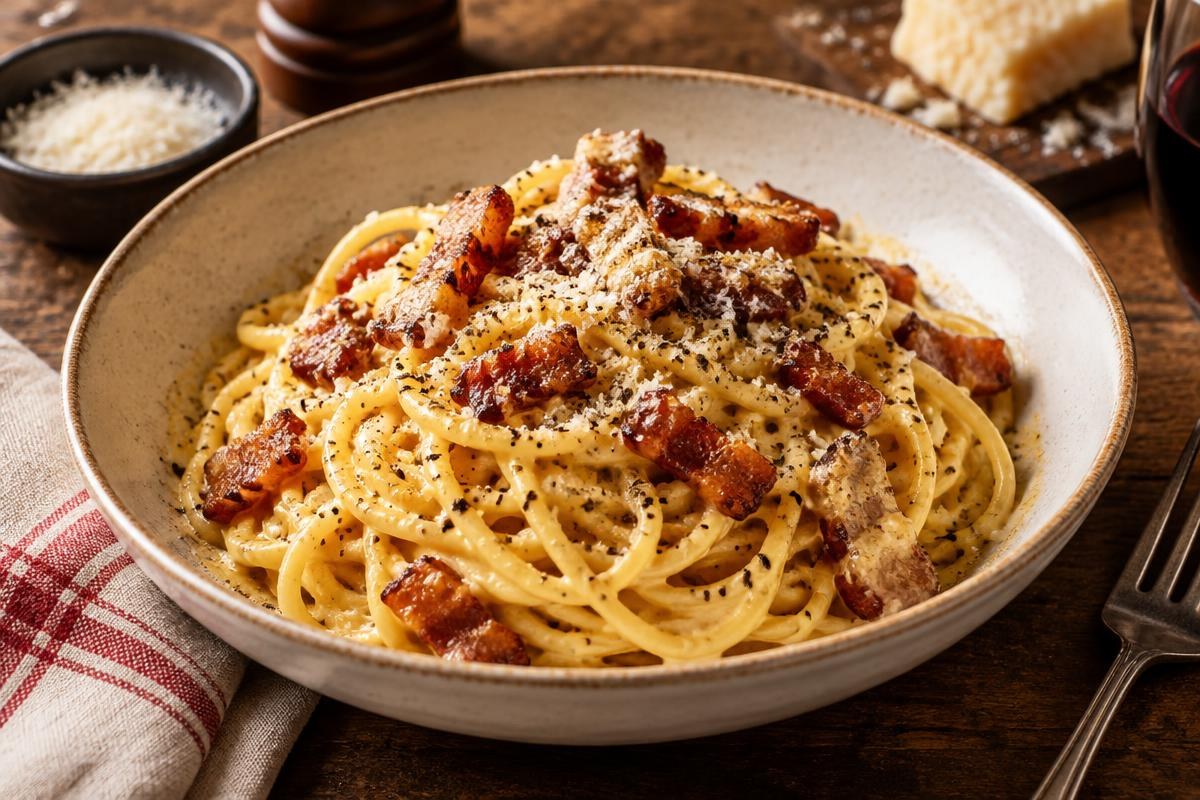
Carbonara is a Roman pasta built from a short list of ingredients and a narrow window of timing. The sauce is not a cream sauce. It is a warm emulsion of egg, hard cheese, rendered pork fat, and starchy pasta water, clinging to pasta. The challenge is not complexity; it is temperature and coordination. If the egg mixture is added while the pan is too hot, it can set into curds. If the mixture is too cold or too thick, it can remain pasty. If pasta water is added carelessly, the sauce may become thin.
This recipe focuses on a reliable home-kitchen method for two generous portions. It gives quantities in grams, lays out the order of work, and explains how to fix the most common failures. Roman cooks and families disagree about whole eggs versus yolks, the exact cheese blend, and even the preferred pasta shape. The version here uses guanciale, Pecorino Romano, egg yolks plus one whole egg, black pepper, and spaghetti. No cream is needed. Bon Appétit describes the classic sauce as eggs, cheese, pork, and pasta water, with the egg mixture added off heat to avoid scrambling in its spaghetti carbonara guide.
Ingredients for two portions
- 200 g dried spaghetti or bucatini
- 90 g guanciale, cut into 5–7 mm batons; pancetta is a practical substitute
- 2 large egg yolks
- 1 large whole egg
- 55 g finely grated Pecorino Romano, plus a little for serving
- 1–2 teaspoons freshly cracked black pepper, to taste
- Fine salt for pasta water
- 60–120 ml reserved pasta water, as needed
A small amount of finely grated Parmigiano Reggiano can soften the sharpness of Pecorino, but the recipe does not require it. Guanciale is cured pork jowl, prized for its fat and savory flavor. Pancetta is a closer substitute than smoky bacon; bacon works in a pinch but changes the flavor. Choose a block rather than pre-diced pieces if possible, because larger batons retain a tender center while the edges crisp.
Equipment and setup
Use a wide skillet or sauté pan large enough to hold the pasta, a pot for boiling, a heatproof mixing bowl, tongs, and a fine grater. Set out a mug for pasta water before draining. Carbonara moves quickly once the pasta is ready, so grate the cheese and whisk the egg mixture before the pasta finishes cooking.
If you are concerned about consuming lightly cooked eggs, use pasteurized eggs or follow local food-safety guidance. A home cook should not rely on a vague claim that residual heat always makes eggs safe. The classic texture depends on gentle thickening; the egg mixture should be cooked to an appropriate safe temperature while avoiding a scramble, which is why careful off-heat tossing, a pre-warmed bowl, and pasteurized eggs are useful options.
The method, stage by stage
1. Render guanciale slowly
Place guanciale in a cold skillet, then set the heat to medium-low. Starting cold gives the fat time to melt before the lean portions over-brown. Cook for 8–12 minutes, stirring occasionally, until the fat is translucent and pooled, while the meat edges are golden and crisp but not hard. The exact time depends on thickness and pan material.
Use a slotted spoon to move the guanciale to a small plate. Leave the rendered fat in the pan. If there is an unusually large amount, pour off some and reserve it; you can add it back gradually. Add the black pepper to the warm fat for 20–30 seconds to bloom its aroma. Keep the pan off the heat while you prepare the sauce base.
2. Make a smooth egg-and-cheese paste
In a heatproof bowl, whisk together the yolks, whole egg, and finely grated Pecorino until a thick paste forms. Add most of the black pepper if you did not bloom it in the fat. The mixture may look very thick; that is expected before pasta water is added. Finely grated cheese melts more evenly than coarse shreds.
Do not add hot pasta water in a large splash. When the pasta is nearly done, whisk one tablespoon of hot water into the egg mixture. Repeat once or twice, whisking continuously. This gradual tempering warms and loosens the paste rather than giving one patch of egg an abrupt heat shock. Set the bowl beside the stove.
3. Cook the pasta just shy of done
Bring a large pot of water to a boil and salt it. Use less salt than you might for a sauce without salty cured pork and Pecorino. Cook the pasta until it is just shy of al dente according to the package directions. It will finish in the pan.
Before draining, reserve at least 250 ml of pasta water. Its starch helps the cheese and rendered fat stay dispersed in the sauce. The amount of starch depends on pasta shape, water volume, and cooking time, so the recipe gives a range rather than a magic fixed quantity.
4. Finish pasta in the guanciale fat
Transfer the pasta directly to the skillet with the warm guanciale fat. Add about 60 ml pasta water and toss over low heat for 30–60 seconds, until the pasta is al dente and the water looks slightly cloudy and glossy. If the skillet has cooled completely, warm it gently; it should not be sizzling aggressively when the egg mixture goes in.
Turn off the heat and move the skillet off the burner. Wait 15–30 seconds, tossing once or twice. The pan must be hot enough to cook and thicken the sauce, but not so hot that the egg proteins seize into curds. A heavy pan holds heat longer than a thin one; the exact pause therefore varies.
5. Emulsify off heat
Pour the tempered egg-and-cheese mixture over the pasta while tossing continuously with tongs. Add the guanciale and keep tossing. If the sauce looks too thick or clumpy, add pasta water one tablespoon at a time, tossing between additions. The target is a glossy coating that gathers in a thin pool at the bottom of the pan and clings to each strand. It should not look like scrambled eggs, nor should it run like soup.
If you prefer extra control, transfer the pasta to the warm egg bowl and toss there. This reduces direct contact with the hot skillet. A warm bowl helps the sauce thicken gently; a cold bowl can cool the mixture too quickly. Work briskly, but do not panic. Small, measured additions of pasta water are easier to correct than one large pour.
6. Taste and serve at once
Taste a strand before adding more salt. Guanciale and Pecorino both bring saltiness. Add a little more black pepper and Pecorino at the table. Serve immediately; carbonara thickens as it sits. Warm plates help preserve the sauce’s texture.
What the sauce is doing: practical food science
Egg proteins unfold and link together as they warm. That process thickens the mixture; too much heat or time pushes it toward firm curds. Cheese contributes fat, protein, and salt. Guanciale contributes rendered fat. Starchy pasta water helps the watery and fatty parts remain dispersed long enough to coat the pasta. The cook is creating a temporary emulsion, not simply melting cheese into oil.
There is no single temperature that guarantees perfect carbonara across all pans, egg sizes, pasta quantities, and heat sources. A thermometer can help with food-safety considerations, but it cannot replace the sensory cue: the sauce should thicken into a smooth, glossy coating without visible scrambled curds. Keep the pan off direct heat during egg addition, toss continuously, and add water gradually. Those controls matter more than chasing an isolated temperature number.
Troubleshooting: what went wrong and how to recover
The eggs scrambled
The pan was too hot, the egg mixture touched the pan before the pasta cooled slightly, or the cook paused instead of tossing. Remove the pan from heat immediately and add a tablespoon of cool or warm pasta water while tossing vigorously. If the eggs have already formed large curds, they cannot be turned back into a perfectly smooth sauce. You can still serve it, but for the next attempt, temper the eggs, move the pan off the burner, wait briefly, and toss continuously.
The sauce is too thick or pasty
Add reserved pasta water one tablespoon at a time and toss. The sauce can tighten quickly as starch cools. If the bowl feels cold, set it over the warm pasta pot for a few seconds while tossing, not directly over a flame.
The sauce is watery
The pasta may not have been tossed enough to emulsify, or too much water was added. Continue tossing off heat for several seconds. If it remains thin, add a little more finely grated cheese and toss until incorporated. Avoid turning the burner back to high; the likely result is scrambled egg rather than a stable sauce.
The cheese clumped
The grating may be too coarse, the egg mixture may not have been whisked smooth, or the pasta water may have been too hot and added all at once. Finely grate the cheese, whisk it into the eggs before cooking, and temper gradually. Once clumped, vigorous tossing with a splash of pasta water may improve the texture, but it may not become perfectly smooth.
The dish tastes too salty
Do not add more Pecorino or salt. Use less salted pasta water next time, choose a less salty guanciale, or blend Pecorino with a milder hard cheese. A small amount of extra unsalted pasta can help dilute a salty batch, but adding cream is not the traditional fix and changes the dish.
The guanciale is hard or burnt
The heat was too high or the pieces were too small. Start in a cold pan over medium-low heat and render slowly. Remove the guanciale once its edges are golden; it will warm again when tossed with the pasta.
Useful variations without losing the method
Guanciale unavailable
Use pancetta, ideally unsmoked, and render it slowly. Thick-cut bacon can substitute, but its smoke may dominate the Pecorino and egg. Avoid adding oil unless the pan is unusually dry; cured pork normally releases enough fat.
Spaghetti unavailable
Bucatini, rigatoni, or another sturdy shape can work. Long strands are easy to coat by tossing; ridged tubes hold sauce in their surfaces. Adjust pasta water by appearance rather than using the exact amount specified for spaghetti.
Whole eggs versus yolks
More yolks create a richer, thicker sauce; whole egg contributes water and a lighter set. This recipe uses a combination for balance and reliability. If you change the ratio, adjust the cheese and pasta water rather than assuming the same formula will behave identically.
A milder cheese profile
Use mostly Pecorino for a sharper, saltier finish, or combine it with Parmigiano for a milder flavor. Grate it finely and taste before adding salt. Cheese varies by age and brand, so the final seasoning should be judged at the stove.
How carbonara differs from neighboring Roman pastas
Carbonara is often discussed alongside Rome’s other celebrated pasta dishes, but the sauces are distinct. Cacio e pepe centers on cheese, pepper, and pasta water. Gricia uses cured pork, cheese, and pepper without egg. Amatriciana includes tomato and cured pork. Understanding the family helps keep carbonara’s own flavor legible: egg, Pecorino, guanciale, pepper, and pasta.
What to serve with carbonara
Because the pasta is rich, serve it with a crisp salad dressed with sharp vinegar, or a bitter green vegetable. Keep the side simple. Carbonara can anchor a meal; a second rich sauce or heavy meat dish is unnecessary. For a broader Mediterranean table, the site’s Mediterranean pantry guide explains the foundational oils, grains, herbs, and preserved ingredients that help build a balanced menu.
Frequently asked questions
Does authentic carbonara contain cream?
The Roman preparation described here does not. Its creamy texture comes from egg, cheese, rendered guanciale fat, and pasta water. Cream can make an easy creamy pasta, but it is a different preparation.
Can I make carbonara ahead?
It is best assembled and eaten immediately. The sauce thickens and can become grainy as it cools; reheating risks scrambling the egg. Prepare ingredients ahead, but cook and emulsify at serving time.
Can I reheat leftovers?
You can, but the texture will not be identical. Reheat gently with a splash of water in a covered pan over low heat, stirring, and stop as soon as it is hot. Avoid high microwave power, which can overcook egg in patches. Follow local food-safety guidance for storage and reheating.
Why reserve pasta water?
It carries surface starch from the pasta and helps loosen the egg-cheese mixture while encouraging a cohesive coating. Plain water can thin the sauce but does not perform quite the same way.
Is carbonara difficult?
The ingredient list is short, but the timing requires attention. It becomes repeatable once you prepare the egg mixture first, reserve the pasta water, render the guanciale slowly, and add eggs off heat while tossing.
The repeatable standard
Carbonara succeeds through preparation and restraint. Render the pork gently, make the egg-and-cheese paste before the pasta is ready, reserve enough pasta water, and use residual heat rather than direct flame to thicken the sauce. Add liquid gradually and serve as soon as it turns glossy. That is the difference between a creamy coating and a pan of scrambled eggs.