Originating from the colonial city of Puebla in east-central Mexico, Tinga de Pollo represents the pinnacle of weeknight efficiency. It is a dish that demonstrates how simple pantry components—charred tomatoes, sweet caramelized onions, and canned chipotles in adobo—can be emulsified into a smoky, savory sauce that coats tender chicken without drowning it.
The Culinary Principles of Tinga
1. Dry Skillet Charring (Blistering the Aromatics)
Traditional recipes call for charring Roma tomatoes, white onion, and garlic on a dry comal before blending. This is not merely cosmetic. Charring accomplishes three biochemical objectives:
- Maillard Reactions & Caramelization: Direct conduction heat converts tomato sugars into complex maltol and furanone compounds, adding smoky depth.
- Moisture Loss: Evaporating water from the outer flesh concentrates the glutamic acid (natural umami) of the tomatoes.
- Volatile Oil Release: Garlic and onion cell walls soften, mellowing their harsh raw sulfurous sting into sweet, rounded aromatics.
2. The Chipotle-Adobo Ratio
Canned chipotles en adobo are smoke-dried red jalapeños packed in a puree of vinegar, tomato paste, garlic, and spices. In Tinga, the chipotle provides heat and lingering hickory smoke, while the adobo provides acetic acidity to balance the rich chicken fat.
Comprehensive Ingredient Roster
- 1.5 lbs (700g) boneless, skinless chicken breasts or thighs, poached gently and shredded into long, thin fibers (or shredded meat from a high-quality roasted chicken)
- 4 large ripe Roma tomatoes (approx. 450g)
- 2 large white onions (divided):
- 1/2 onion, kept in thick wedges for roasting and blending
- 1 1/2 onions, sliced thinly into lengthwise crescents (plumas)
- 4 medium garlic cloves, unpeeled
- 3 whole canned chipotle chilies in adobo, plus 3 tbsp of adobo sauce (adjust to heat preference)
- 1/2 cup (120ml) low-sodium chicken bone broth
- 1 tsp dried Mexican oregano, crushed between palms
- 1/2 tsp whole cumin seed, freshly toasted and ground
- 1 dried Mexican bay leaf
- 2 tbsp pork lard (manteca) or neutral avocado oil
- 1 1/2 tsp kosher salt (to taste)
For the Tostada Assembly
- 8–12 crisp, flat corn tostadas
- 1 cup (240g) refried black or pinto beans (warm)
- 1/2 cup (120ml) Mexican crema (or whole crème fraîche whisked with a pinch of salt and lime juice)
- 1/2 cup (60g) Queso Cotija (aged, salty cow's milk cheese), finely crumbled
- 1 large Hass avocado, thinly sliced
- Fresh cilantro leaves, tender stems included
Step-by-Step Execution Protocol
- Char the Base Aromatics: Heat a wide cast-iron skillet over medium-high heat until hot. Place whole Roma tomatoes, onion wedges, and unpeeled garlic cloves directly onto the dry iron. Turn periodically until the tomato skins are blistered and blackened in patches (8–10 minutes), onions are softened with charred edges, and garlic is fragrant. Peel the garlic skins and transfer everything to a blender.
- Blend the Adobo Salsa: Add the chipotle chilies, adobo sauce, chicken broth, Mexican oregano, ground cumin, and kosher salt to the blender with the charred vegetables. Puree on high speed for 90 seconds until glossy, smooth, and emulsified.
- Caramelize the Onions (Plumas): In a deep 12-inch skillet or Dutch oven, melt the manteca or oil over medium heat. Add the thinly sliced onions with a pinch of salt. Sauté slowly for 8–10 minutes, stirring frequently. You want the onions soft, translucent, and just beginning to show golden caramelization at the tips, which lends natural sweetness to balance the spicy chipotle.
- Fry the Sauce (Sofreír): Pour the blended salsa directly into the hot skillet with the caramelized onions. The sauce should sizzle and sputter. Stir constantly for 3–5 minutes as the sauce darkens from pale orange to a deep terracotta red, cooking out the raw tomato notes and concentrating flavors.
- Simmer the Chicken: Add the shredded chicken and bay leaf to the pan. Toss thoroughly to coat every strand of meat. Reduce heat to low, cover partially, and simmer gently for 10–12 minutes. The chicken should absorb the liquid until the sauce clings tightly to the meat without pooling water at the bottom of the pan. Remove bay leaf and adjust salt.
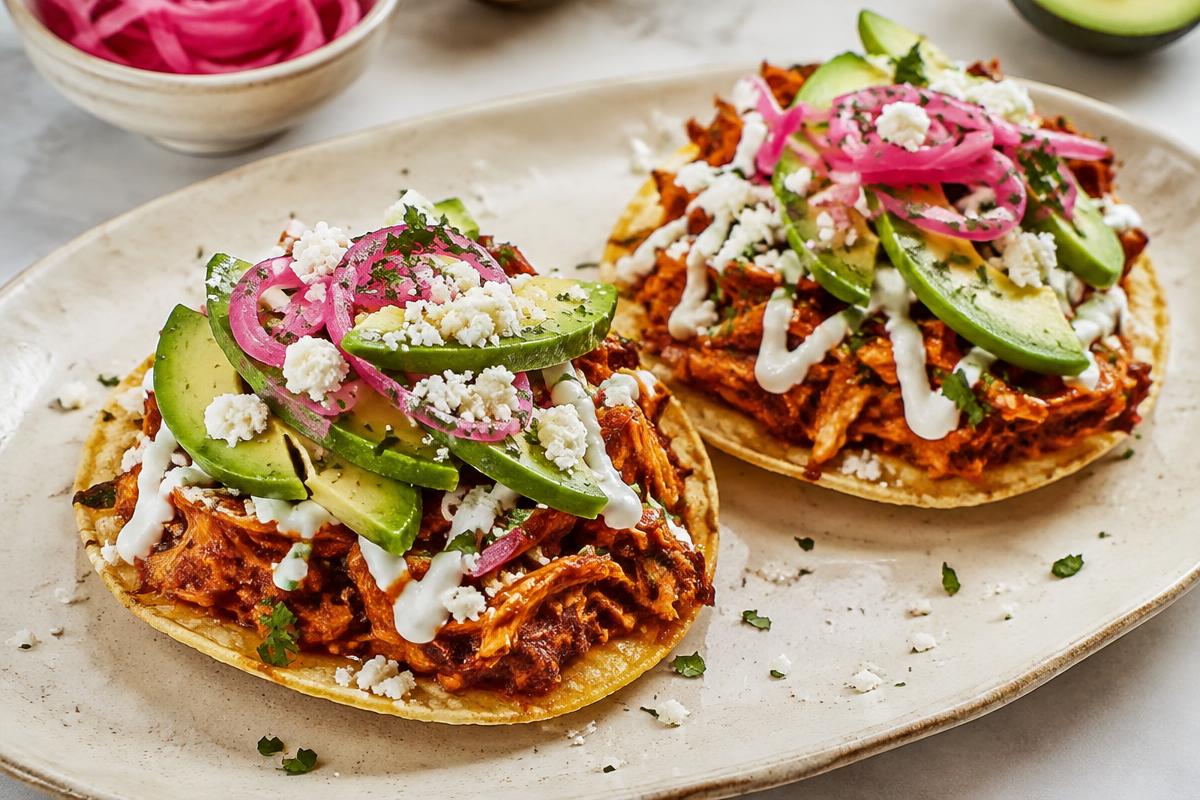
- The Architectural Tostada Assembly:
- Base: Spread a thin layer of warm refried beans across the surface of a crisp tostada. The beans act as culinary "mortar," preventing the chicken from sliding off.
- Filling: Pile a generous mound of warm Chicken Tinga onto the beans.
- Garnish: Top with sliced avocado, drizzle with cool crema, scatter salty Cotija cheese, and crown with fresh cilantro. Serve immediately.
Troubleshooting & Technical Notes
- Problem: The sauce is too watery and makes the tostada soggy.
Fix: Uncover the skillet and increase heat to medium for 4–5 minutes, stirring continuously to evaporate excess broth until the salsa clings tightly like a thick glaze. - Problem: The sauce is aggressively spicy.
Fix: Stir in 1 tablespoon of brown sugar or honey, followed by 2 tablespoons of Mexican crema. Dairy casein binds to capsaicin, immediately mitigating perceived heat.